Fehrenbach Michael Karl, Brock Hannah, Mehnert-Theuerkauf Anja, Meixensberger Jürgen
Department of Neurosurgery, University Medical Center Leipzig, Leipzig, Germany.
Department of Medical Psychology and Medical Sociology, University Medical Center Leipzig, Leipzig, Germany.
Front Psychol. 2021 Aug 16;12:664235. doi: 10.3389/fpsyg.2021.664235. eCollection 2021.
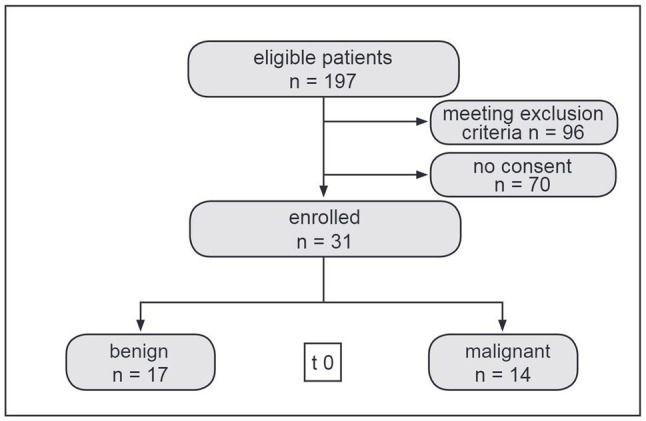
We aimed to assess psychological distress in patients with intracranial neoplasia, a group of patients who suffer from severe functional, neurocognitive and neuropsychological side effects, resulting in high emotional distress. We conducted a cross-sectional study, including inpatients with brain tumours. Eligible patients completed validated self-report questionnaires measuring depression, anxiety, distress, symptoms of posttraumatic stress disorder (PTSD), fear of progression and health-related quality of life. The questionnaire set was completed after brain surgery and receiving diagnosis and before discharge from hospital. A total of = 31 patients participated in this survey. Fourteen of them suffered from malignant ( = 3 metastatic neoplasia) and 17 from benign brain tumours. Mean values of the total sample regarding depression ( = 9.28, SD = 6.08) and anxiety ( = 6.00, SD = 4.98) remained below the cut-off ≥ 10. Mean psychosocial distress ( = 16.30, SD = 11.23, cut-off ≥ 14) and posttraumatic stress ( = 35.10, SD = 13.29, cut-off ≥ 32) exceeded the clinically relevant cut-off value in all the patients with intracranial tumours. Significantly, more patients with malignant (79%) than benign (29%) brain tumours reported PTSD symptoms ( = 0.006). Distress and clinically relevant PTSD symptoms in patients with intracranial neoplasia should be routinely screened and treated in psycho-oncological interventions immediately after diagnosis. Especially, neuro-oncological patients with malignant brain tumours or metastases need targeted support to reduce their emotional burden.
我们旨在评估颅内肿瘤患者的心理困扰,这组患者遭受严重的功能、神经认知和神经心理副作用,导致高度的情绪困扰。我们进行了一项横断面研究,纳入了脑肿瘤住院患者。符合条件的患者完成了经过验证的自我报告问卷,以测量抑郁、焦虑、困扰、创伤后应激障碍(PTSD)症状、疾病进展恐惧和健康相关生活质量。问卷在脑手术后、确诊后且出院前完成。共有31名患者参与了这项调查。其中14名患有恶性肿瘤(3例为转移性肿瘤),17名患有良性脑肿瘤。整个样本在抑郁(均值=9.28,标准差=6.08)和焦虑(均值=6.00,标准差=4.98)方面的均值仍低于临界值≥10。所有颅内肿瘤患者的平均心理社会困扰(均值=16.30,标准差=11.23,临界值≥14)和创伤后应激(均值=35.10,标准差=13.29,临界值≥32)超过了临床相关临界值。值得注意的是,报告有PTSD症状的恶性脑肿瘤患者(79%)比良性脑肿瘤患者(29%)多(P=0.006)。颅内肿瘤患者的困扰和临床相关PTSD症状应在确诊后立即在心理肿瘤学干预中进行常规筛查和治疗。特别是,患有恶性脑肿瘤或转移瘤的神经肿瘤患者需要有针对性的支持,以减轻他们的情感负担。