Division of Sleep Medicine, Harvard Medical School, Boston, MA 02115;
Medical Chronobiology Program, Division of Sleep and Circadian Disorders, Brigham and Women's Hospital, Boston, MA 02115.
Proc Natl Acad Sci U S A. 2021 Sep 14;118(37). doi: 10.1073/pnas.2018486118.
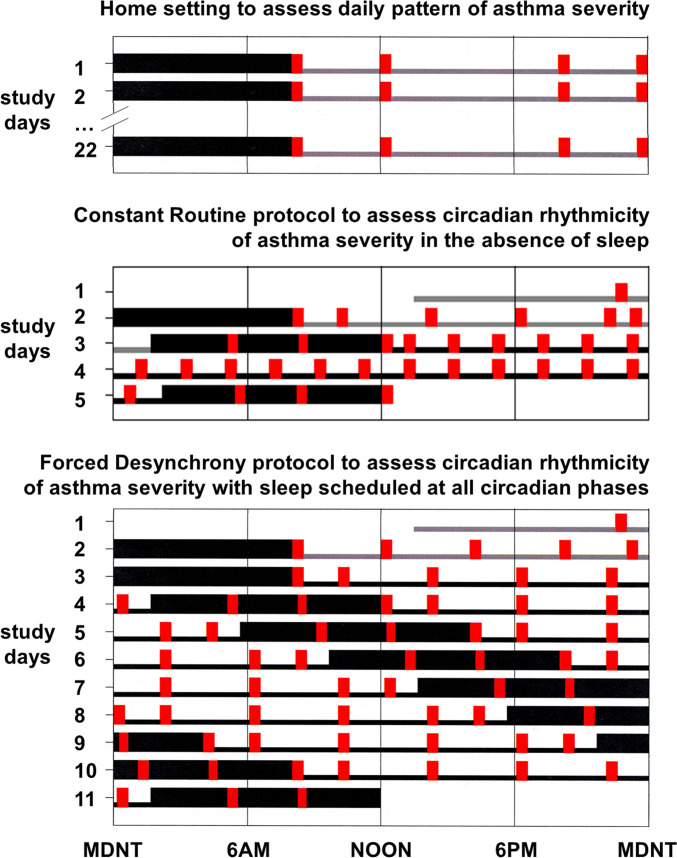
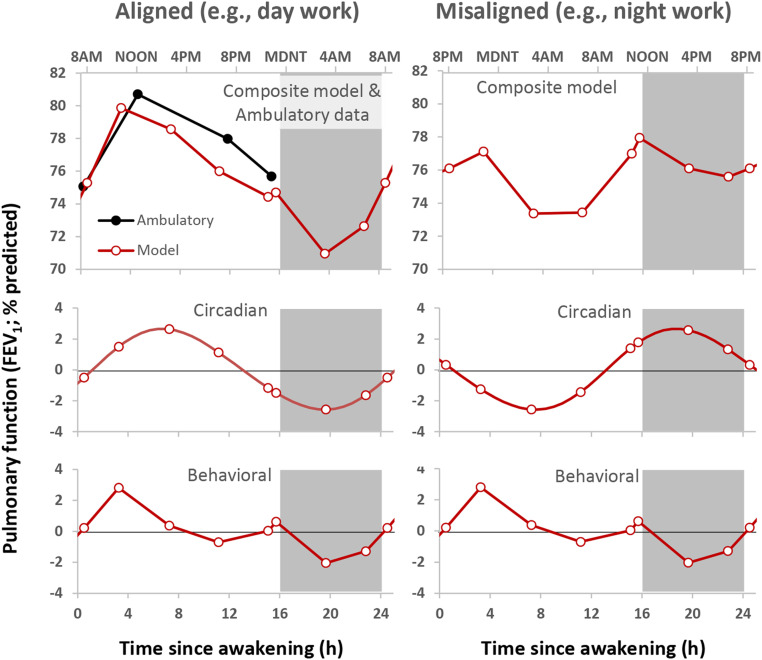
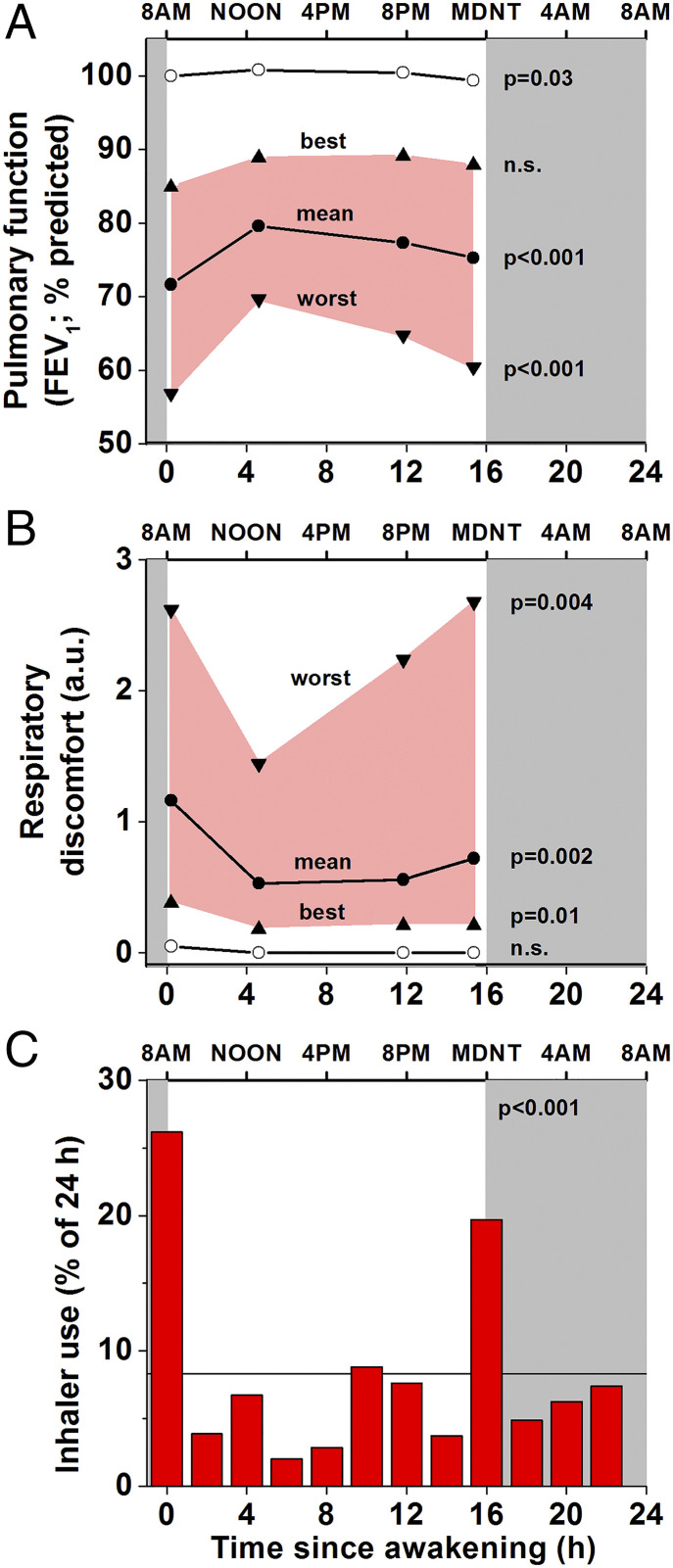
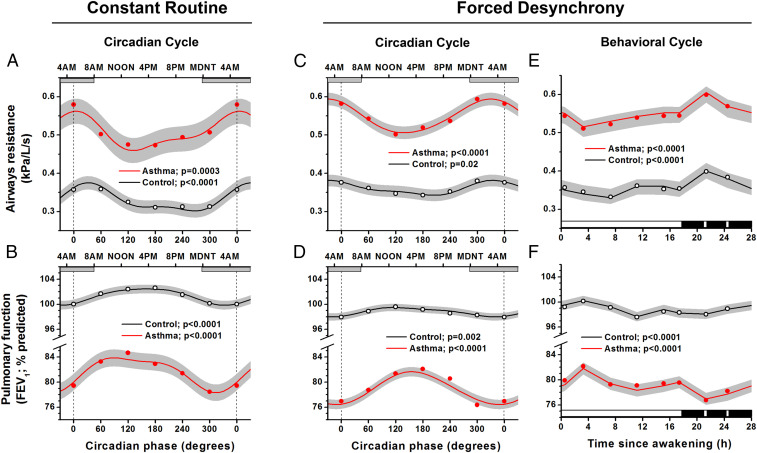
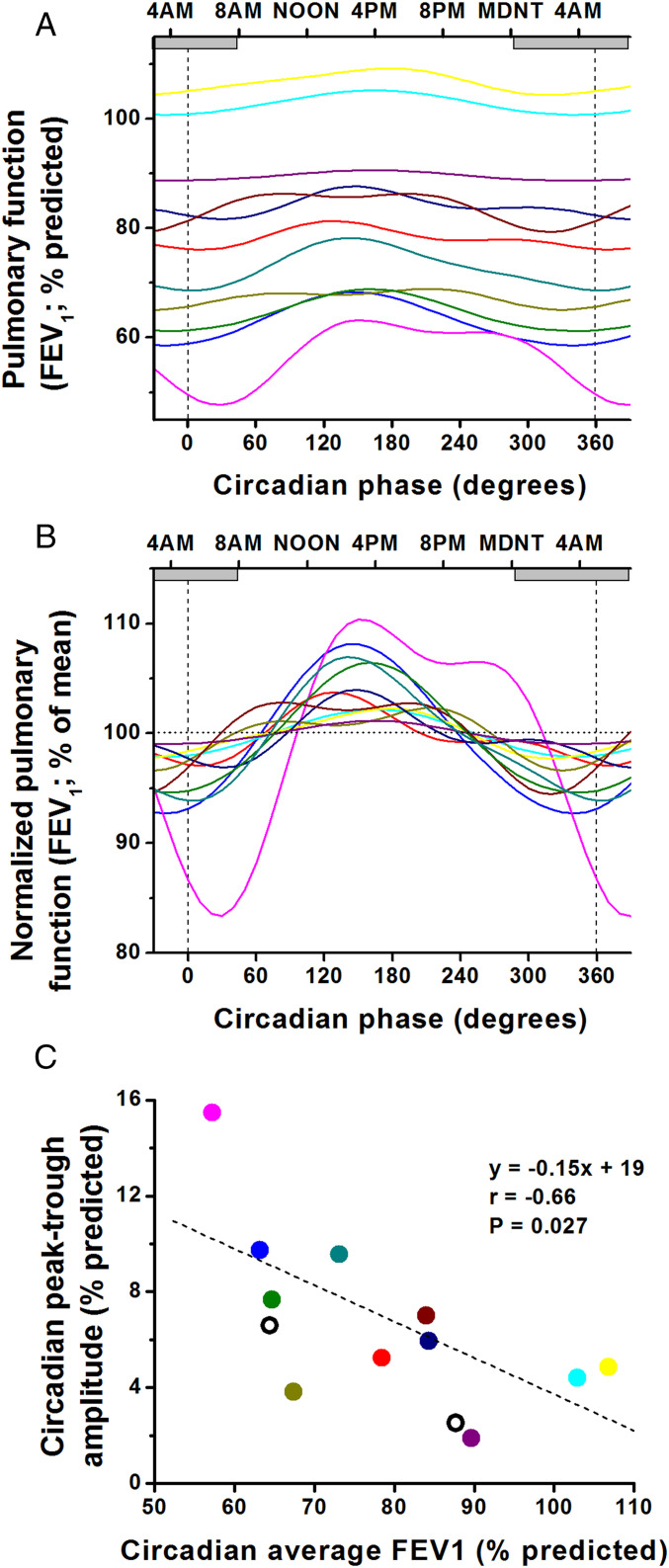
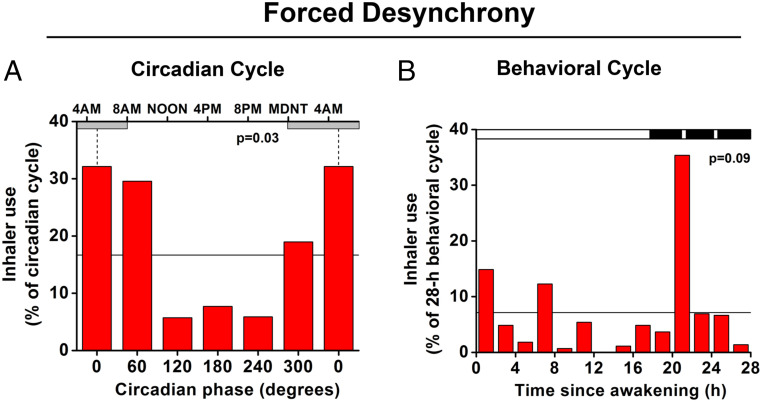
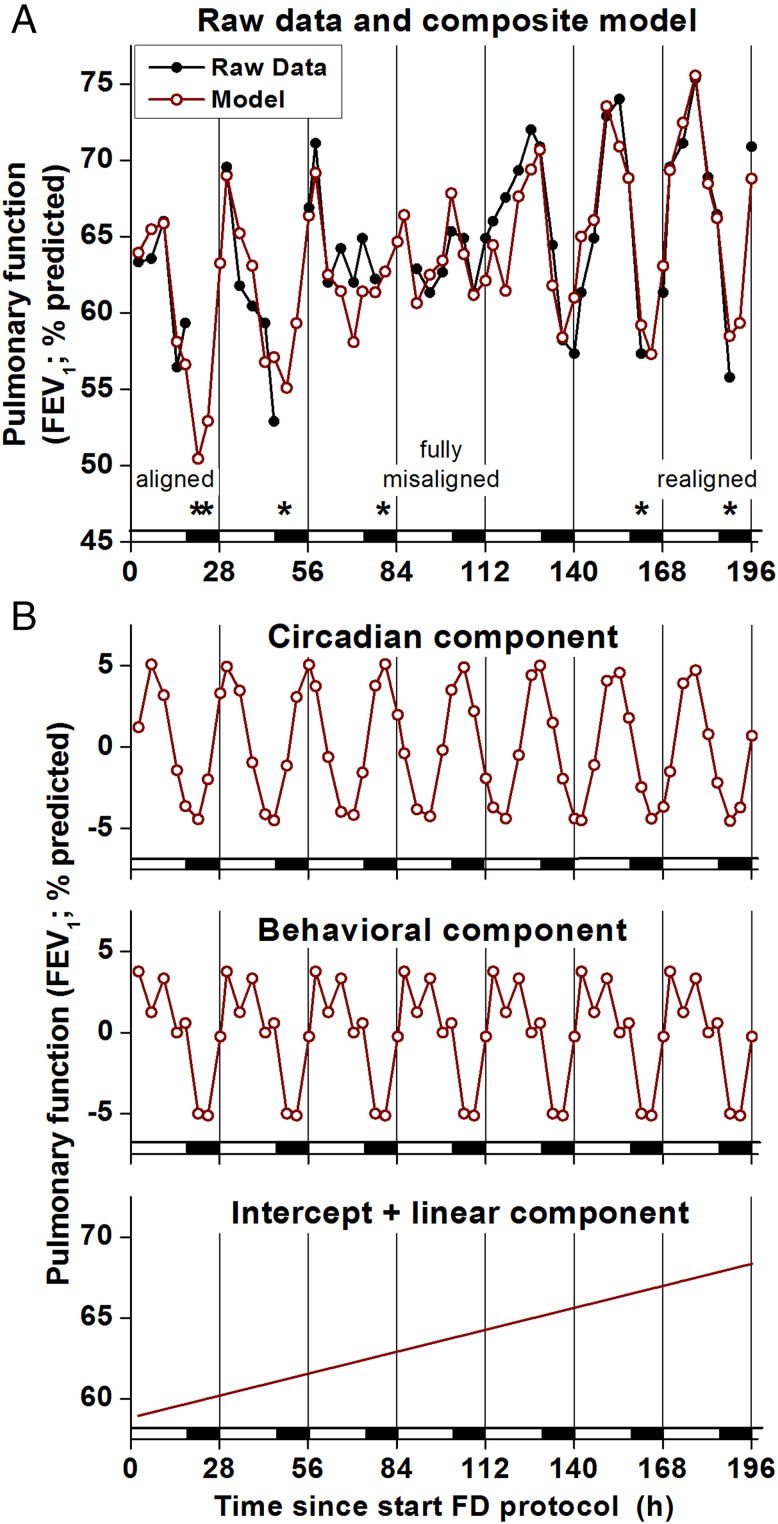
Asthma often worsens at night. To determine if the endogenous circadian system contributes to the nocturnal worsening of asthma, independent of sleep and other behavioral and environmental day/night cycles, we studied patients with asthma (without steroid use) over 3 wk in an ambulatory setting (with combined circadian, environmental, and behavioral effects) and across the circadian cycle in two complementary laboratory protocols performed in dim light, which separated circadian from environmental and behavioral effects: 1) a 38-h "constant routine," with continuous wakefulness, constant posture, 2-hourly isocaloric snacks, and 2) a 196-h "forced desynchrony" incorporating seven identical recurring 28-h sleep/wake cycles with all behaviors evenly scheduled across the circadian cycle. Indices of pulmonary function varied across the day in the ambulatory setting, and both laboratory protocols revealed significant circadian rhythms, with lowest function during the biological night, around 4:00 AM, uncovering a nocturnal exacerbation of asthma usually unnoticed or hidden by the presence of sleep. We also discovered a circadian rhythm in symptom-based rescue bronchodilator use (β2-adrenergic agonist inhaler) whereby inhaler use was four times more likely during the circadian night than day. There were additive influences on asthma from the circadian system plus sleep and other behavioral or environmental effects. Individuals with the lowest average pulmonary function tended to have the largest daily circadian variations and the largest behavioral cycle effects on asthma. When sleep was modeled to occur at night, the summed circadian, behavioral/environmental cycle effects almost perfectly matched the ambulatory data. Thus, the circadian system contributes to the common nocturnal worsening of asthma, implying that internal biological time should be considered for optimal therapy.
哮喘通常在夜间恶化。为了确定内源性昼夜节律系统是否有助于哮喘的夜间恶化,而与睡眠和其他行为和环境昼夜周期无关,我们在一个非住院环境中(具有昼夜节律、环境和行为的综合影响)对哮喘患者(不使用类固醇)进行了 3 周的研究,并在两个互补的实验室方案中跨越昼夜节律周期进行了研究,这两个方案分别分离了昼夜节律与环境和行为的影响:1)38 小时的“恒常程序”,保持清醒、持续的姿势、每两小时提供热量相同的小吃,以及 2)196 小时的“强制去同步”,包括七个相同的重复 28 小时的睡眠/觉醒周期,所有行为均匀分布在昼夜节律周期内。在非住院环境中,肺功能指标在一天中有所变化,两个实验室方案都显示出明显的昼夜节律,最低功能出现在生物夜间,大约凌晨 4 点,揭示了哮喘的夜间恶化,通常被睡眠掩盖或隐藏。我们还发现了基于症状的急救支气管扩张剂使用(β2-肾上腺素能激动剂吸入器)的昼夜节律,即吸入器的使用在昼夜节律夜间比白天高出四倍。昼夜节律系统加上睡眠和其他行为或环境影响对哮喘有附加影响。平均肺功能最低的个体往往具有最大的每日昼夜节律变化和对哮喘最大的行为周期影响。当睡眠模式被建模为夜间发生时,昼夜节律、行为/环境周期的综合影响几乎与非住院数据完全匹配。因此,昼夜节律系统有助于哮喘的常见夜间恶化,这意味着应该考虑内部生物钟以实现最佳治疗。