Department of Emergency and Critical Care Medicine, Hubei Provincial Hospital of Traditional Chinese Medicine, Wuhan, 430061, China.
Hubei Province Academy of Traditional Chinese Medicine, Wuhan, China.
Sci Rep. 2021 Sep 7;11(1):17791. doi: 10.1038/s41598-021-96983-4.
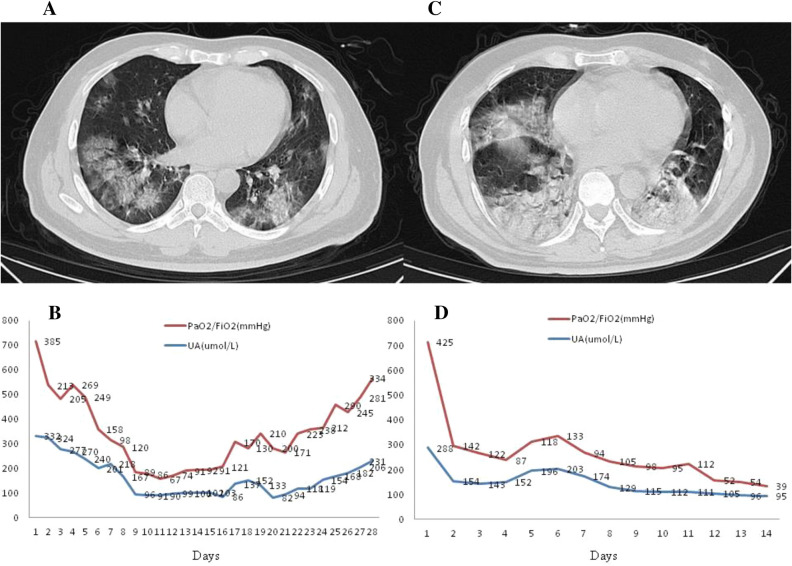
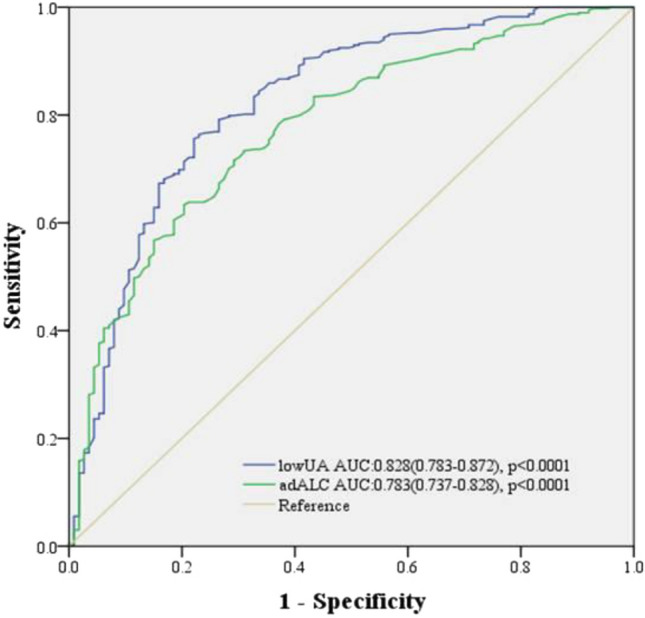
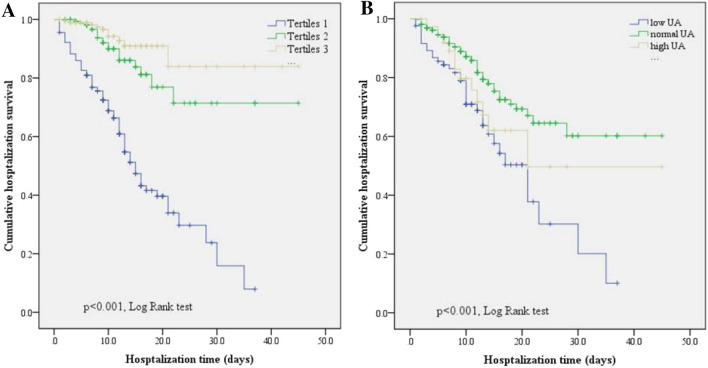
The purpose of this study is to explore whether uric acid (UA) can independently act as a prognostic factor and critical marker of the 2019 novel corona virus disease (COVID-19). A multicenter, retrospective, and observational study including 540 patients with confirmed COVID-19 was carried out at four designated hospitals in Wuhan. Demographic, clinical, laboratory data were collected and analyzed. The primary end point was in-hospital death of patients with COVID-19. The concentration of admission UA (adUA) and the lowest concentration of uric acid during hospitalization (lowUA) in the dead patients were significantly lower than those in the survivors. Multivariate logistic regression analysis showed the concentration of lowUA (OR 0.986, 95% CI 0.980-0.992, p < 0.001) was able to independently predict the risk of in-hospital death. The mean survival time in the low-level group of lowUA was significantly lower than other groups. When lowUA was ≤ 166 µmol/L, the sensitivity and specificity in predicting hospital short-term mortality were 76.9%, (95% CI 68.5-85.1%) and 74.9% (95% CI 70.3-78.9%). This retrospective study determined that the lowest concentration of UA during hospitalization can be used as a prognostic indicator and a marker of disease severity in severe patients with COVID-19.
本研究旨在探讨尿酸(UA)是否可以独立作为 2019 年新型冠状病毒病(COVID-19)的预后因素和关键标志物。在武汉的四家指定医院进行了一项多中心、回顾性、观察性研究,共纳入了 540 例确诊的 COVID-19 患者。收集并分析了人口统计学、临床和实验室数据。主要终点是 COVID-19 患者住院期间的死亡。死亡患者的入院时 UA 浓度(adUA)和住院期间 UA 最低浓度(lowUA)明显低于存活患者。多变量 logistic 回归分析显示,低UA 浓度(OR 0.986,95%CI 0.980-0.992,p<0.001)能够独立预测住院死亡风险。低UA 低水平组的平均生存时间明显短于其他组。当 lowUA≤166µmol/L 时,预测医院短期死亡率的灵敏度和特异性分别为 76.9%(95%CI 68.5-85.1%)和 74.9%(95%CI 70.3-78.9%)。这项回顾性研究确定,住院期间 UA 的最低浓度可作为 COVID-19 重症患者的预后指标和疾病严重程度的标志物。