Fagerholm Nora, Eilola Salla, Arki Vesa
Department of Geography and Geology, University of Turku, University of Turku, 20014, Finland.
Urban For Urban Green. 2021 Sep;64:127257. doi: 10.1016/j.ufug.2021.127257. Epub 2021 Jul 19.
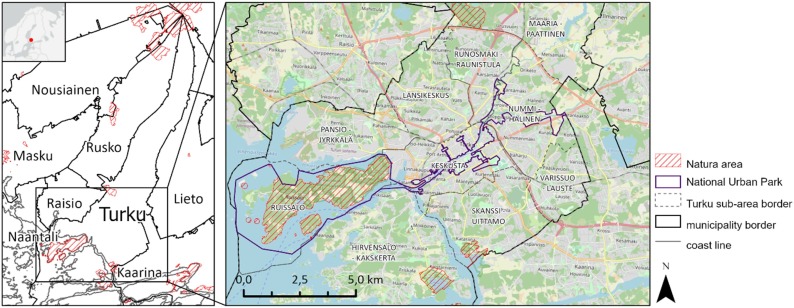
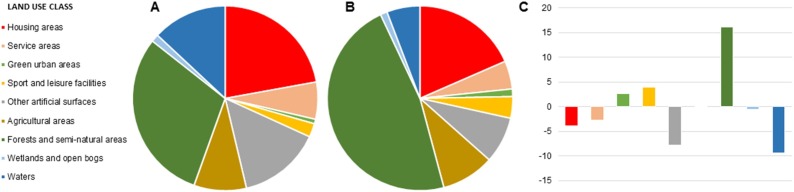
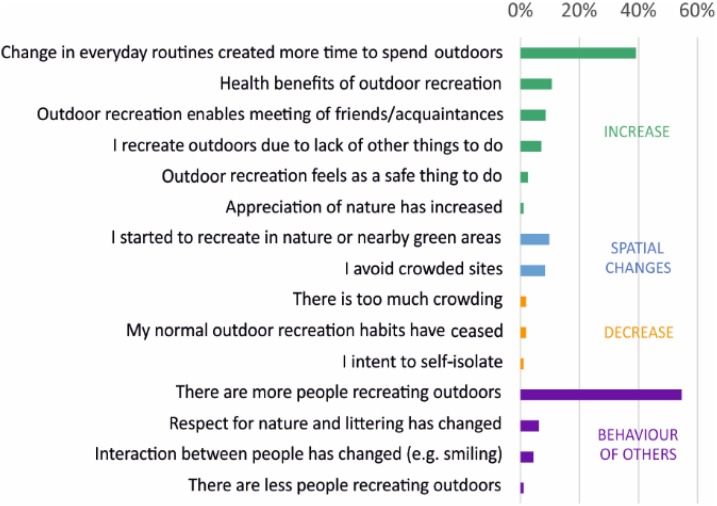
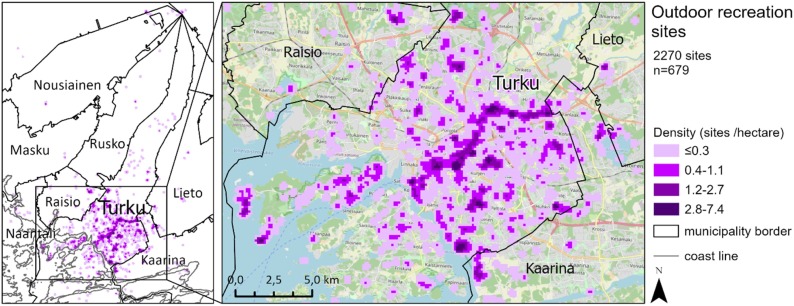
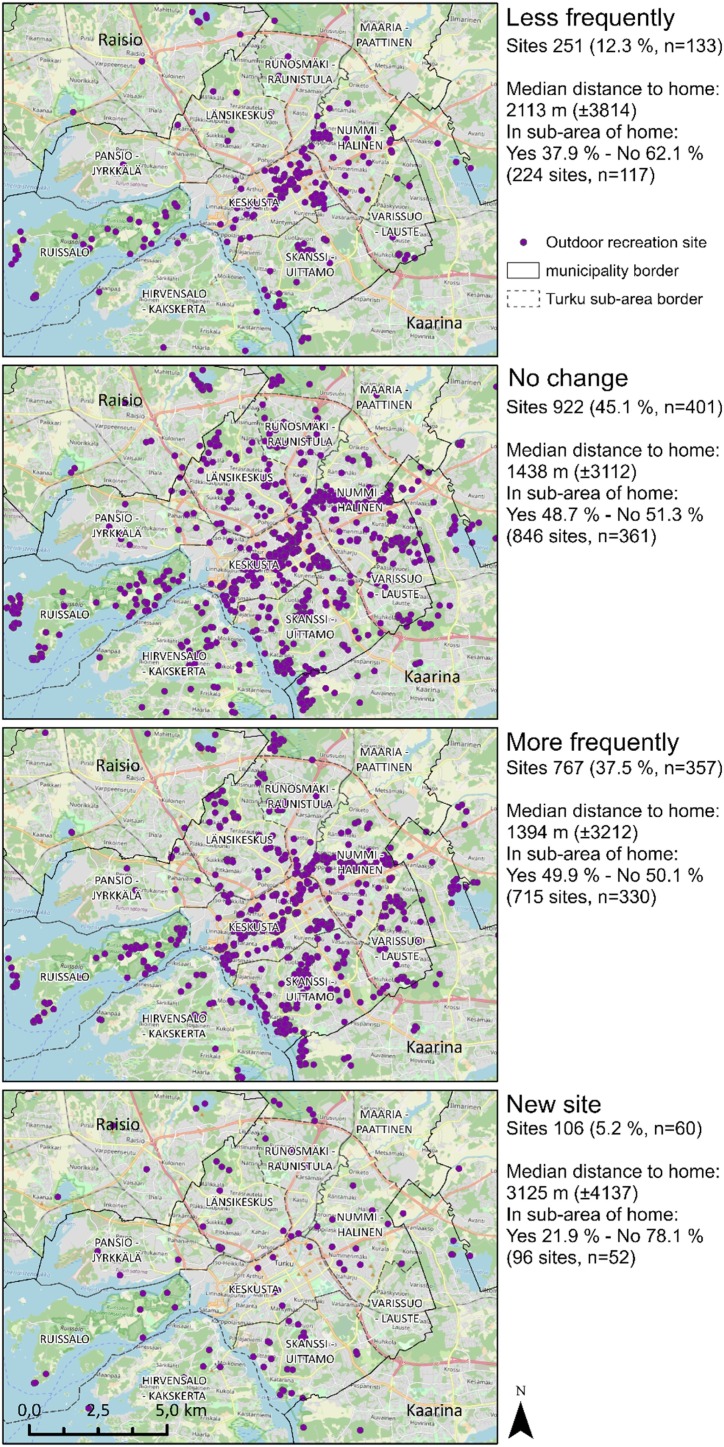
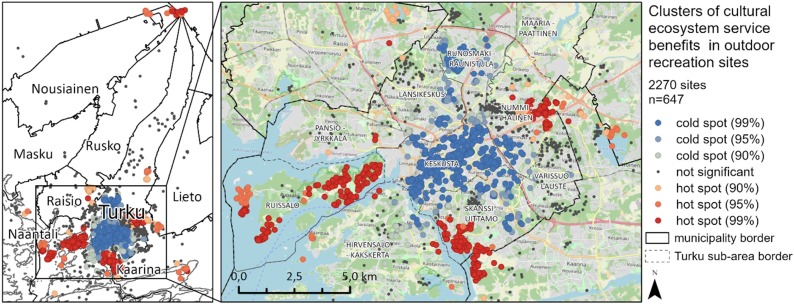
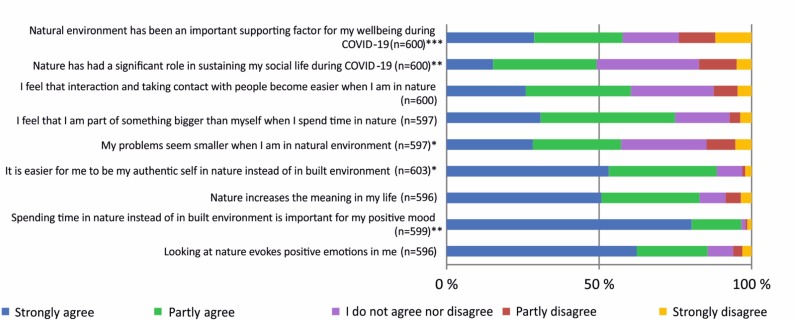
Urban green infrastructure provides a range of experiences for people and various health benefits that support human well-being. To increase urban resilience, exceptional situations, such as the COVID-19 pandemic, are important to learn from. This study aims to understand how the residents in Turku, a middle-sized city in Finland, perceived their outdoor recreation changed and how nature contributed to their subjective well-being during the early phases of the COVID-19. Sites of outdoor recreation and associated ecosystem service benefits were gathered through a map-based survey. In addition, the contribution of nature on subjective well-being was measured through Likert scale statements and the perceived changes in outdoor recreation behaviour were measured through self-reported number of days and from responses to open survey questions. Data was analysed through quantitative, qualitative and spatial methods. The results show that nearly half of the respondents increased outdoor recreation and the majority of outdoor recreation sites were visited more or as often as before the pandemic. The spatial analysis revealed that the most often visited recreation sites were near forests, semi-natural areas and housing areas as well as relatively close to respondent's residence. Respondents had various reasons for changes in outdoor recreation behaviour. For some a shift to working remotely and changes in everyday routines led to spending time outdoors more often and for some spending less while others avoided recreation in crowded areas due to social distancing. The results also indicate that people's opportunities to adapt to the pandemic conditions differ greatly. The nature's contribution to subjective well-being during COVID-19 was important regardless of respondent's outdoor recreation behaviour. Our study highlights that urban planning should respond to different needs for outdoor recreation in order to widely, and in a just way, promote the well-being benefits of urban nature during a pandemic, and to increase the resilience of the city and its residents. Participatory mapping can capture the variety in resident's values and identify key recreation sites of multiple ecosystem service benefits.
城市绿色基础设施为人们提供了一系列体验以及各种有益于健康的因素,有助于人类福祉。为了增强城市韧性,诸如新冠疫情这样的特殊情况很值得借鉴。本研究旨在了解芬兰中型城市图尔库的居民如何看待其户外休闲活动的变化,以及在新冠疫情早期自然环境如何促进了他们的主观幸福感。通过基于地图的调查收集了户外休闲场所及相关生态系统服务效益。此外,通过李克特量表陈述来衡量自然环境对主观幸福感的贡献,通过自我报告的天数以及对开放式调查问题的回答来衡量户外休闲行为的感知变化。通过定量、定性和空间方法对数据进行了分析。结果表明,近一半的受访者增加了户外休闲活动,且大多数户外休闲场所的访客数量比疫情前更多或与之前一样。空间分析显示,最常被访问的休闲场所位于森林、半自然区域和住宅区附近,并且相对靠近受访者的住所。受访者户外休闲行为变化的原因各不相同。对一些人来说,转向远程工作和日常惯例的改变导致他们更频繁地在户外度过时光,而对另一些人来说则是减少了户外时间,还有一些人由于社交距离而避免在拥挤区域进行休闲活动。结果还表明,人们适应疫情状况的机会差异很大。在新冠疫情期间,无论受访者的户外休闲行为如何,自然环境对主观幸福感的贡献都很重要。我们的研究强调,城市规划应回应不同的户外休闲需求,以便在疫情期间广泛且公正地促进城市自然环境对幸福感的益处,并增强城市及其居民的韧性。参与式地图绘制能够捕捉居民价值观的多样性,并识别具有多种生态系统服务效益的关键休闲场所。