Ugolini Francesca, Massetti Luciano, Calaza-Martínez Pedro, Cariñanos Paloma, Dobbs Cynnamon, Ostoic Silvija Krajter, Marin Ana Marija, Pearlmutter David, Saaroni Hadas, Šaulienė Ingrida, Simoneti Maja, Verlič Andrej, Vuletić Dijana, Sanesi Giovanni
Institute of BioEconomy, National Research Council, via Madonna del Piano 10, 50019, Sesto Fiorentino, Italy.
Spanish Association of Public Parks and Gardens, Calle Campo de La Estrada N2 Portal C 3 D, 15001, A Coruña, Spain.
Urban For Urban Green. 2020 Dec;56:126888. doi: 10.1016/j.ufug.2020.126888. Epub 2020 Oct 16.
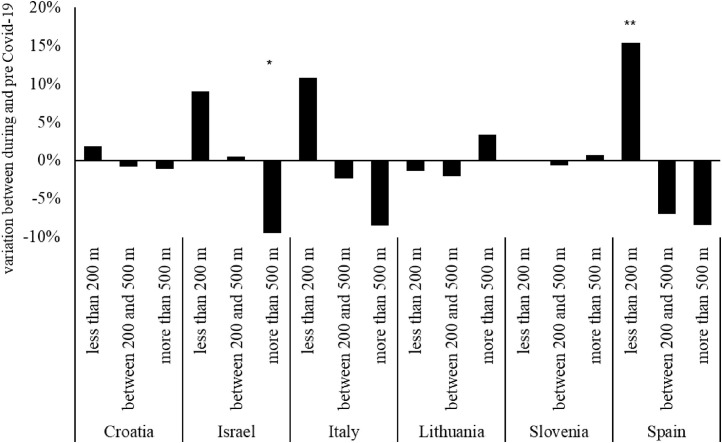
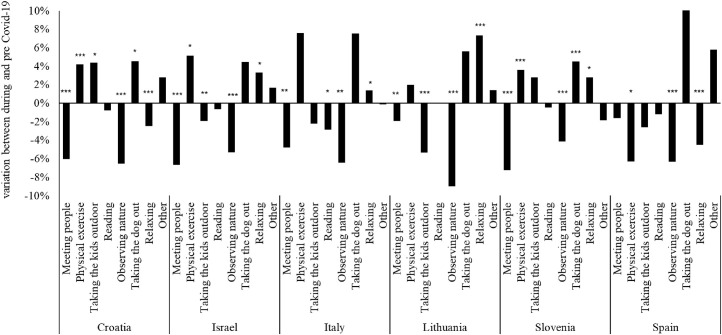
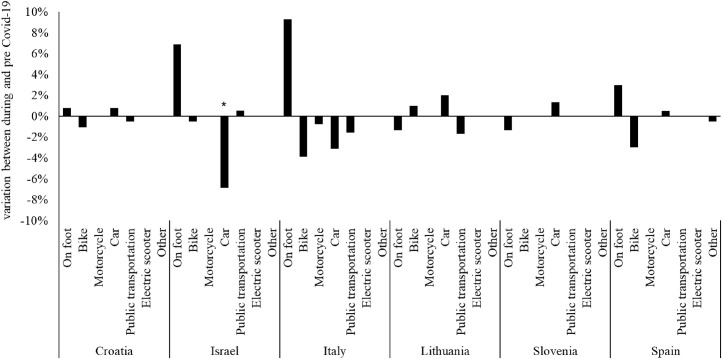
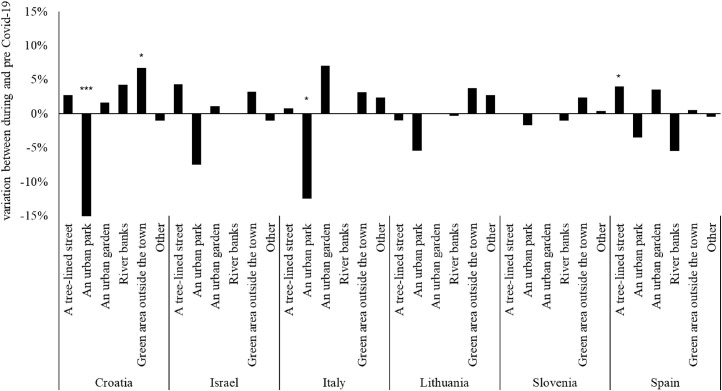
Urban green space (UGS) is an essential element in the urban environment, providing multiple ecosystem services as well as beneficial effects on physical and mental health. In a time of societal crisis these effects may be amplified, but ensuring that they are maintained requires effective planning and management - which is a complex challenge given the rapid changes in modern society and the need for continual adaptation. This study aims to identify the drivers that normally attract visitors to UGS, and to assess the effects of social isolation on the usage and perception of UGS during the COVID-19 pandemic. We conducted an online survey during the period in which restrictive measures were imposed in response to the pandemic (March-May 2020), in Croatia, Israel, Italy, Lithuania, Slovenia and Spain. Results showed that urban residents normally have a need for accessible UGS, mainly for physical exercise, relaxing and observing nature. The reduction in UGS visitation during the containment period was related to distinct changes in the motivations of those who did visit, with a relative increase in "necessary activities" such as taking the dog out, and a reduction in activities that could be considered non-essential or high-risk such as meeting people or observing nature. Behavioral changes related to proximity were also observed, with an increase in people walking to small urban gardens nearby (e.g. in Italy) or tree-lined streets (e.g. in Spain, Israel), and people traveling by car to green areas outside the city (e.g. in Lithuania). What the respondents missed the most about UGS during the pandemic was "spending time outdoors" and "meeting other people" - highlighting that during the COVID-19 isolation, UGS was important for providing places of solace and respite, and for allowing exercise and relaxation. Respondents expressed the need for urban greenery even when legally mandated access was limited - and many proposed concrete suggestions for improved urban planning that integrates green spaces of different sizes within the fabric of cities and neighborhoods, so that all residents have access to UGS.
城市绿地(UGS)是城市环境中的重要元素,它提供多种生态系统服务,对身心健康也有有益影响。在社会危机时期,这些影响可能会被放大,但要确保这些影响得以维持,就需要有效的规划和管理——鉴于现代社会的快速变化以及持续适应的需求,这是一项复杂的挑战。本研究旨在确定通常吸引人们前往城市绿地的驱动因素,并评估在新冠疫情期间社会隔离对城市绿地使用和认知的影响。我们在克罗地亚、以色列、意大利、立陶宛、斯洛文尼亚和西班牙实施疫情防控限制措施期间(2020年3月至5月)进行了一项在线调查。结果表明,城市居民通常需要可达的城市绿地,主要用于体育锻炼、放松身心和观赏自然。在管控期间城市绿地游客量的减少与前往者动机的明显变化有关,“遛狗”等“必要活动”相对增加,而诸如与人会面或观赏自然等可被视为非必要或高风险的活动则减少。还观察到与距离相关的行为变化,例如人们增加了步行前往附近小型城市花园(如在意大利)或绿树成荫街道(如在西班牙、以色列)的次数,以及开车前往城外绿地(如在立陶宛)的次数。在疫情期间,受访者最怀念城市绿地的是“户外时光”和“与人会面”——这凸显出在新冠疫情隔离期间,城市绿地对于提供慰藉和休憩场所、允许进行锻炼和放松非常重要。即使在法定进入受限的情况下,受访者仍表示需要城市绿化——许多人还提出了具体的建议,以改进城市规划,将不同规模的绿地整合到城市和社区结构中,使所有居民都能使用城市绿地。