Department of Landscape Architecture, The University of Sheffield, Sheffield S10 2TN, UK.
inVIVO Planetary Health, of the Worldwide Universities Network, West New York, NJ 10704, USA.
Int J Environ Res Public Health. 2021 Feb 24;18(5):2227. doi: 10.3390/ijerph18052227.
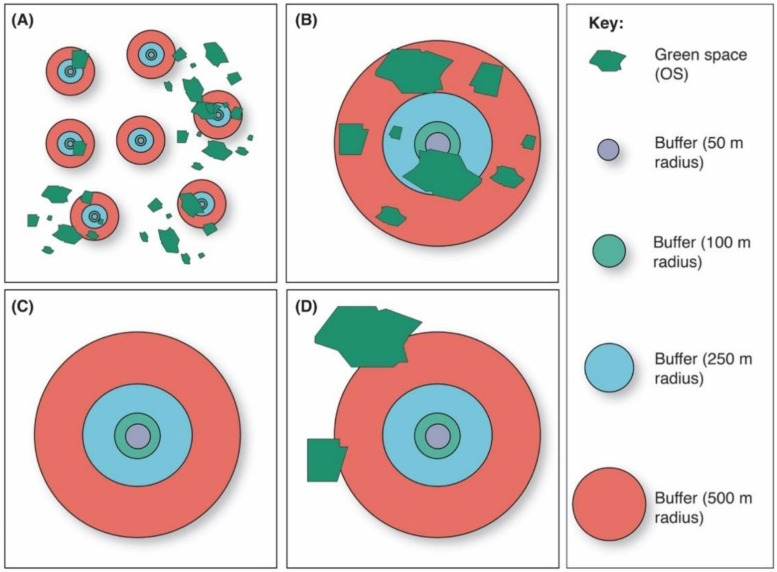
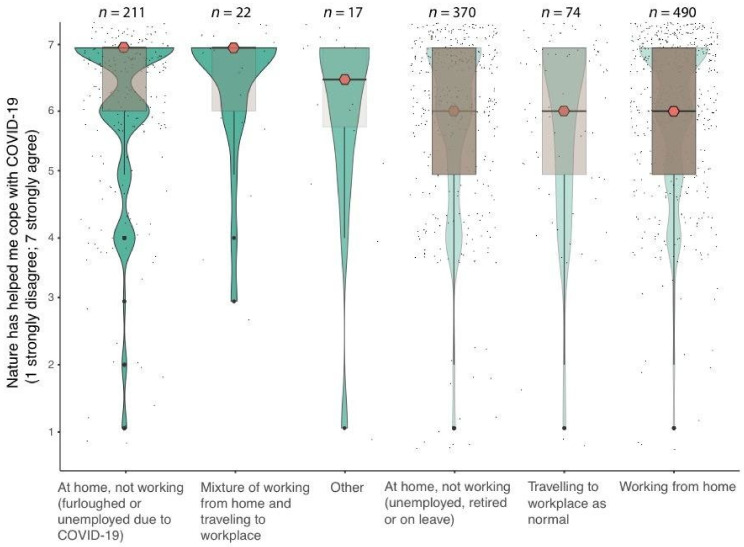
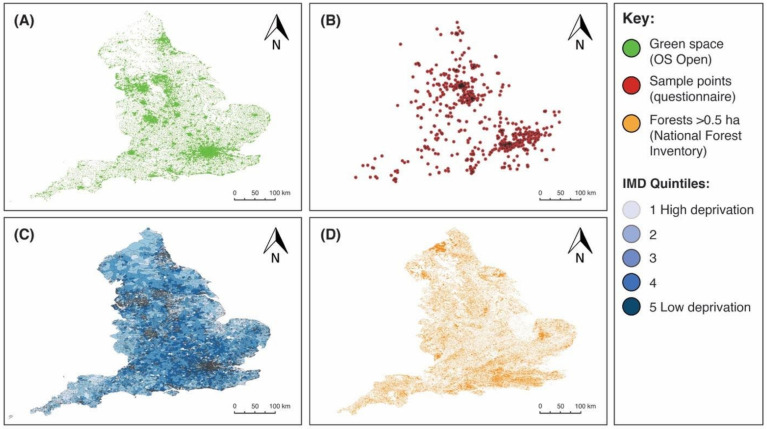
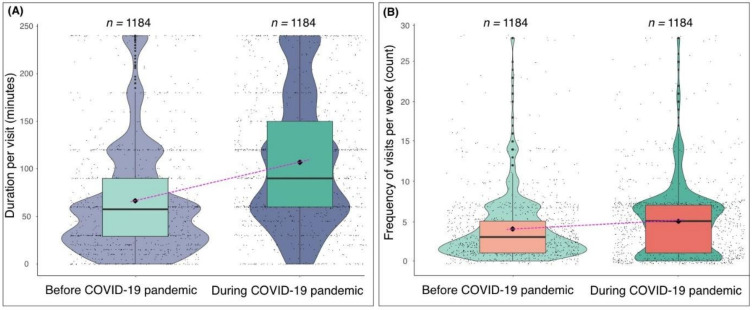
The COVID-19 pandemic has brought about unprecedented changes to human lifestyles across the world. The virus and associated social restriction measures have been linked to an increase in mental health conditions. A considerable body of evidence shows that spending time in and engaging with nature can improve human health and wellbeing. Our study explores nature's role in supporting health during the COVID-19 pandemic. We created web-based questionnaires with validated health instruments and conducted spatial analyses in a geographic information system (GIS). We collected data (n = 1184) on people's patterns of nature exposure, associated health and wellbeing responses, and potential socioecological drivers such as relative deprivation, access to greenspaces, and land-cover greenness. The majority of responses came from England, UK (n = 993). We applied a range of statistical analyses including bootstrap-resampled correlations and binomial regression models, adjusting for several potential confounding factors. We found that respondents significantly changed their patterns of visiting nature as a result of the COVID-19 pandemic. People spent more time in nature and visited nature more often during the pandemic. People generally visited nature for a health and wellbeing benefit and felt that nature helped them cope during the pandemic. Greater land-cover greenness within a 250 m radius around a respondent's postcode was important in predicting higher levels of mental wellbeing. There were significantly more food-growing allotments within 100 and 250 m around respondents with high mental wellbeing scores. The need for a mutually-advantageous relationship between humans and the wider biotic community has never been more important. We must conserve, restore and design nature-centric environments to maintain resilient societies and promote planetary health.
COVID-19 大流行给全世界人类的生活方式带来了前所未有的变化。病毒和相关的社会限制措施与心理健康状况的增加有关。大量证据表明,花时间与大自然接触可以改善人类的健康和幸福感。我们的研究探讨了在 COVID-19 大流行期间大自然在支持健康方面的作用。我们使用经过验证的健康工具创建了基于网络的问卷,并在地理信息系统 (GIS) 中进行了空间分析。我们收集了人们接触自然的模式、相关健康和幸福感反应以及潜在的社会生态驱动因素(如相对贫困、绿地可达性和土地覆盖绿化)的数据(n = 1184)。大多数回应来自英国英格兰(n = 993)。我们应用了一系列统计分析,包括自举重采样相关性和二项式回归模型,同时调整了几个潜在的混杂因素。我们发现,由于 COVID-19 大流行,受访者显著改变了他们接触自然的模式。人们在大流行期间花更多的时间在自然中,更频繁地访问自然。人们通常访问自然是为了健康和幸福感,并且觉得自然在大流行期间帮助他们应对。受访者邮政编码周围 250 米半径内的土地覆盖绿化程度越高,心理健康水平越高。在心理健康得分较高的受访者周围 100 和 250 米范围内,有更多的粮食种植园。人类与更广泛的生物群落之间建立互利关系的需求从未如此重要。我们必须保护、恢复和设计以自然为中心的环境,以维持有弹性的社会并促进行星健康。