Second Department of General Surgery, Cangzhou Central Hospital, Cangzhou, Hebei Province, China.
Meinian Health Clinic, Cangzhou, Hebei Province, China.
Aging (Albany NY). 2021 Sep 8;13(17):21191-21201. doi: 10.18632/aging.203403.
Gastric cancer (GC) is a malignant tumor of digestive tract with high mortality. Elucidating the molecular mechanisms of GC and obtaining new molecular targets are particularly important for the prevention and treatment of GC. The discovery of long non-coding RNAs (lncRNAs) provides the possibility for further elucidating the molecular mechanisms of GC and discovering new molecular markers.
Here, we aimed to explore the function and the mechanism of lncRNA PITPNA-AS1 in GC.
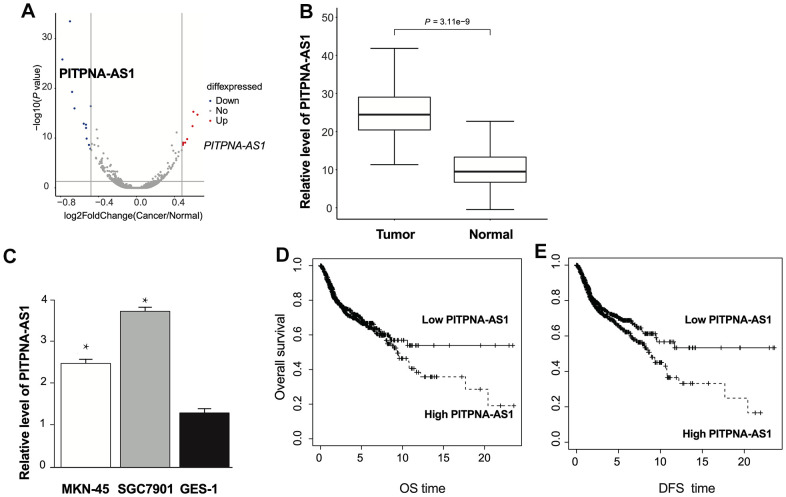
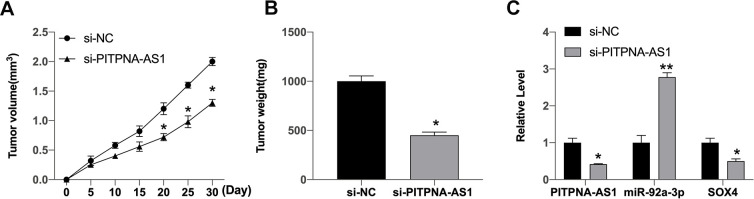
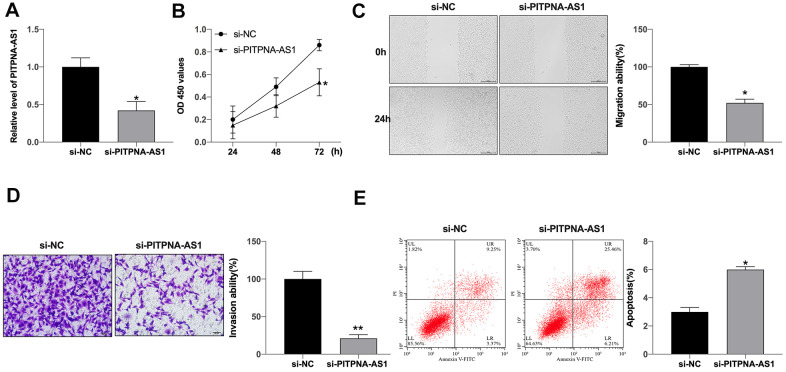
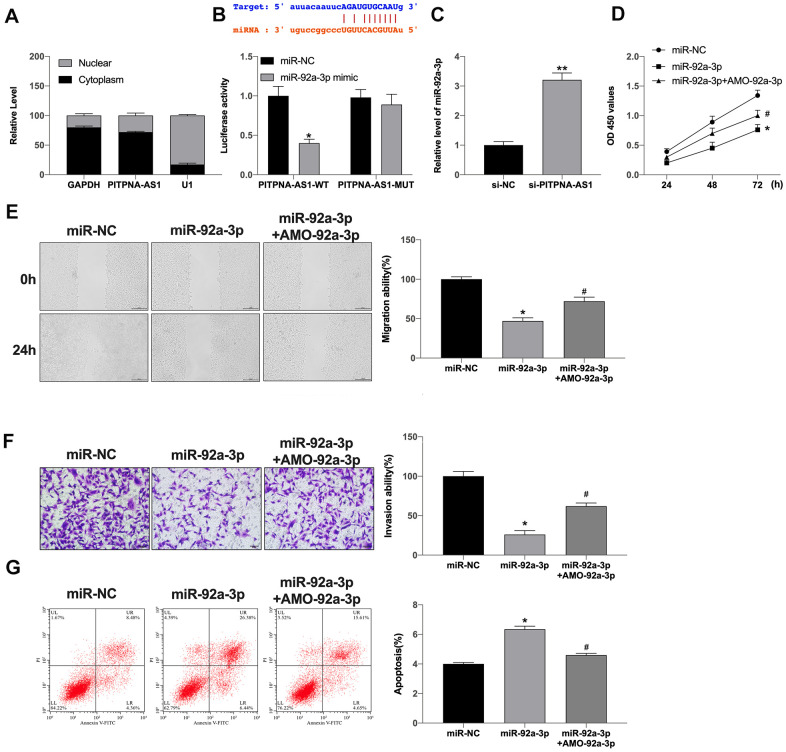
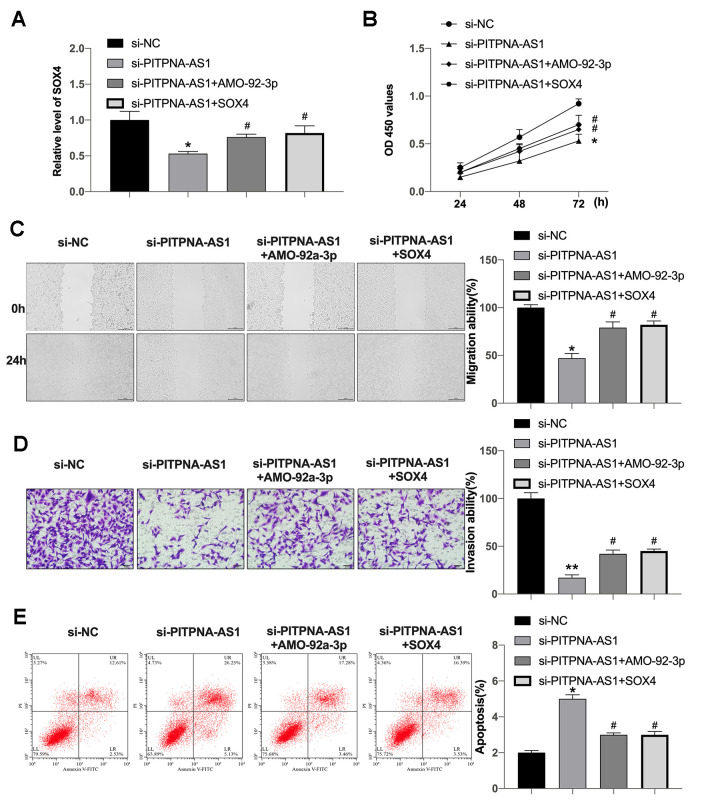
High-throughput lncRNA microarray was used to compare the differences in expression profiles between tumor tissues and adjacent tissues, and to filtrate the differentially expressed lncRNAs in tumors. To analyze the relationship between lncRNA expression and clinicopathological parameters in GC. The apoptosis was detected by down-regulation of lncRNA. The effect of down-regulated lncRNA PITPNA-AS1 on the migration and invasion of GC cells was determined by wound healing and Transwell assays. The function of lncRNA PITPNA-AS1 on tumor growth was verified by tumor experiment in nude mice. Analysis of target interaction relationship was performed by luciferase assay.
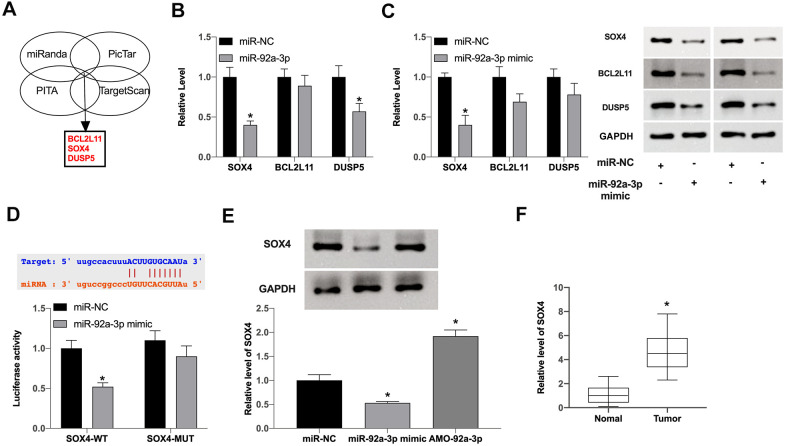
The results of high throughput chip analysis identified that PITPNA-AS1 was up-regulated in GC tissues. Our data revealed that knockdown of PITPNA-AS1 was able to inhibit tumor development of GC cells. Meanwhile, PITPNA-AS1 could regulate SOX4 expression via targeting miR-92a-3p.
Thus, we concluded that PITPNA-AS1 induced the development of GC cells by inhibiting miR-92a-3p and inducing SOX4. Our finding presents novel insights of GC, which may provide an underlying therapeutic target for GC treatment.
胃癌(GC)是一种高死亡率的消化道恶性肿瘤。阐明 GC 的分子机制并获得新的分子靶点对于 GC 的预防和治疗尤为重要。长链非编码 RNA(lncRNA)的发现为进一步阐明 GC 的分子机制和发现新的分子标志物提供了可能。
本研究旨在探讨 lncRNA PITPNA-AS1 在 GC 中的功能和作用机制。
采用高通量 lncRNA 微阵列比较肿瘤组织与相邻组织的表达谱差异,筛选肿瘤中差异表达的 lncRNA。分析 lncRNA 表达与 GC 临床病理参数的关系。通过下调 lncRNA 检测细胞凋亡。通过划痕愈合和 Transwell 实验测定下调 lncRNA PITPNA-AS1 对 GC 细胞迁移和侵袭的影响。通过裸鼠肿瘤实验验证 lncRNA PITPNA-AS1 对肿瘤生长的作用。通过荧光素酶实验分析靶基因相互作用关系。
高通量芯片分析结果表明 PITPNA-AS1 在 GC 组织中上调。我们的数据显示,下调 PITPNA-AS1 能够抑制 GC 细胞的肿瘤发生。同时,PITPNA-AS1 可以通过靶向 miR-92a-3p 调节 SOX4 的表达。
因此,我们得出结论,PITPNA-AS1 通过抑制 miR-92a-3p 并诱导 SOX4 促进 GC 细胞的发展。我们的研究结果为 GC 提供了新的见解,可能为 GC 的治疗提供潜在的治疗靶点。