Division of Nephrology, Department of Medicine, West China Hospital, Sichuan University, Chengdu, Sichuan, China.
West China School of Medicine, Sichuan University, Chengdu, Sichuan, China.
J Clin Hypertens (Greenwich). 2021 Oct;23(10):1879-1886. doi: 10.1111/jch.14366. Epub 2021 Sep 9.
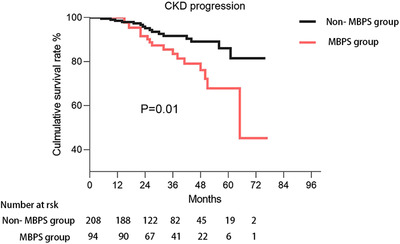
Blood pressure (BP) usually rise from being asleep to awake, which is named the morning blood pressure surge (MBPS). Researches have reported that elevated MBPS was related with CV events, incident CKD in hypertensive patients. However, there have been no studies that have investigated the association between MBPS and renal or heart outcomes in patients with CKD and hypertension, in these patients, the MBPS is much lower because of high prevalence of night hypertension and reduced BP dipping. In this prospective two-center observational study, we enrolled patients with CKD and hypertension and the 24 h ambulatory blood pressure monitoring (ABPM) was conducted in all patients. Time to total mortality, CKD progression and CV events was recorded; Finally, a total of 304 patients were enrolled and 94 (30.9%) of them had elevated MBPS. After a follow-up for median 30 months, 23 (7.6%), 34 (11.2%), and 95 (31.3%) patients occurred death, CKD progression and new-onset CV events, respectively. The Cox regression analysis suggested the elevated MBPS was a strong predictor of CKD progression (HR 2.35, 95%CI 1.2 -4.63, p = .013), independent of morning BP, while no associations were found between elevated MBPS and CV events (HR 1.02, 95%CI 0.66 -1.57), as well as death (HR 1.08, 95%CI 0.46 -2.55). In conclusion, we provided the first evidence that elevated MBPS was an important risk factor of CKD progression in patients with CKD and hypertension. Appropriate evaluation and management of MBPS may be helpful to postpone CKD progression.
血压(BP)通常在从睡眠状态转为清醒状态时升高,这被称为清晨血压飙升(MBPS)。研究报告称,MBPS 升高与心血管事件、高血压患者的新发 CKD 相关。然而,目前还没有研究调查 MBPS 与 CKD 和高血压患者的肾脏或心脏结局之间的关系,在这些患者中,由于夜间高血压和血压下降减少的患病率较高,MBPS 要低得多。在这项前瞻性的双中心观察性研究中,我们招募了 CKD 和高血压患者,并对所有患者进行了 24 小时动态血压监测(ABPM)。记录总死亡率、CKD 进展和心血管事件的时间;最终,共纳入 304 例患者,其中 94 例(30.9%)MBPS 升高。中位随访 30 个月后,分别有 23 例(7.6%)、34 例(11.2%)和 95 例(31.3%)患者发生死亡、CKD 进展和新发心血管事件。Cox 回归分析表明,MBPS 升高是 CKD 进展的强烈预测因子(HR 2.35,95%CI 1.2-4.63,p=0.013),独立于清晨血压,而 MBPS 升高与心血管事件(HR 1.02,95%CI 0.66-1.57)以及死亡(HR 1.08,95%CI 0.46-2.55)之间无关联。总之,我们提供了第一个证据,即 MBPS 升高是 CKD 和高血压患者 CKD 进展的重要危险因素。适当评估和管理 MBPS 可能有助于延缓 CKD 进展。