Shanghai Public Health Clinical Center, Fudan University, Shanghai, China.
Department of Biomedical and Molecular Sciences, Queen's University, Kingston, Ontario K7L3N6, Canada.
Comput Biol Chem. 2021 Oct;94:107570. doi: 10.1016/j.compbiolchem.2021.107570. Epub 2021 Sep 2.
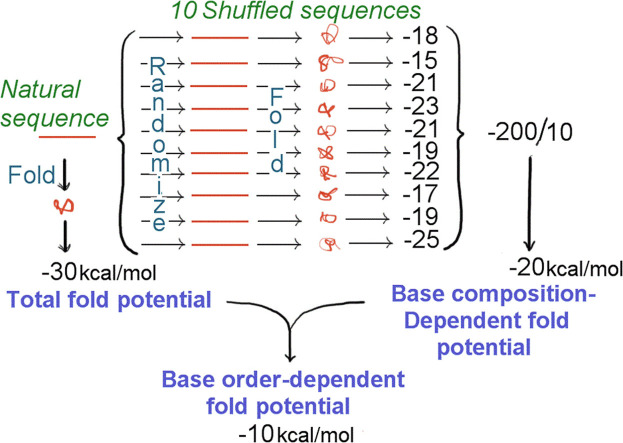
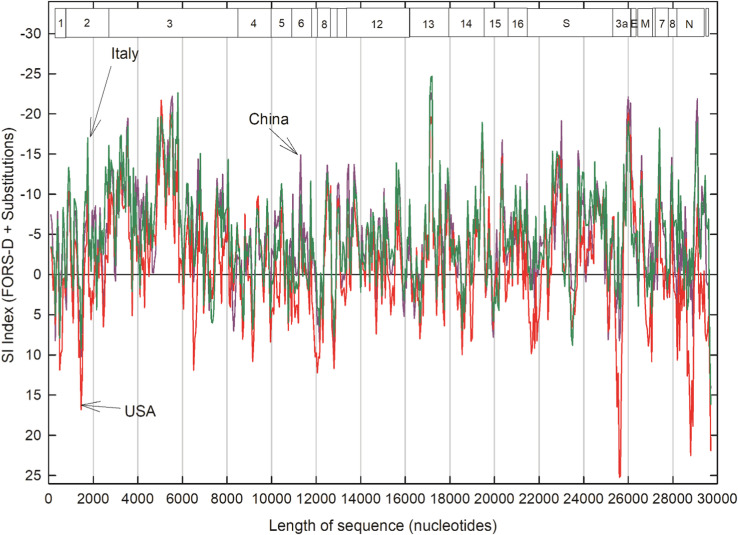
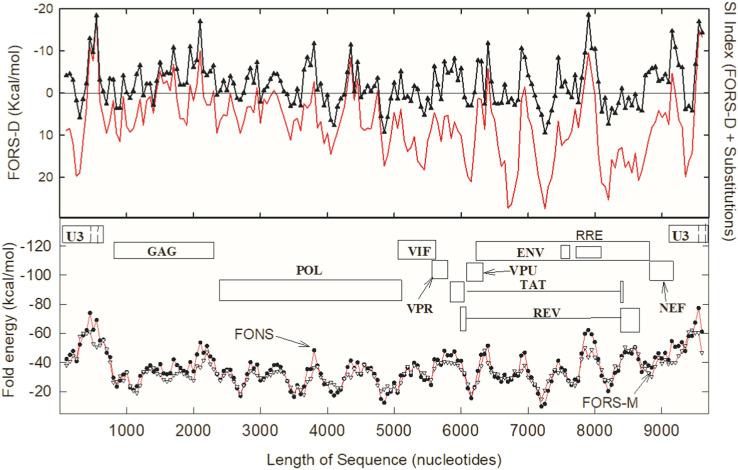
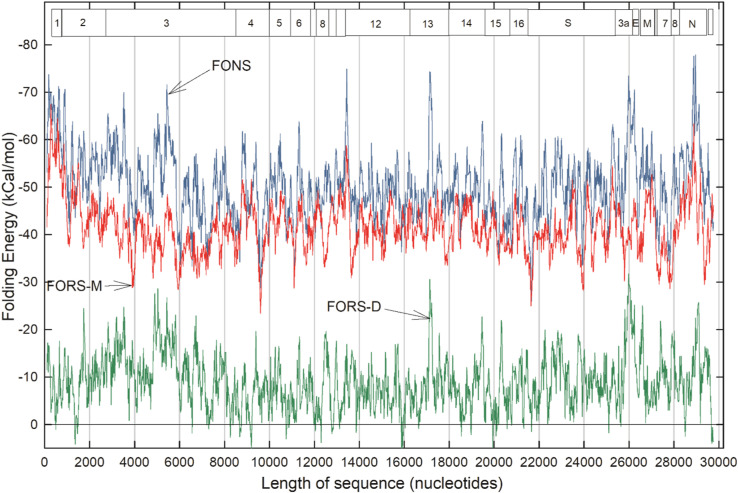
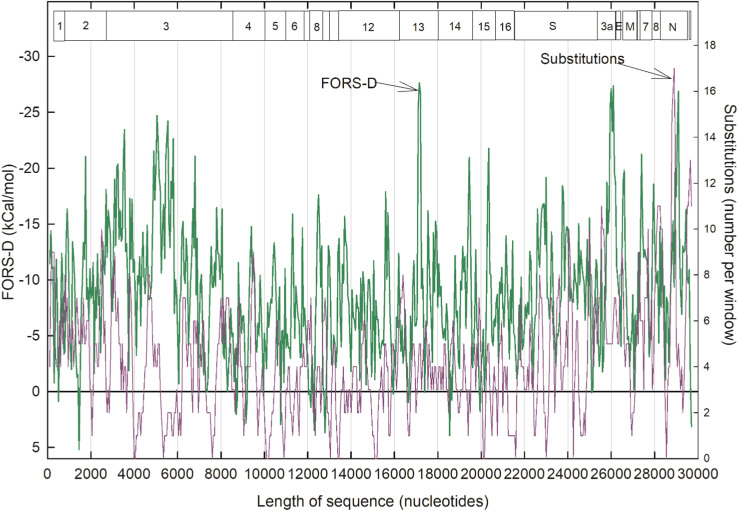
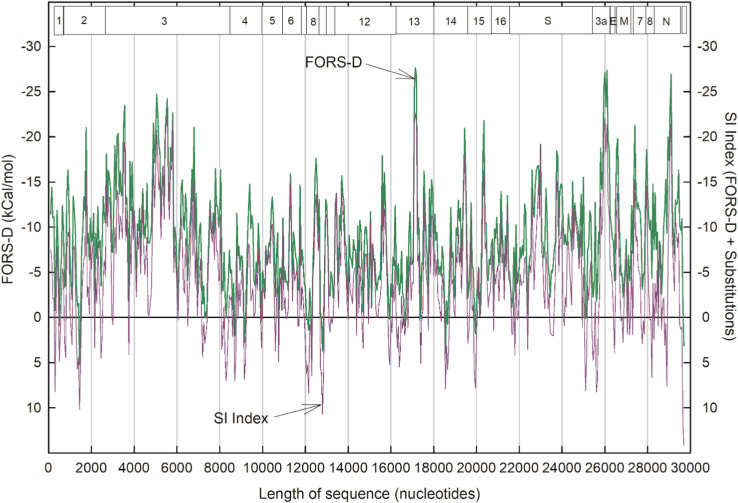
The base order-dependent component of folding energy has revealed a highly conserved region in HIV-1 genomes that associates with RNA structure. This corresponds to a packaging signal that is recognized by the nucleocapsid domain of the Gag polyprotein. Long viewed as a potential HIV-1 "Achilles heel," the signal can be targeted by a new antiviral compound. Although SARS-CoV-2 differs in many respects from HIV-1, the same technology displays regions with a high base order-dependent folding energy component, which are also highly conserved. This indicates structural invariance (SI) sustained by natural selection. While the regions are often also protein-encoding (e. g. NSP3, ORF3a), we suggest that their nucleic acid level functions can be considered potential "Achilles heels" for SARS-CoV-2, perhaps susceptible to therapies like those envisaged for AIDS. The ribosomal frameshifting element scored well, but higher SI scores were obtained in other regions, including those encoding NSP13 and the nucleocapsid (N) protein.
折叠能量的碱基序依赖成分揭示了 HIV-1 基因组中与 RNA 结构相关的高度保守区域。这对应于一个包装信号,被 Gag 多蛋白的核衣壳结构域识别。长期以来,该信号被视为 HIV-1 的一个潜在“阿喀琉斯之踵”,可以被一种新的抗病毒化合物靶向。尽管 SARS-CoV-2 在许多方面与 HIV-1 不同,但相同的技术显示出具有高碱基序依赖折叠能量成分的区域,这些区域也高度保守。这表明结构不变性(SI)受到自然选择的维持。虽然这些区域通常也是蛋白质编码的(例如 NSP3、ORF3a),但我们建议可以将其核酸水平的功能视为 SARS-CoV-2 的潜在“阿喀琉斯之踵”,可能容易受到像艾滋病那样的治疗方法的影响。核糖体移码元件得分较高,但在其他区域(包括编码 NSP13 和核衣壳(N)蛋白的区域)获得了更高的 SI 分数。