
离心运动在外侧肘肌腱病管理中的有益作用:一项系统评价和荟萃分析
The Beneficial Effects of Eccentric Exercise in the Management of Lateral Elbow Tendinopathy: A Systematic Review and Meta-Analysis.
作者信息
Yoon Seo Yeon, Kim Yong Wook, Shin In Soo, Kang Seok, Moon Hyun Im, Lee Sang Chul
机构信息
Department of Physical Medicine and Rehabilitation, Korea University Guro Hospital, Seoul 08308, Korea.
Department and Research Institute of Rehabilitation Medicine, Yonsei University College of Medicine, Seoul 03722, Korea.
出版信息
J Clin Med. 2021 Sep 1;10(17):3968. doi: 10.3390/jcm10173968.
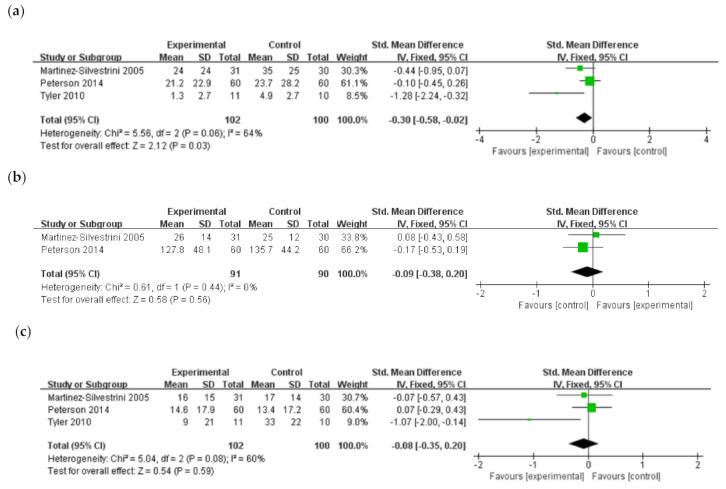
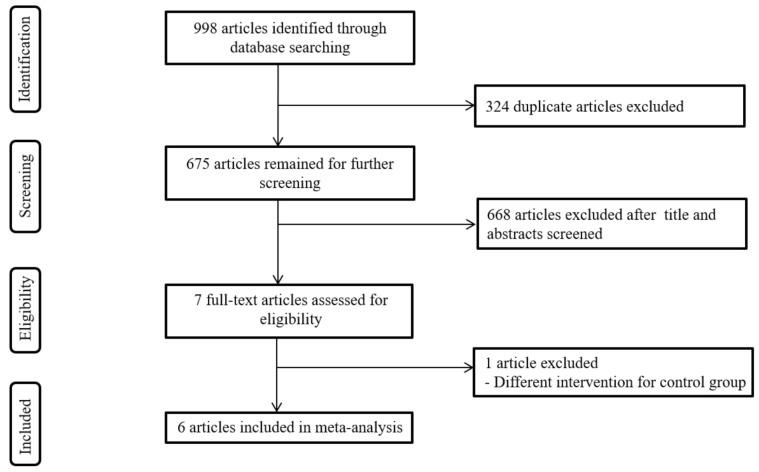
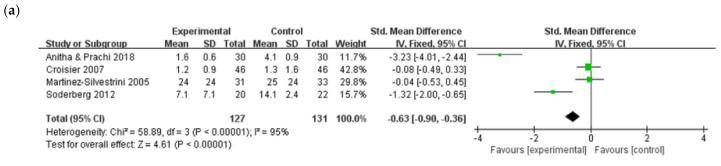
As a first-line treatment for lateral elbow tendinopathy (LET), eccentric exercise has been suggested as a conservative treatment method. This study aimed to investigate the impact of eccentric exercise on LET with regard to pain reduction, and strength and functional improvement. The PubMed, EMBASE, and Cochrane Central Register of Controlled Trials databases were searched, and studies up to May 2021 were included if (1) randomization was used for patient allocation, (2) the study comprised patients with LET, (3) the intervention was eccentric exercise, and (4) the primary outcomes included improvement in pain intensity, muscle strength, or function. The meta-analysis comprised of six studies, totaling 429 participants. Additional eccentric exercise with underlying adjuvant therapy significantly improved the visual analog scale (VAS) scores (standardized mean difference [SMD], -0.63; 95% confidence interval [CI], -0.90--0.36) and muscle strength (SMD, 1.05; 95% CI, 0.78-1.33) compared with adjuvant therapy alone. Compared with the concentric or isotonic exercise group, the eccentric exercise group showed significantly improved VAS scores (SMD, -0.30; 95% CI, -0.58--0.02). However, no differences in muscle strength and function were observed between the two groups. Eccentric exercise can improve pain and muscle strength in patients with LET. The limited number of included studies and heterogeneous exercise parameters are important when interpreting these findings.
作为外侧肘肌腱病(LET)的一线治疗方法,离心运动被认为是一种保守治疗方法。本研究旨在探讨离心运动对LET在减轻疼痛、增强力量和改善功能方面的影响。检索了PubMed、EMBASE和Cochrane对照试验中央注册库数据库,纳入截至2021年5月的研究,如果(1)采用随机化进行患者分配,(2)研究纳入LET患者,(3)干预措施为离心运动,(4)主要结局包括疼痛强度、肌肉力量或功能的改善。荟萃分析包括六项研究,共429名参与者。与单纯辅助治疗相比,在基础辅助治疗的基础上进行额外的离心运动显著改善了视觉模拟量表(VAS)评分(标准化均数差[SMD],-0.63;95%置信区间[CI],-0.90--0.36)和肌肉力量(SMD,1.05;95%CI,0.78-1.33)。与向心或等张运动组相比,离心运动组的VAS评分显著改善(SMD,-0.30;95%CI,-0.58--0.02)。然而,两组之间在肌肉力量和功能方面未观察到差异。离心运动可以改善LET患者的疼痛和肌肉力量。在解释这些结果时,纳入研究数量有限和运动参数异质性是重要因素。
 Zotero 插件