Department of Applied Social Sciences, The Hong Kong Polytechnic University, Hong Kong, China.
Int J Environ Res Public Health. 2021 Aug 25;18(17):8916. doi: 10.3390/ijerph18178916.
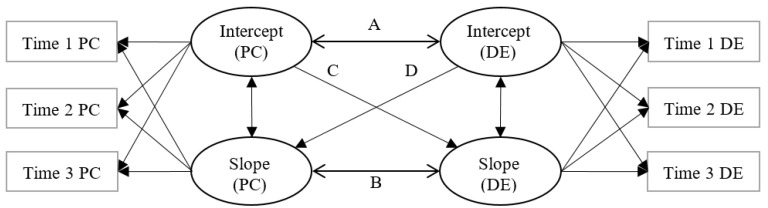
Although ample evidence demonstrates parental influences on delinquent behavior in adolescent years, few studies have examined how change in adolescent delinquency and change in parental behavior are related to each other, particularly in late adolescence. This study utilized survey data collected over three high school years (N = 3074 Grade 10 students; mean age = 15.57, SD = 0.74 at Time 1) to examine how change trajectory of adolescent-reported delinquency is related to change trajectory of adolescent perceived parental behavioral and psychological control using parallel process growth curve modeling. Results revealed that adolescent delinquency level was negatively associated with both parents' behavioral control and positively associated with parents' psychological control at Time 1 (Grade 10). However, adolescent delinquency increased in parallel with decreased parental behavioral control, but not a change in psychological control. Initial paternal behavioral control positively predicted a linear increase slope of adolescent delinquency while initial adolescent delinquency level also positively predicted a linear decrease slope of paternal behavioral control. These results highlight the parallel development of parents' behavioral control and children's delinquent behavior and delineate the reciprocal influence between paternal behavioral control and adolescent children's delinquency.
尽管有大量证据表明父母对青少年时期的犯罪行为有影响,但很少有研究探讨青少年犯罪行为的变化和父母行为的变化如何相互关联,特别是在青少年晚期。本研究利用三年高中(N = 3074 名 10 年级学生;平均年龄 = 15.57,SD = 0.74 在第一时间)收集的调查数据,使用平行过程增长曲线模型来检验青少年报告的犯罪行为的变化轨迹与青少年感知的父母行为和心理控制的变化轨迹之间的关系。结果表明,青少年犯罪水平与父母的行为控制呈负相关,与父母的心理控制呈正相关(在时间 1 时,即 10 年级)。然而,青少年犯罪行为与父母行为控制的下降呈平行增加,而与心理控制的变化无关。最初的父亲行为控制正向预测了青少年犯罪的线性增加斜率,而最初的青少年犯罪水平也正向预测了父亲行为控制的线性减少斜率。这些结果突出了父母行为控制和儿童犯罪行为的平行发展,并描绘了父亲行为控制和青少年儿童犯罪之间的相互影响。