Jazrawi Allan, Pantiora Eirini, Abdsaleh Shahin, Bacovia Daniel Vasiliu, Eriksson Staffan, Leonhardt Henrik, Wärnberg Fredrik, Karakatsanis Andreas
Centre for Clinical Research, County Västmanland, Uppsala University, 72189 Västerås, Sweden.
Department of Surgery, Västmanlands County Hospital, 72189 Västerås, Sweden.
Cancers (Basel). 2021 Aug 25;13(17):4285. doi: 10.3390/cancers13174285.
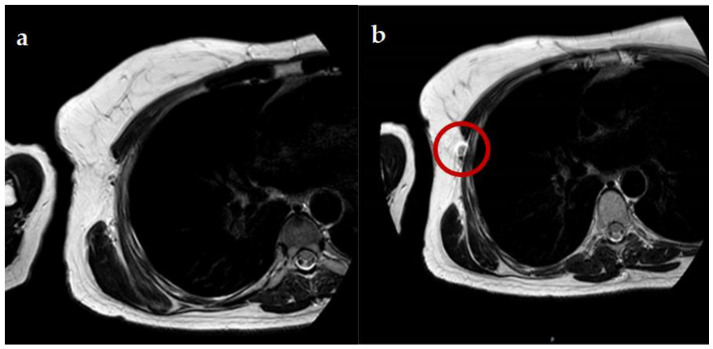
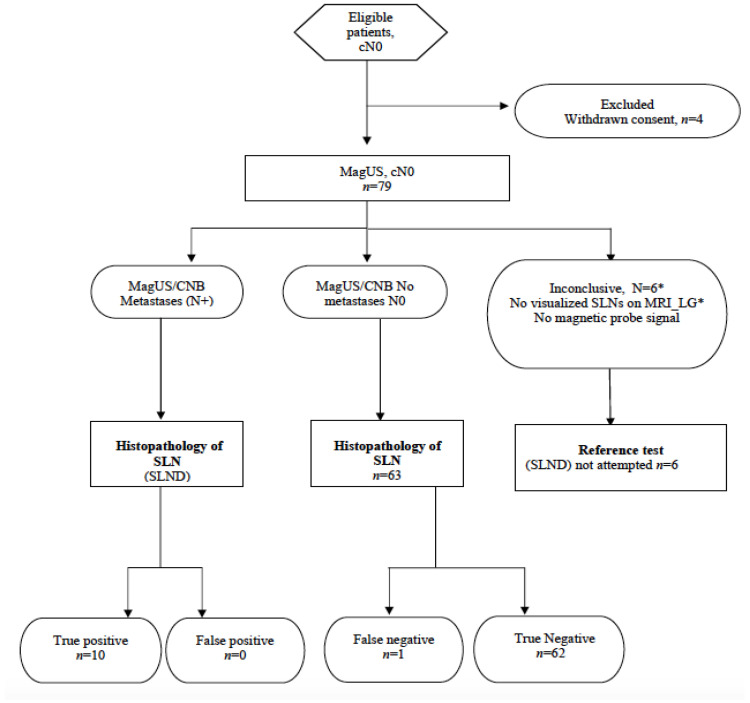
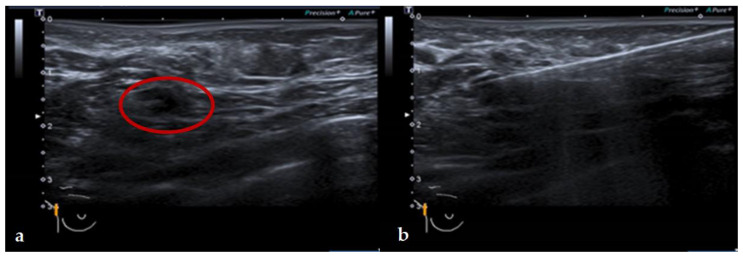
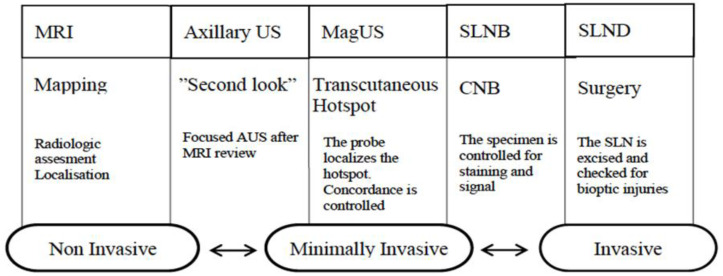
Lymph Node Dissection (SLND) is standard of care for diagnosing sentinel lymph node (SLN) status in patients with early breast cancer. Study aim was to determine whether the combination of Superparamagnetic iron oxide nanoparticles (SPIO) MRI-lymphography (MRI-LG) and a Magnetic-guided Axillary UltraSound (MagUS) with biopsy can allow for minimally invasive, axillary evaluation to de-escalate surgery. Patients were injected with 2 mL of SPIO and underwent MRI-LG for SN mapping. Thereafter MagUS and core needle biopsy (CNB) were performed. Patients planned for neoadjuvant treatment, the SLN was clipped and SLND was performed after neoadjuvant with the addition of isotope. During surgery, SLNs were controlled for signs of previous biopsy or clip. The primary endpoint was MagUS SLN detection rate, defined as successful SLN detection of at least one SLN of those retrieved in SLND. In 79 patients, 48 underwent upfront surgery, 12 received neoadjuvant and 19 had recurrent cancer. MagUS traced the SLN in all upfront and neoadjuvant cases, detecting all patients with macrometastases ( = 10). MagUS missed only one micrometastasis, outperforming baseline axillary ultrasound AUS (AUC: 0.950 vs. 0.508, < 0.001) and showing no discordance to SLND ( = 1.000). MagUS provides the niche for minimally invasive axillary mapping that can reduce diagnostic surgery.
前哨淋巴结清扫术(SLND)是诊断早期乳腺癌患者前哨淋巴结(SLN)状态的标准治疗方法。研究目的是确定超顺磁性氧化铁纳米颗粒(SPIO)磁共振淋巴造影(MRI-LG)与磁导航腋窝超声(MagUS)联合活检是否能实现微创腋窝评估,从而减少手术范围。患者注射2 mL SPIO后接受MRI-LG进行前哨淋巴结定位。此后进行MagUS和粗针活检(CNB)。计划接受新辅助治疗的患者,在前哨淋巴结上夹闭标记,新辅助治疗后加用同位素进行前哨淋巴结清扫术。手术期间,检查前哨淋巴结是否有先前活检或夹闭的迹象。主要终点是MagUS前哨淋巴结检测率,定义为在SLND中成功检测出至少一个前哨淋巴结。79例患者中,48例接受 upfront手术,12例接受新辅助治疗,19例为复发性癌症。MagUS在所有 upfront和新辅助治疗病例中均追踪到了前哨淋巴结,检测出所有有大转移灶的患者(=10)。MagUS仅漏检了1例微转移灶,优于基线腋窝超声AUS(AUC:0.950对0.508,<0.001),且与SLND无不一致性(=1.000)。MagUS为微创腋窝定位提供了可能,可减少诊断性手术。