Borgia Melissa, Dal Bo Michele, Toffoli Giuseppe
Experimental and Clinical Pharmacology Unit, Centro di Riferimento Oncologico di Aviano (CRO), IRCCS, 33081 Aviano, Italy.
Cancers (Basel). 2021 Aug 30;13(17):4387. doi: 10.3390/cancers13174387.
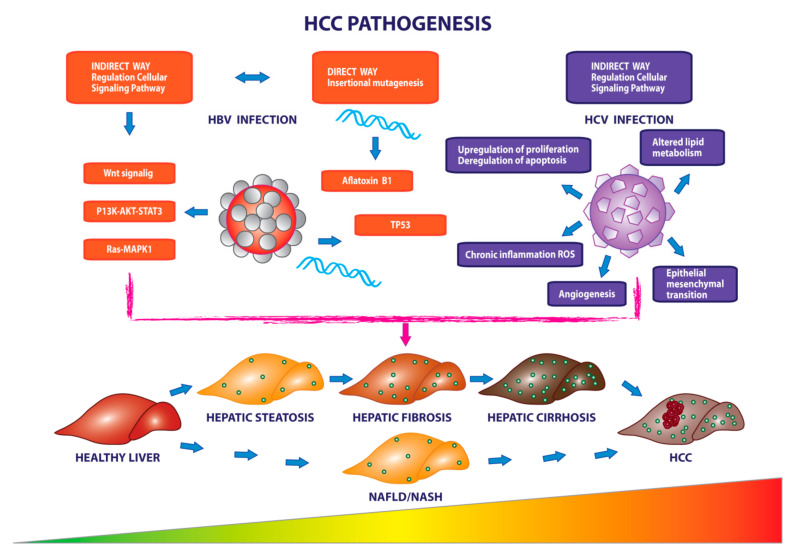
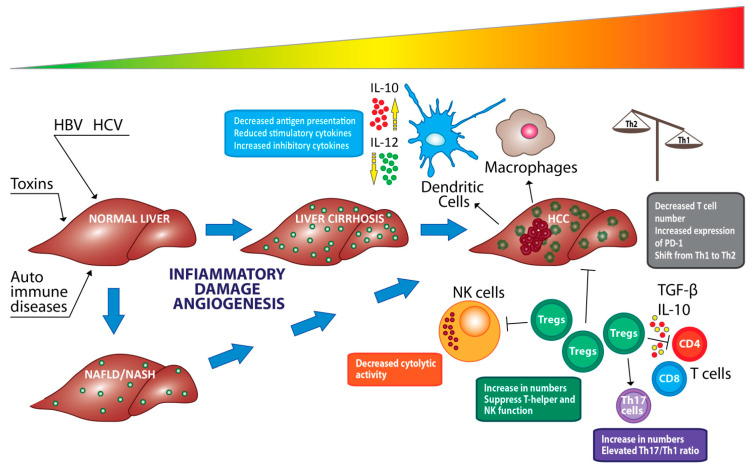
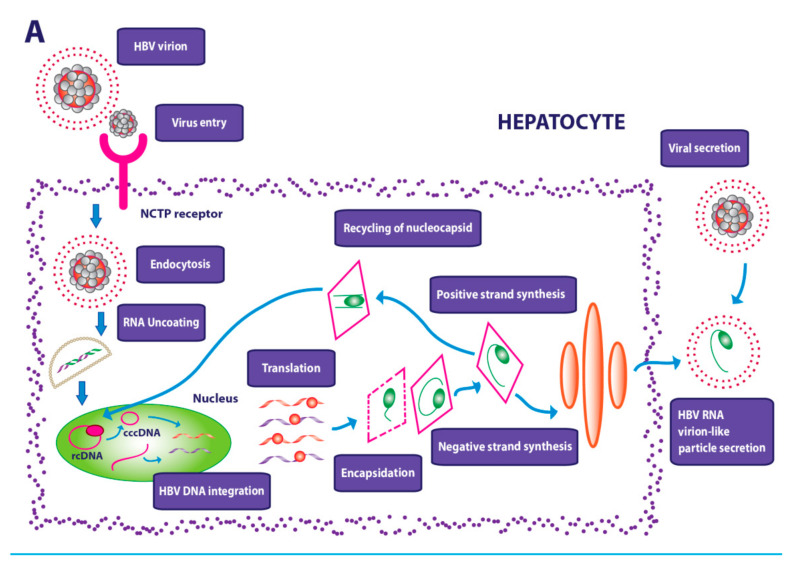
Hepatocellular carcinoma (HCC) can be classified as a prototypical inflammation-driven cancer that generally arises from a background of liver cirrhosis, but that in the presence of nonalcoholic steatohepatitis (NASH), could develop in the absence of fibrosis or cirrhosis. Tumor-promoting inflammation characterizes HCC pathogenesis, with an epidemiology of the chronic liver disease frequently encompassing hepatitis virus B (HBV) or C (HCV). HCC tumor onset and progression is a serial and heterogeneous process in which intrinsic factors, such as genetic mutations and chromosomal instability, are closely associated with an immunosuppressive tumor microenvironment (TME), which may have features associated with the etiopathogenesis and expression of the viral antigens, which favor the evasion of tumor neoantigens to immune surveillance. With the introduction of direct-acting antiviral (DAA) therapies for HCV infection, sustained virological response (SVR) has become very high, although occurrence of HCC and reactivation of HBV in patients with co-infection, who achieved SVR in short term, have been observed in a significant proportion of treated cases. In this review, we discuss the main molecular and TME features that are responsible for HCC pathogenesis and progression. Peculiar functional aspects that could be related to the presence and treatment of HCV/HBV viral infections are also dealt with.
肝细胞癌(HCC)可被归类为典型的炎症驱动型癌症,通常起源于肝硬化背景,但在非酒精性脂肪性肝炎(NASH)存在的情况下,可在无纤维化或肝硬化的情况下发生。促肿瘤炎症是HCC发病机制的特征,慢性肝病的流行病学通常包括乙型肝炎病毒(HBV)或丙型肝炎病毒(HCV)。HCC肿瘤的发生和进展是一个连续且异质性的过程,其中诸如基因突变和染色体不稳定等内在因素与免疫抑制性肿瘤微环境(TME)密切相关,TME可能具有与病毒抗原的病因发病机制和表达相关的特征,这有利于肿瘤新抗原逃避免疫监视。随着针对HCV感染的直接抗病毒(DAA)疗法的引入,持续病毒学应答(SVR)已变得非常高,尽管在相当比例的接受治疗的病例中,观察到短期实现SVR的合并感染患者出现了HCC以及HBV再激活。在本综述中,我们讨论了导致HCC发病机制和进展的主要分子和TME特征。还探讨了可能与HCV/HBV病毒感染的存在和治疗相关的特殊功能方面。