Department of Animal Science, Faculty of Agriculture, Shahid Bahonar University of Kerman, 22 Bahman Blvd, Kerman, Iran.
Genet Sel Evol. 2021 Sep 9;53(1):72. doi: 10.1186/s12711-021-00664-9.
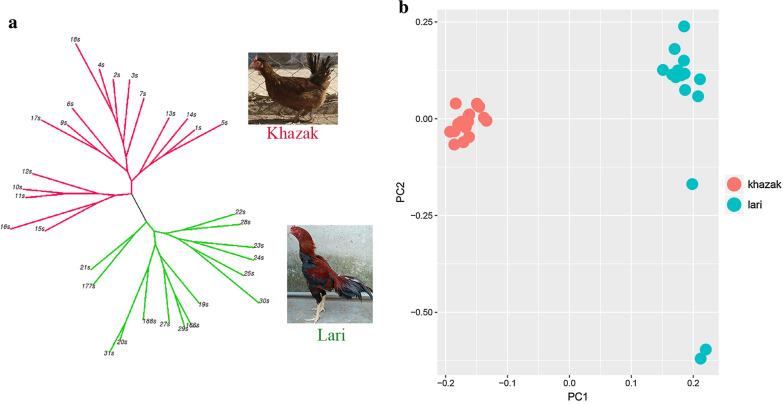
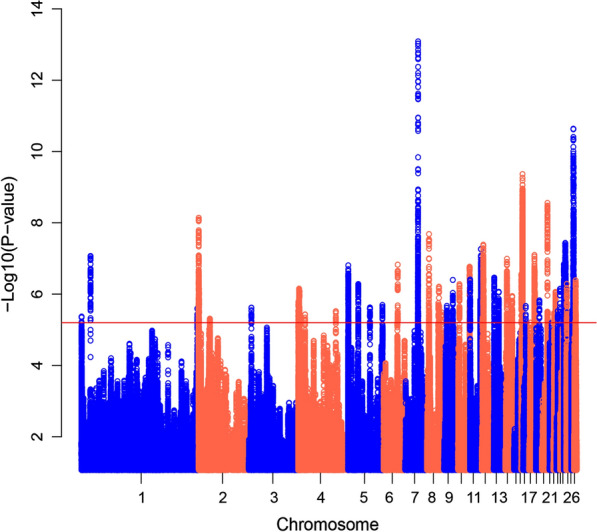
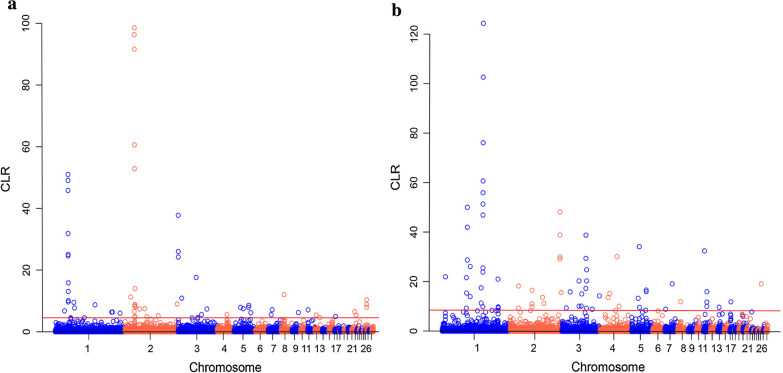
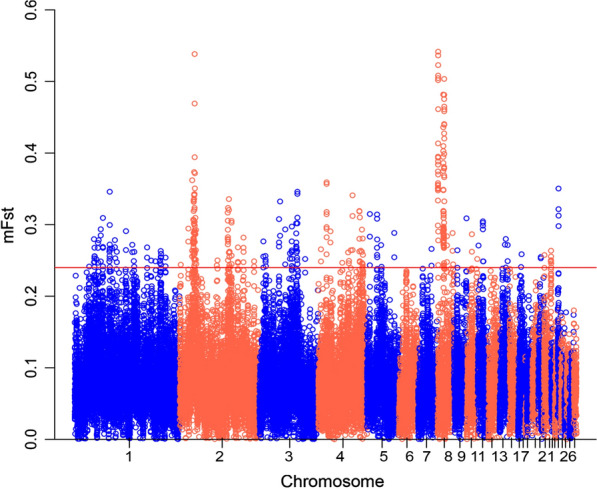
Various regions of the chicken genome have been under natural and artificial selection for thousands of years. The substantial diversity that exits among chickens from different geographic regions provides an excellent opportunity to investigate the genomic regions under selection which, in turn, will increase our knowledge about the mechanisms that underlie chicken diversity and adaptation. Several statistics have been developed to detect genomic regions that are under selection. In this study, we applied approaches based on differences in allele or haplotype frequencies (F and hapFLK, respectively) between populations, differences in long stretches of consecutive homozygous sequences (ROH), and differences in allele frequencies within populations (composite likelihood ratio (CLR)) to identify inter- and intra-populations traces of selection in two Iranian indigenous chicken ecotypes, the Lari fighting chicken and the Khazak or creeper (short-leg) chicken.
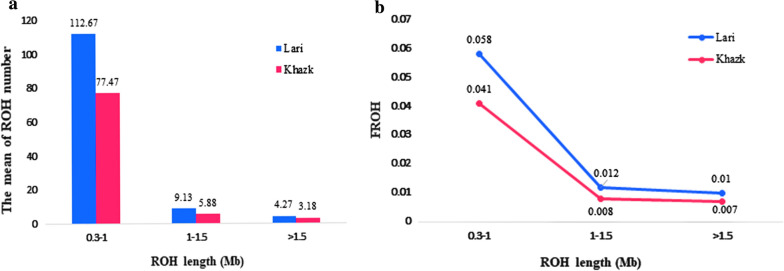
Using whole-genome resequencing data of 32 individuals from the two chicken ecotypes, approximately 11.9 million single nucleotide polymorphisms (SNPs) were detected and used in genomic analyses after quality processing. Examination of the distribution of ROH in the two populations indicated short to long ROH, ranging from 0.3 to 5.4 Mb. We found 90 genes that were detected by at least two of the four applied methods. Gene annotation of the detected putative regions under selection revealed candidate genes associated with growth (DCN, MEOX2 and CACNB1), reproduction (ESR1 and CALCR), disease resistance (S1PR1, ALPK1 and MHC-B), behavior pattern (AGMO, GNAO1 and PSEN1), and morphological traits (IHH and NHEJ1).
Our findings show that these two phenotypically different indigenous chicken populations have been under selection for reproduction, immune, behavioral, and morphology traits. The results illustrate that selection can play an important role in shaping signatures of differentiation across the genomic landscape of two chicken populations.
几千年来,鸡的基因组的不同区域一直受到自然和人工选择的影响。来自不同地理区域的鸡之间存在着巨大的多样性,这为研究受选择影响的基因组区域提供了极好的机会,这反过来又会增加我们对鸡多样性和适应机制的了解。已经开发了几种统计方法来检测受选择影响的基因组区域。在这项研究中,我们应用了基于群体间等位基因或单倍型频率差异(F 和 hapFLK)、连续纯合序列长度差异(ROH)以及群体内等位基因频率差异(复合似然比(CLR))的方法,来识别两个伊朗本土鸡生态型——拉里战斗鸡和哈扎克或爬行动物(短腿)鸡的种内和种间选择痕迹。
使用来自两个鸡生态型的 32 个个体的全基因组重测序数据,在质量处理后,检测到并用于基因组分析了约 1190 万个单核苷酸多态性(SNP)。对两个群体中 ROH 的分布进行检查表明,ROH 短到长,范围从 0.3 到 5.4 Mb。我们发现了 90 个至少被四种应用方法中的两种检测到的基因。对检测到的受选择假定区域的基因注释表明,候选基因与生长(DCN、MEOX2 和 CACNB1)、繁殖(ESR1 和 CALCR)、抗病性(S1PR1、ALPK1 和 MHC-B)、行为模式(AGMO、GNAO1 和 PSEN1)和形态特征(IHH 和 NHEJ1)有关。
我们的研究结果表明,这两个表型不同的本土鸡种群在繁殖、免疫、行为和形态特征方面受到了选择。这些结果表明,选择可以在塑造两个鸡种群基因组景观中分化的特征方面发挥重要作用。