Agriculture, Health and Environment Department, Natural Resources Institute, University of Greenwich, Medway campus, Chatham, Kent, ME4 4TB, UK.
Computational and Analytical Sciences, Rothamsted Research, Harpenden, AL5 2JQ, UK.
Virol J. 2021 Sep 9;18(1):184. doi: 10.1186/s12985-021-01649-2.
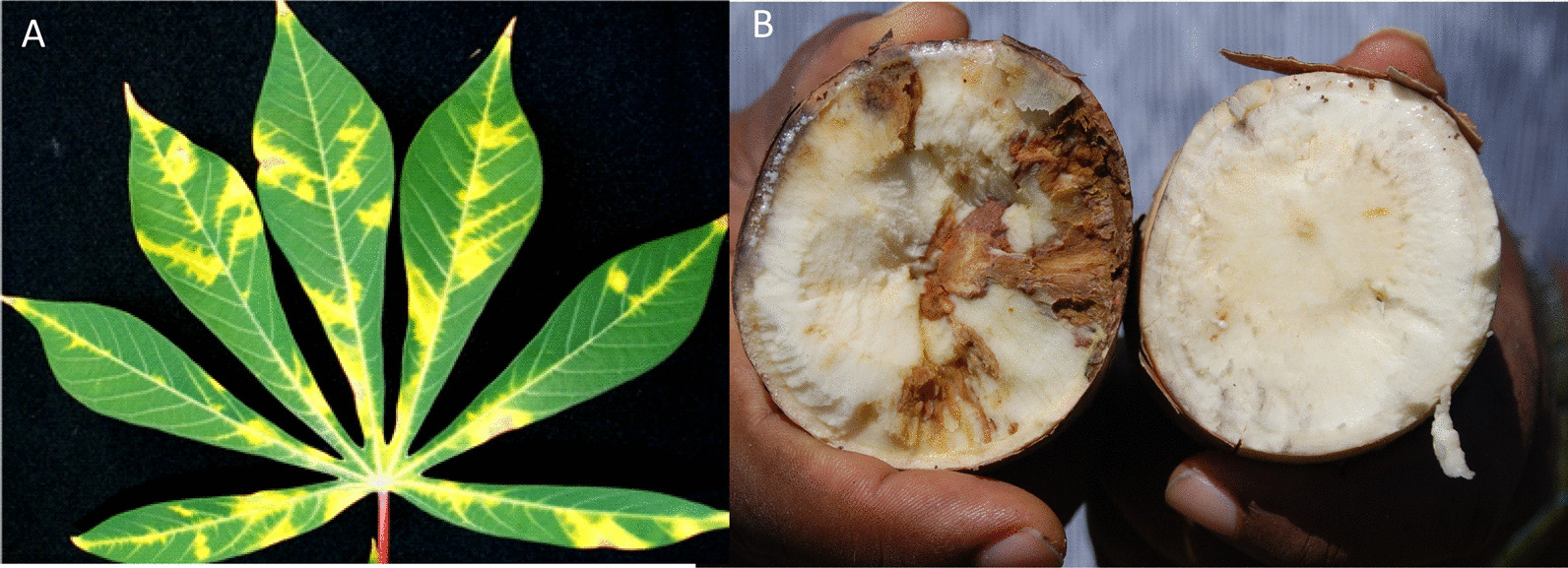
The phenylalanine ammonia lyase genes play crucial role in plant response to biotic and abiotic stresses. In this study, we characterized the role of PAL genes in increasing resistance to the Cassava brown streak virus that causes the economically important cassava brown streak disease (CBSD) on cassava in Africa.
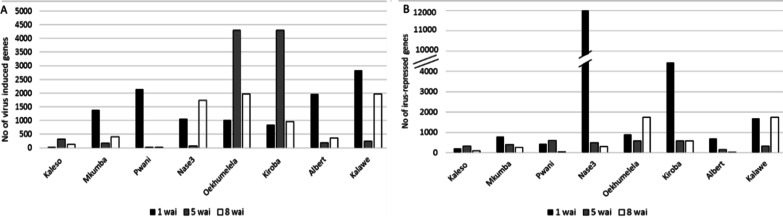
The whole transcriptomes of eight cassava varieties differing in resistance to CBSD were obtained at 1, 5 and 8 weeks after CBSV infection.
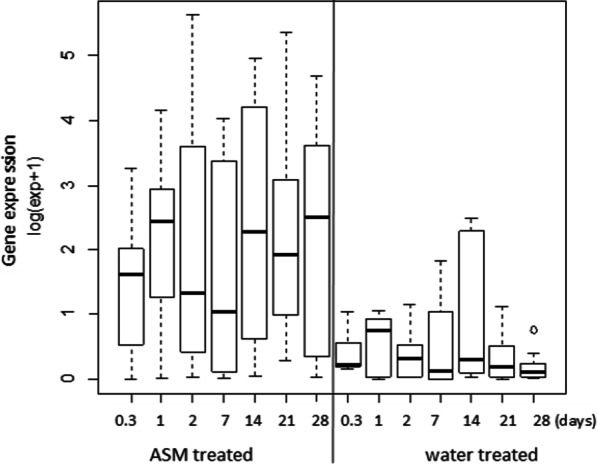
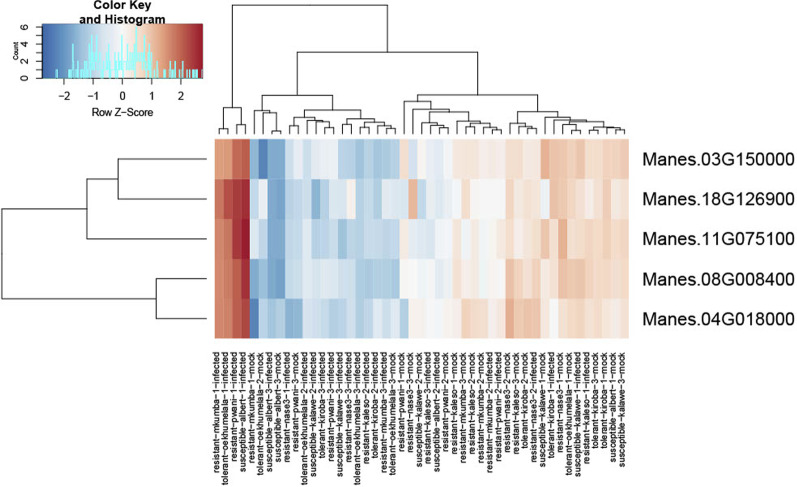
Analysis of RNA-Seq data identified the overexpression of PAL1, PAL2, cinnamic acid and two chalcone synthase genes in CBSD-resistant cassava varieties, which was subsequently confirmed by RT-qPCR. The exogenous application of Acibenzolar-S-Methyl induced PAL1 gene expression to enhance resistance in the susceptible var. Kalawe. In contrast, the silencing of PAL1 by RNA interference led to increased susceptibility of the resistant var. Kaleso to CBSD.
PAL1 gene of the phenylpropanoid pathway has a major role in inducing resistance to CBSD in cassava plants and its early induction is key for CBSD resistance.
苯丙氨酸解氨酶基因在植物应对生物和非生物胁迫中起着至关重要的作用。在这项研究中,我们研究了 PAL 基因在提高对木薯细菌性条斑病毒(引起非洲重要的木薯细菌性条斑病(CBSD)的病毒)抗性中的作用。
在感染 CBSV 后 1、5 和 8 周,获得了对 CBSD 表现出不同抗性的八种木薯品种的全转录组。
通过 RNA-Seq 数据分析,发现 PAL1、PAL2、肉桂酸和两个查尔酮合酶基因在抗 CBSD 的木薯品种中表达上调,随后通过 RT-qPCR 得到了验证。外源施用 Acibenzolar-S-Methyl 诱导 PAL1 基因表达,从而增强了易感品种 Kalawe 的抗性。相比之下,通过 RNA 干扰沉默 PAL1 导致抗性品种 Kaleso 对 CBSD 的易感性增加。
苯丙烷途径的 PAL1 基因在诱导木薯植株对 CBSD 的抗性中起主要作用,其早期诱导是 CBSD 抗性的关键。