Department of Biochemistry, Molecular Biology, and Biophysics, University of Minnesota-Twin Cities, St. Paul, MN, USA.
BioTechnology Institute, University of Minnesota-Twin Cities, St. Paul, MN, USA.
Nat Commun. 2021 Sep 9;12(1):5355. doi: 10.1038/s41467-021-25575-7.
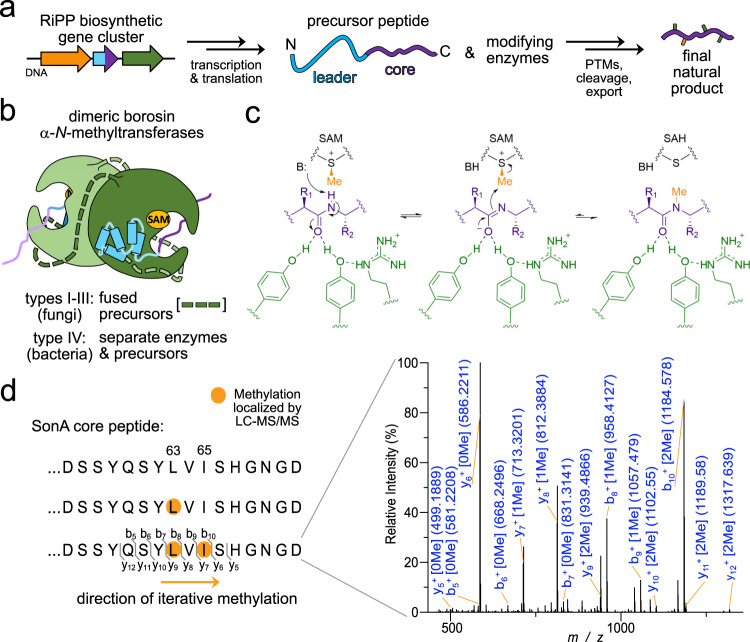
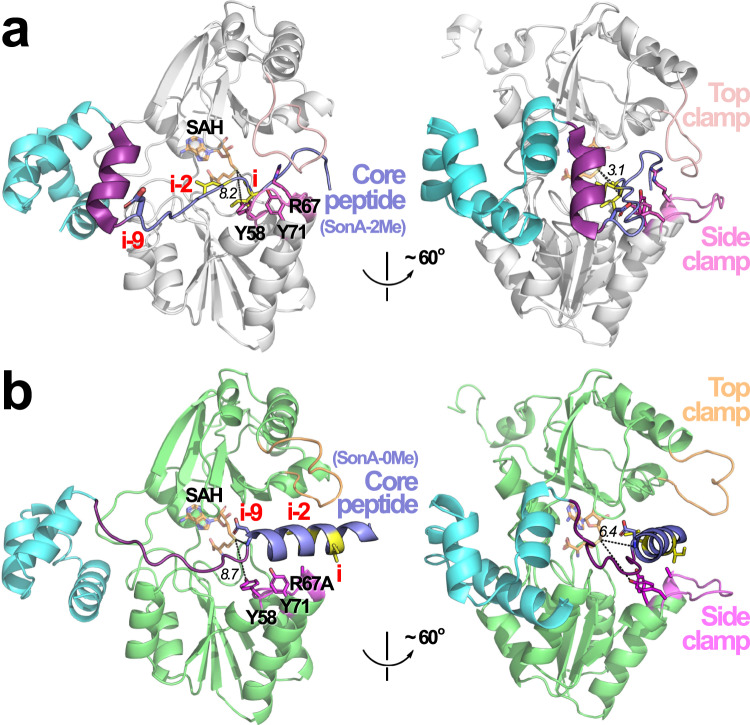
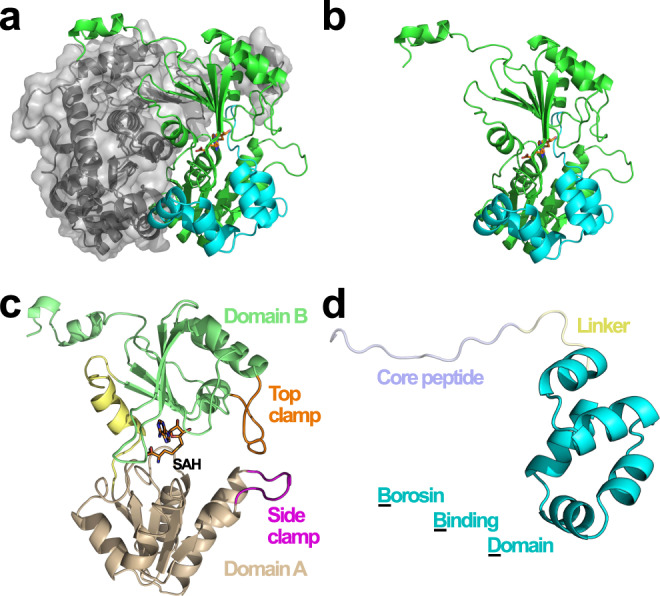
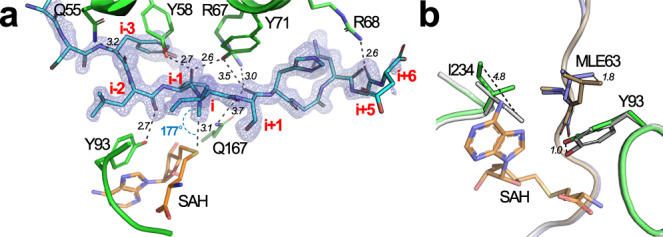
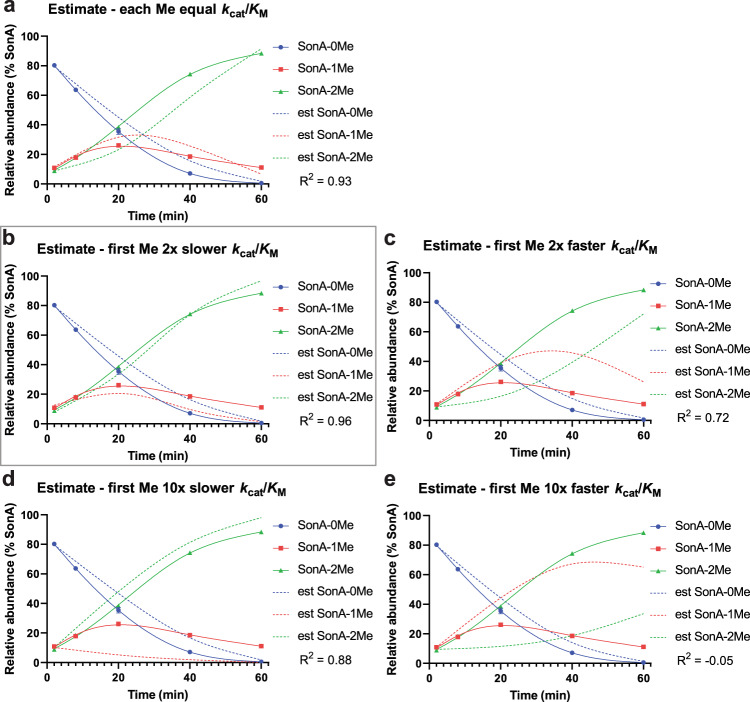
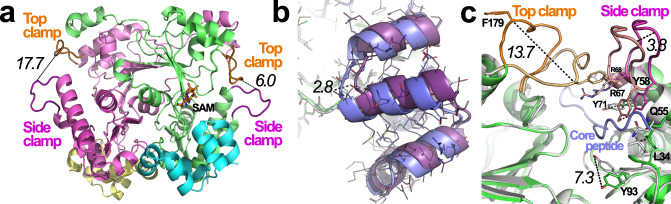
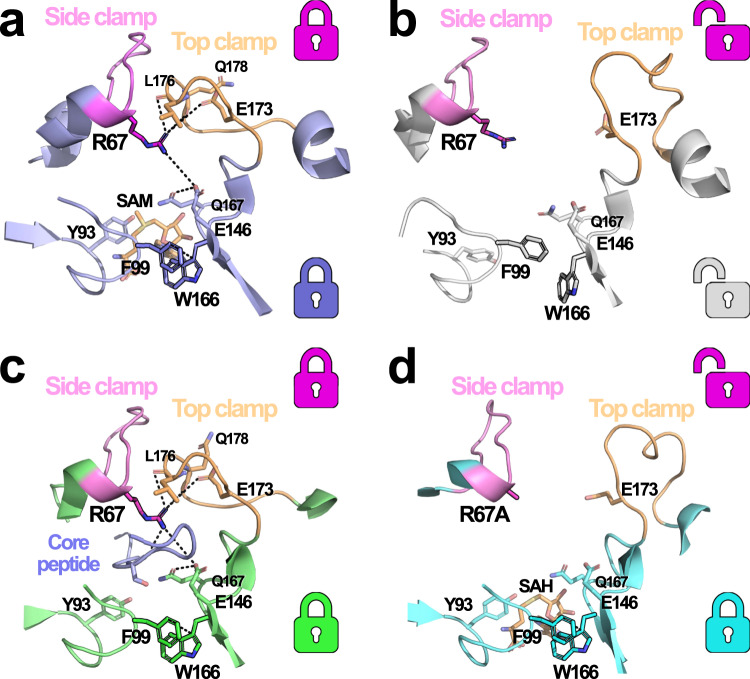
Peptide backbone α-N-methylations change the physicochemical properties of amide bonds to provide structural constraints and other favorable characteristics including biological membrane permeability to peptides. Borosin natural product pathways are the only known ribosomally encoded and posttranslationally modified peptides (RiPPs) pathways to incorporate backbone α-N-methylations on translated peptides. Here we report the discovery of type IV borosin natural product pathways (termed 'split borosins'), featuring an iteratively acting α-N-methyltransferase and separate precursor peptide substrate from the metal-respiring bacterium Shewanella oneidensis. A series of enzyme-precursor complexes reveal multiple conformational states for both α-N-methyltransferase and substrate. Along with mutational and kinetic analyses, our results give rare context into potential strategies for iterative maturation of RiPPs.
肽主链的α-N-甲基化改变酰胺键的物理化学性质,为肽提供结构约束和其他有利特性,包括生物膜对肽的通透性。Borosin 天然产物途径是唯一已知的核糖体编码和翻译后修饰肽(RiPPs)途径,可在翻译后的肽上掺入主链α-N-甲基化。在这里,我们报告了发现 IV 型 Borosin 天然产物途径(称为“分裂 Borosin”),其特征是具有迭代作用的α-N-甲基转移酶和来自金属呼吸细菌 Shewanella oneidensis 的单独前体肽底物。一系列酶-前体复合物揭示了α-N-甲基转移酶和底物的多种构象状态。通过突变和动力学分析,我们的结果为 RiPPs 的迭代成熟提供了罕见的潜在策略。