Department of Oral and Maxillofacial Surgery, Amsterdam UMC Location AMC and Academic Centre for Dentistry Amsterdam (ACTA), University of Amsterdam, Meibergdreef 9, 1105 AZ, Amsterdam, The Netherlands.
Radboudumc 3DLab The Netherlands, Radboud University Medical Center, Radboud Institute for Health Sciences, Geert Grooteplein Zuid 10, 6525 GA, Nijmegen, The Netherlands.
Sci Rep. 2021 Sep 10;11(1):18080. doi: 10.1038/s41598-021-97706-5.
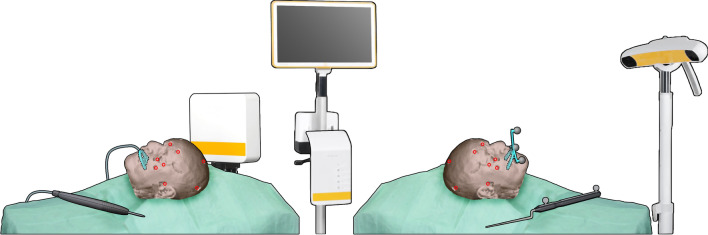
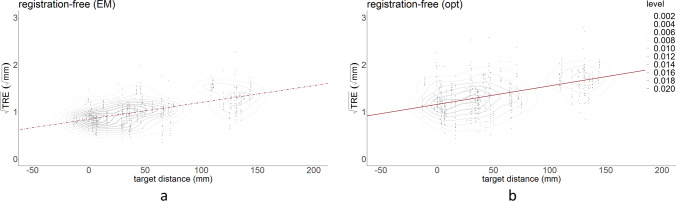
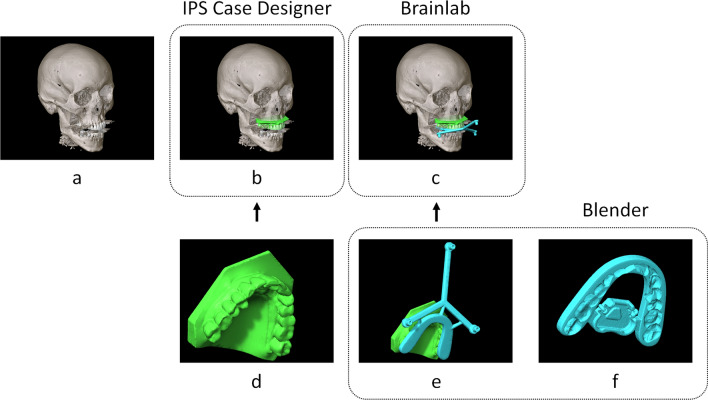
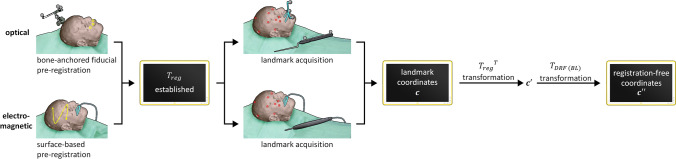
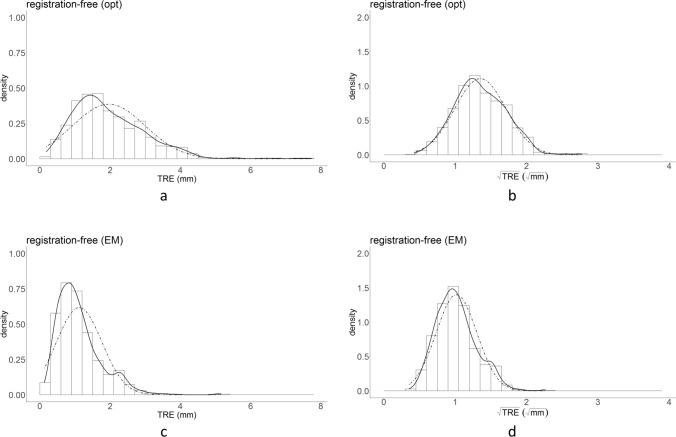
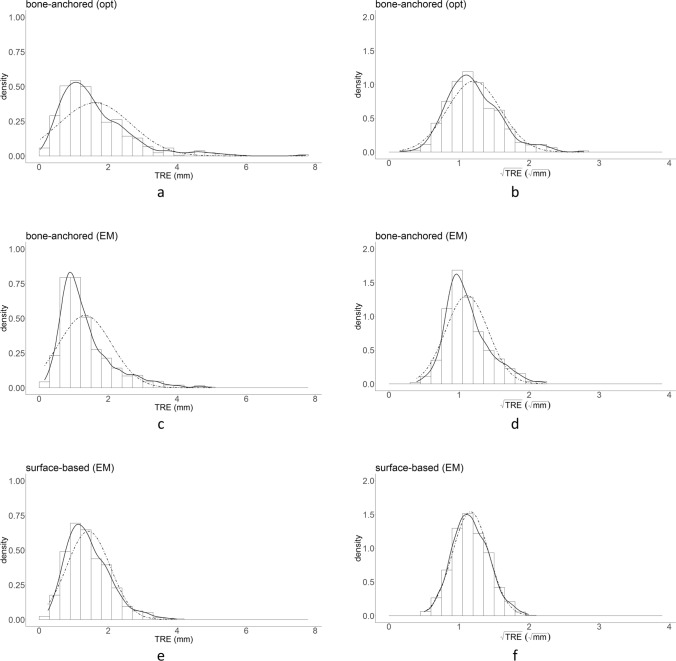
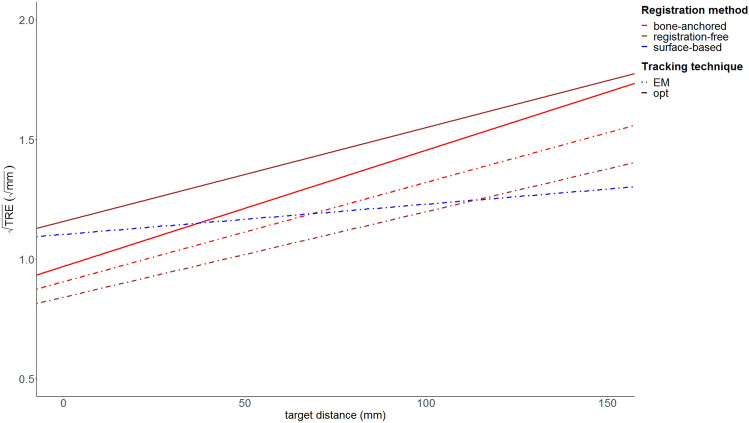
The accuracy of intra-operative navigation is largely dependent on the intra-operative registration procedure. Next to accuracy, important factors to consider for the registration procedure are invasiveness, time consumption, logistical demands, user-dependency, compatibility and radiation exposure. In this study, a workflow is presented that eliminates the need for a registration procedure altogether: registration-free navigation. In the workflow, the maxillary dental model is fused to the pre-operative imaging data using commercially available virtual planning software. A virtual Dynamic Reference Frame on a splint is designed on the patient's fused maxillary dentition: during surgery, the splint containing the reference frame is positioned on the patient's dentition. This alleviates the need for any registration procedure, since the position of the reference frame is known from the design. The accuracy of the workflow was evaluated in a cadaver set-up, and compared to bone-anchored fiducial, virtual splint and surface-based registration. The results showed that accuracy of the workflow was greatly dependent on tracking technique used: the workflow was the most accurate with electromagnetic tracking, but the least accurate with optical tracking. Although this method offers a time-efficient, non-invasive, radiation-free automatic alternative for registration, clinical implementation is hampered by the unexplained differences in accuracy between tracking techniques.
术中导航的准确性在很大程度上取决于术中配准过程。除了准确性之外,配准过程需要考虑的重要因素还有:侵入性、耗时、后勤需求、对用户的依赖性、兼容性和辐射暴露。在本研究中,提出了一种完全不需要配准过程的工作流程:无配准导航。在该工作流程中,上颌牙科模型使用市售的虚拟规划软件与术前成像数据融合。在患者融合的上颌牙列上设计一个带有虚拟参考框架的夹板:手术期间,将带有参考框架的夹板放置在患者的牙列上。这减轻了对任何配准过程的需求,因为参考框架的位置是从设计中已知的。该工作流程的准确性在尸体模型中进行了评估,并与骨锚定基准、虚拟夹板和基于表面的配准进行了比较。结果表明,工作流程的准确性在很大程度上取决于所使用的跟踪技术:电磁跟踪的准确性最高,但光学跟踪的准确性最低。尽管该方法提供了一种高效、无创、无辐射的自动配准替代方案,但由于跟踪技术之间存在无法解释的准确性差异,其临床应用受到阻碍。