Center for Integrative Brain Research, Seattle Children's Research Institute, Seattle, WA 98101, USA.
Department of Neuroscience, The Scripps Research Institute, Jupiter, FL 33458, USA.
Hum Mol Genet. 2022 Feb 21;31(4):510-522. doi: 10.1093/hmg/ddab235.
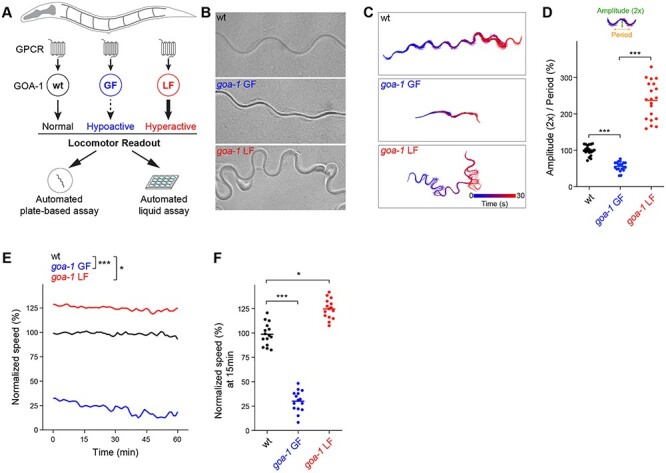
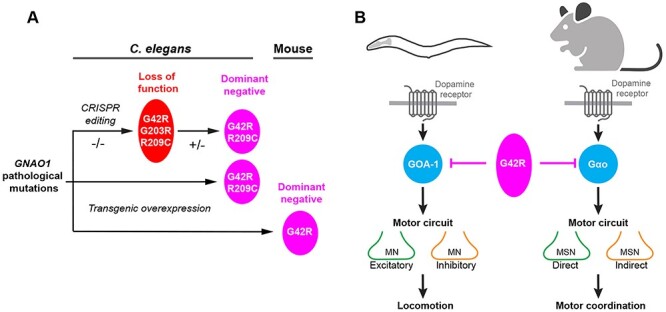
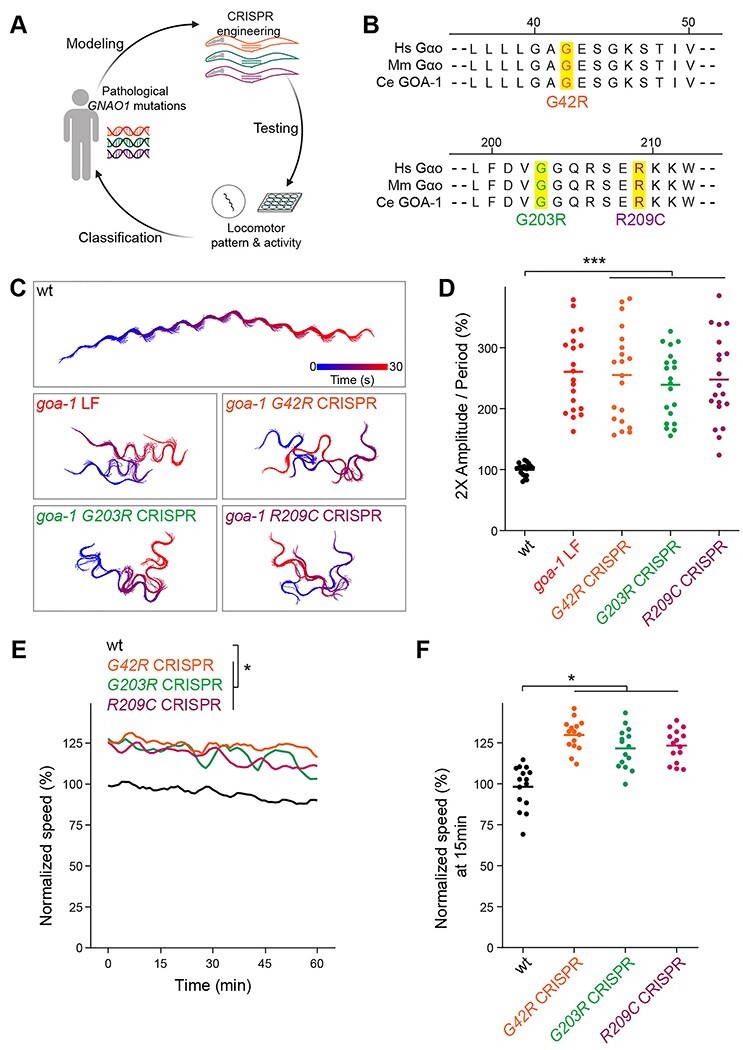
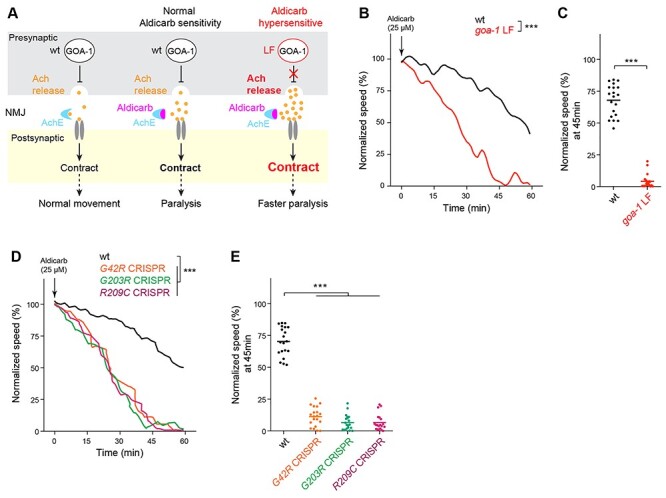
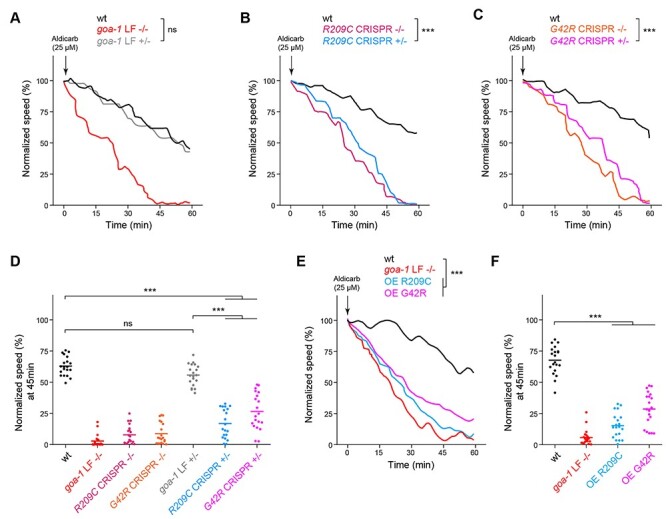
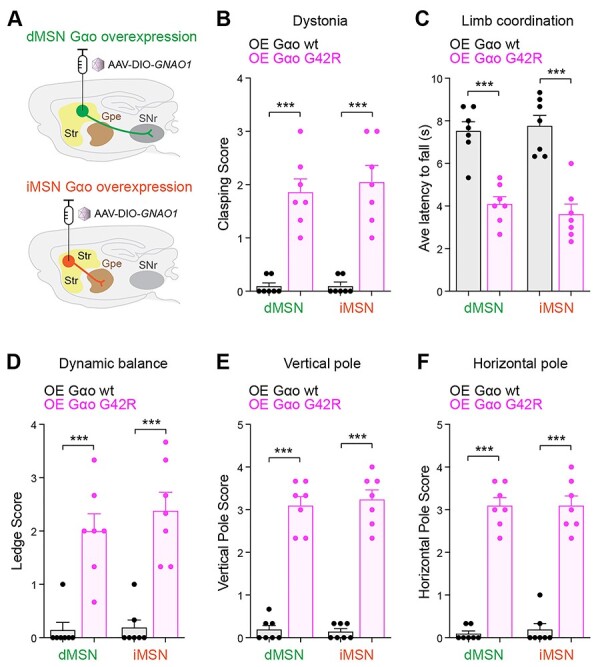
GNAO1 encephalopathy is a neurodevelopmental disorder with a spectrum of symptoms that include dystonic movements, seizures and developmental delay. While numerous GNAO1 mutations are associated with this disorder, the functional consequences of pathological variants are not completely understood. Here, we deployed the invertebrate C. elegans as a whole-animal behavioral model to study the functional effects of GNAO1 disorder-associated mutations. We tested several pathological GNAO1 mutations for effects on locomotor behaviors using a combination of CRISPR/Cas9 gene editing and transgenic overexpression in vivo. We report that all three mutations tested (G42R, G203R and R209C) result in strong loss of function defects when evaluated as homozygous CRISPR alleles. In addition, mutations produced dominant negative effects assessed using both heterozygous CRISPR alleles and transgenic overexpression. Experiments in mice confirmed dominant negative effects of GNAO1 G42R, which impaired numerous motor behaviors. Thus, GNAO1 pathological mutations result in conserved functional outcomes across animal models. Our study further establishes the molecular genetic basis of GNAO1 encephalopathy, and develops a CRISPR-based pipeline for functionally evaluating mutations associated with neurodevelopmental disorders.
GNAO1 脑病是一种神经发育障碍,其症状谱包括张力障碍运动、癫痫发作和发育迟缓。虽然许多 GNAO1 突变与这种疾病有关,但病理变异的功能后果尚不完全清楚。在这里,我们利用无脊椎动物秀丽隐杆线虫作为一种全动物行为模型,研究 GNAO1 紊乱相关突变的功能影响。我们使用 CRISPR/Cas9 基因编辑和体内转基因过表达的组合,测试了几种病理性 GNAO1 突变对运动行为的影响。我们报告说,在作为纯合 CRISPR 等位基因进行评估时,测试的三种突变(G42R、G203R 和 R209C)都导致强烈的功能丧失缺陷。此外,使用杂合 CRISPR 等位基因和转基因过表达评估的突变产生显性负效应。在小鼠中的实验证实了 GNAO1 G42R 的显性负效应,该突变损害了许多运动行为。因此,GNAO1 病理性突变在动物模型中产生保守的功能结果。我们的研究进一步确立了 GNAO1 脑病的分子遗传基础,并开发了一种基于 CRISPR 的方法,用于功能评估与神经发育障碍相关的突变。