Wang Lu, Wang Xinyue, Yang Fengmin, Liu Ying, Meng Lu, Pang Yan, Zhang Mengmeng, Chen Fangjie, Pan Chao, Lin Sisi, Zhu Xinyuan, Leong Kam W, Liu Jinyao
Shanghai Key Laboratory for Nucleic Acid Chemistry and Nanomedicine, Institute of Molecular Medicine, State Key Laboratory of Oncogenes and Related Genes, Shanghai Cancer Institute, Renji Hospital, School of Medicine, Shanghai Jiao Tong University, Shanghai 200127, China.
School of Chemistry and Chemical Engineering, State Key Laboratory of Metal Matrix Composites, Shanghai Jiao Tong University, Shanghai 200240, China.
Nano Today. 2021 Oct;40:101280. doi: 10.1016/j.nantod.2021.101280. Epub 2021 Sep 4.
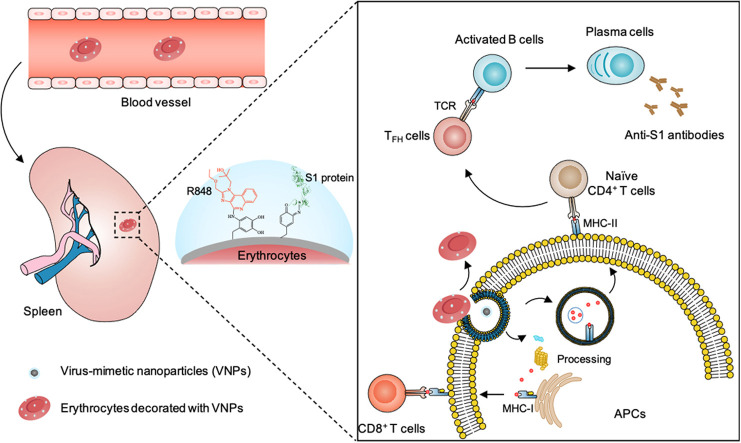
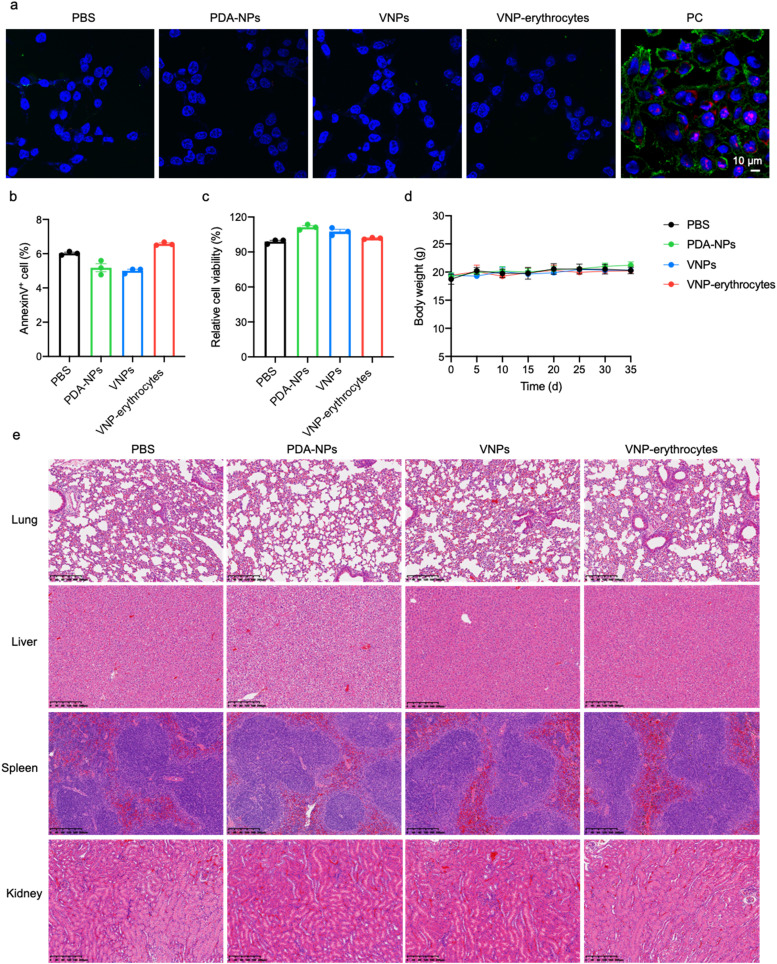
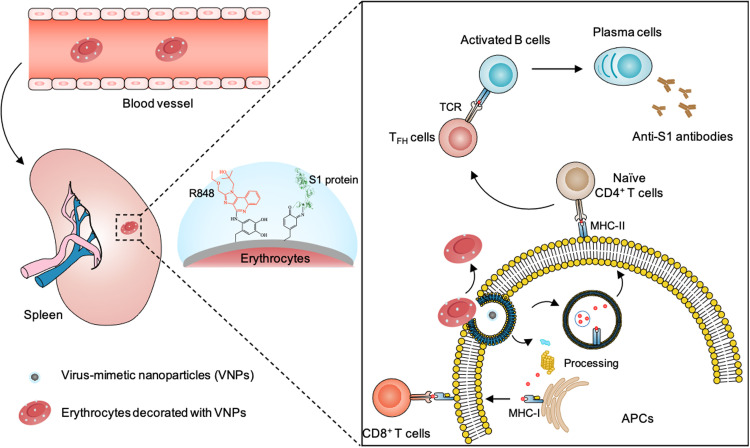
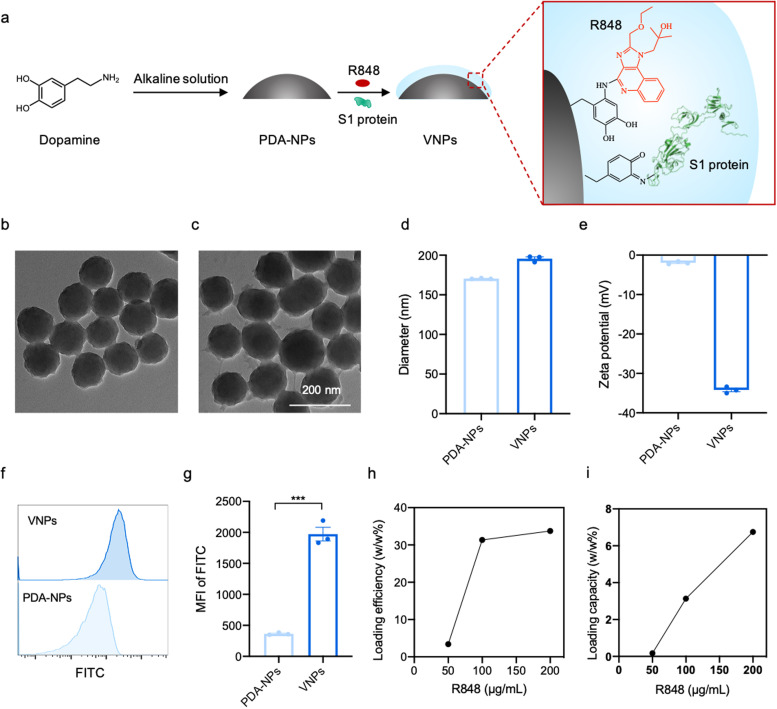
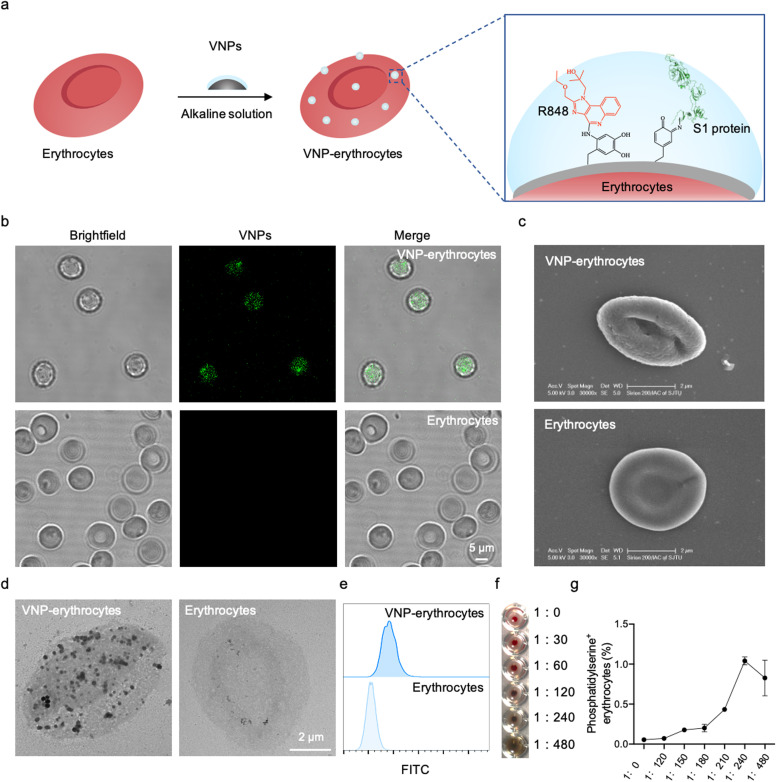
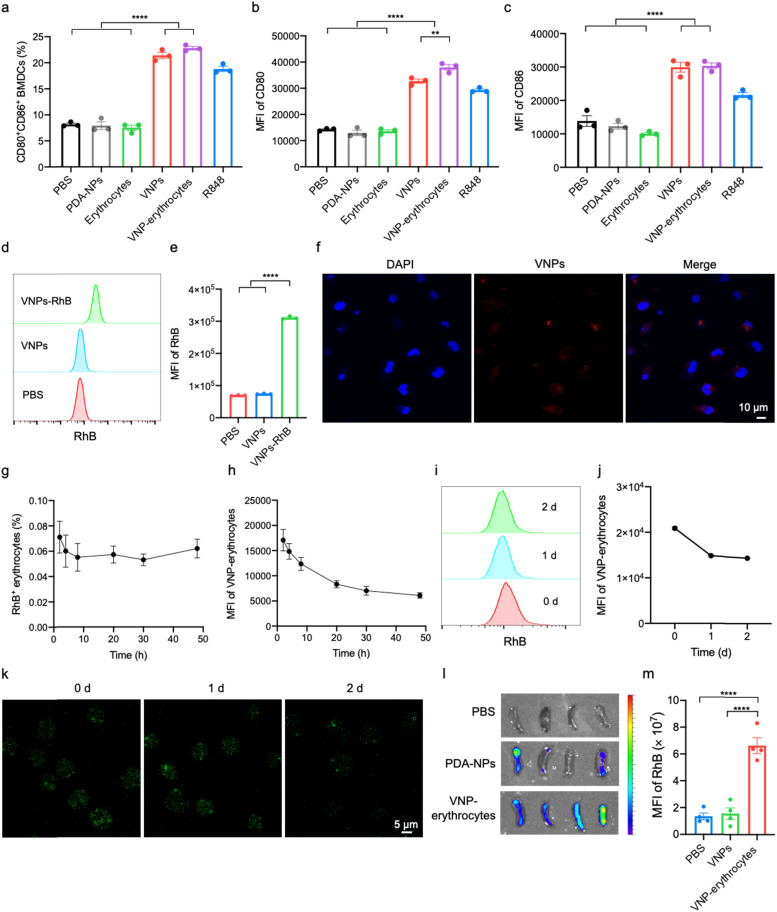
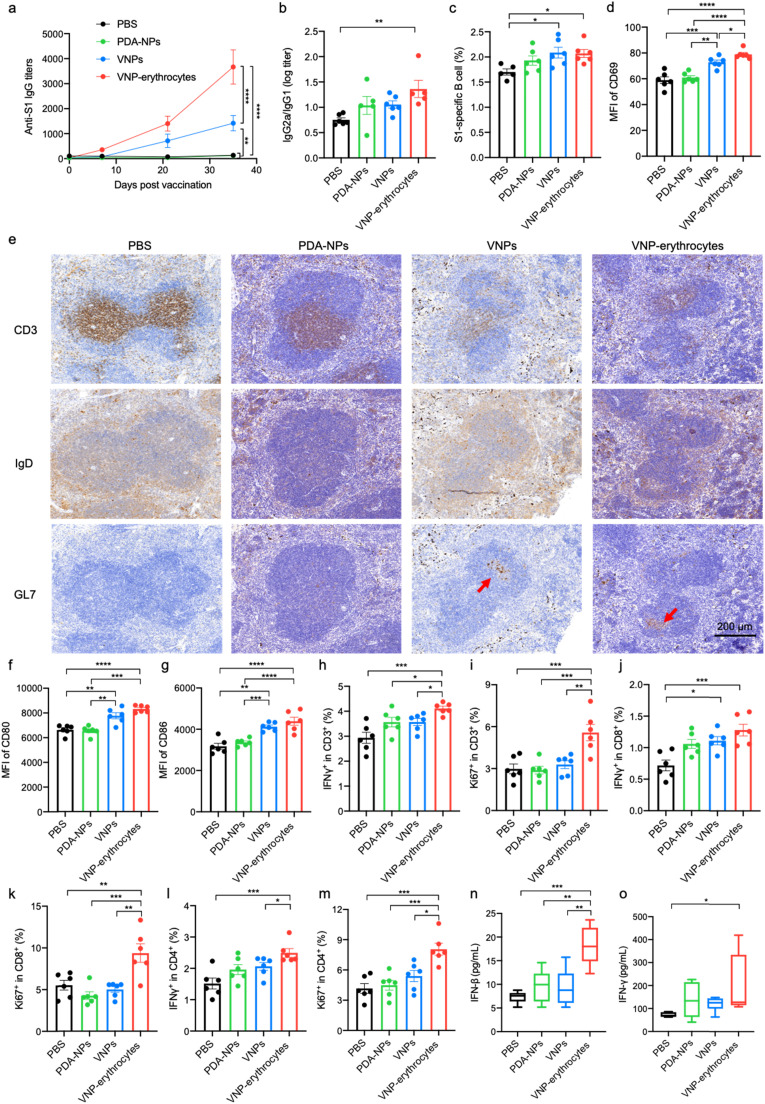
New vaccine technologies are urgently needed to produce safe and effective vaccines in a more timely manner to prevent future infectious disease pandemics. Here, we describe erythrocyte-mediated systemic antiviral immunization, a versatile vaccination strategy that boosts antiviral immune responses by using erythrocytes decorated with virus-mimetic nanoparticles carrying a viral antigen and a Toll-like receptor (TLR) agonist. As a proof of concept, polydopamine nanoparticles were synthesized via a simple in situ polymerization in which the nanoparticles were conjugated with the SARS-CoV-2 spike protein S1 subunit and the TLR7/8 agonist R848. The resulting SARS-CoV-2 virus-mimetic nanoparticles were attached to erythrocytes via catechol groups on the nanoparticle. Erythrocytes naturally home to the spleen and interact with the immune system. Injection of the nanoparticle-decorated erythrocytes into mice resulted in greater maturation and activation of antigen-presenting cells, humoral and cellular immune responses in the spleen, production of S1-specific immunoglobulin G (IgG) antibodies, and systemic antiviral T cell responses than a control group treated with the nanoparticles alone, with no significant negative side effects. These results show that erythrocyte-mediated systemic antiviral immunization using viral antigen- and TLR agonist-presenting polydopamine nanoparticles-a generalizable method applicable to many viral infections-is effective new approach to developing vaccines against severe infectious diseases.
迫切需要新的疫苗技术,以便更及时地生产安全有效的疫苗,预防未来的传染病大流行。在此,我们描述了红细胞介导的全身抗病毒免疫,这是一种通用的疫苗接种策略,通过使用装饰有携带病毒抗原和Toll样受体(TLR)激动剂的病毒模拟纳米颗粒的红细胞来增强抗病毒免疫反应。作为概念验证,通过简单的原位聚合合成了聚多巴胺纳米颗粒,其中纳米颗粒与严重急性呼吸综合征冠状病毒2(SARS-CoV-2)刺突蛋白S1亚基和TLR7/8激动剂R848偶联。所得的SARS-CoV-2病毒模拟纳米颗粒通过纳米颗粒上的儿茶酚基团附着于红细胞。红细胞自然归巢至脾脏并与免疫系统相互作用。将纳米颗粒装饰的红细胞注射到小鼠体内,与仅用纳米颗粒处理的对照组相比,导致脾脏中抗原呈递细胞的更大成熟和激活、体液和细胞免疫反应、S1特异性免疫球蛋白G(IgG)抗体的产生以及全身抗病毒T细胞反应,且无明显负面副作用。这些结果表明,使用呈现病毒抗原和TLR激动剂的聚多巴胺纳米颗粒进行红细胞介导的全身抗病毒免疫——一种适用于多种病毒感染的通用方法——是开发针对严重传染病疫苗的有效新方法。