Yang Jinxiu, Li Shiyi, He Leren, Chen Minliang
Department of Burn and Plastic Surgery, the Fourth Medical Centre, Chinese People's Liberation Army General Hospital, No. 51 Fucheng Road, Haidian District, Beijing, 100038, China.
7th Department of Plastic Surgery, Plastic Surgery Hospital, Chinese Academy of Medical Sciences and Peking Union Medical College, No.33 Ba Dachu Road, Shi Jingshan District, Beijing, 100144, China.
Burns Trauma. 2021 Sep 11;9:tkab020. doi: 10.1093/burnst/tkab020. eCollection 2021.
The clinical features of keloids consist of aberrant proliferation, secretion, differentiation and apoptosis of keloid dermis-derived fibroblasts (KFBs). Notably, the apoptosis rate of KFBs is lower than the proliferation rate. Though the anti-fibrotic effect of adipose-derived stem cells (ADSCs) on keloids has become a hot topic of research, the exact anti-fibrotic mechanism of the paracrine effect remains unclear. This study aimed to find out how the conditioned medium of ADSCs (ADSC-CM) exerts an anti-fibrotic effect in KFBs.
KFBs and ADSCs were extracted and cultured. Then, ADSC-CM was prepared. Whether ADSC-CM could inhibit KFB growth and induce apoptosis was verified by the use of a cell counting kit-8, an 5-Ethynyl-2-deoxyuridine (Edu) kit and flow cytometry. The expressions of cyclooxygenase-1 (COX-1), COX-2, caspase 3 and B-cell lymphoma-2 (Bcl-2) in ADSC-CM-cultured KFBs were tested by real-time PCR and western blotting. To clarify the role of COX-2 in ADSC-CM-induced KFB apoptosis, a specific COX-2 inhibitor, celecoxib, was applied to KFBs cultured in ADSC-CM. Moreover, we tested the production of arachidonic acid (AA) and prostaglandin E2 (PGE2) by ELISA. Then, we established a keloid transplantation model in a nude mouse to validate the therapeutic effect .
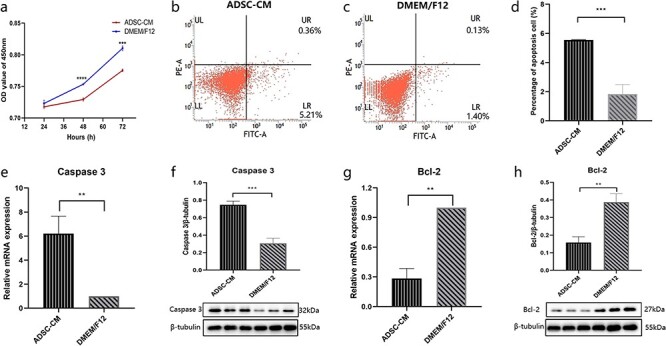
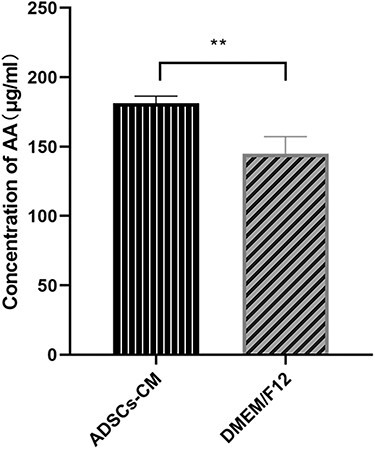
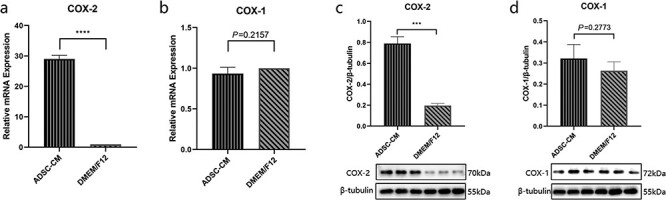
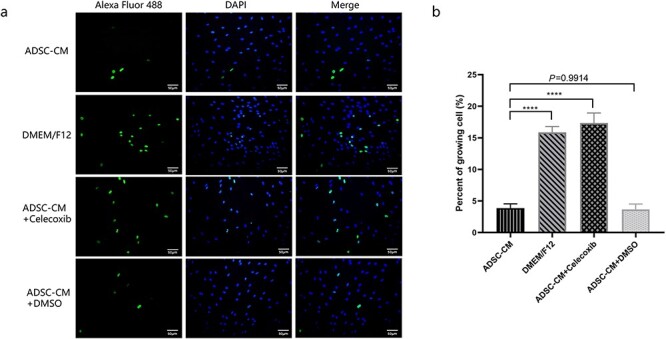
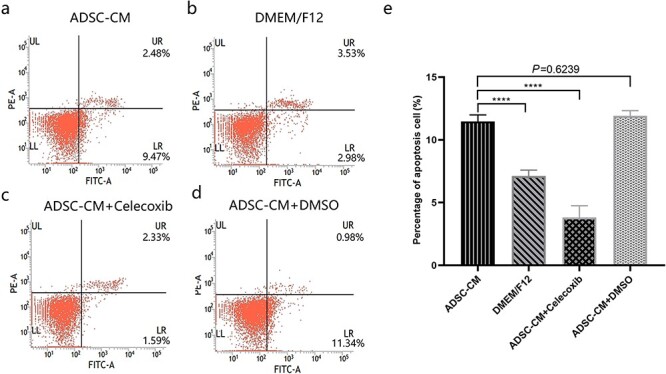
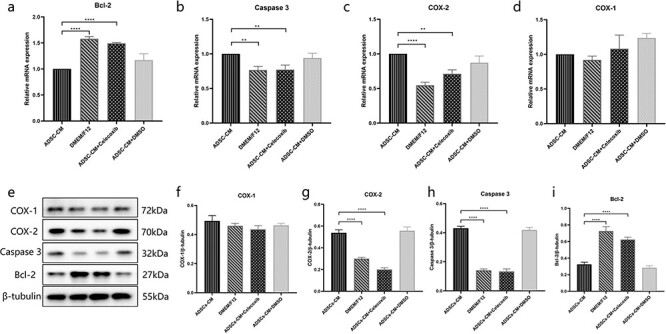
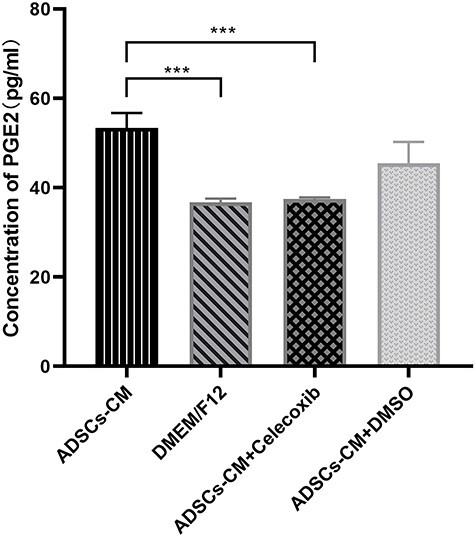
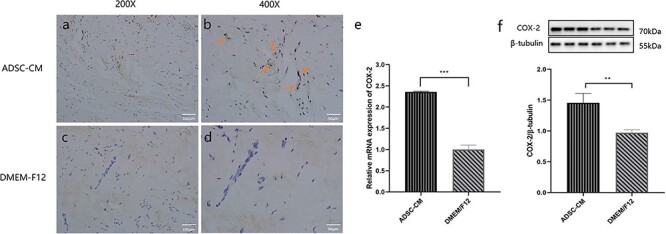
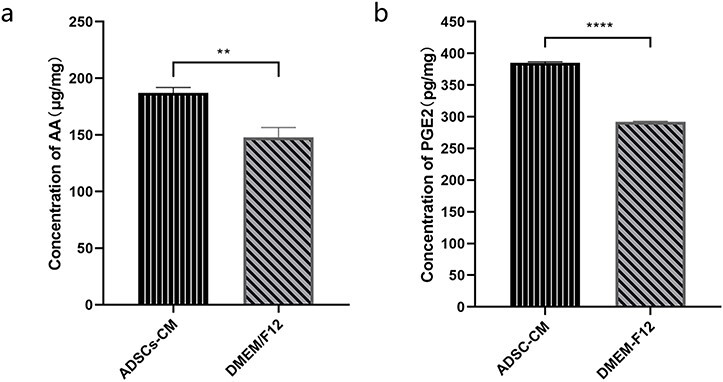
The proliferation ability of KFBs cultured in ADSC-CM was found to be weakened and apoptosis was significantly increased. Caspase 3 expression was significantly upregulated and Bcl-2 was downregulated in ADSC-CM-cultured KFBs. Furthermore, ADSC-CM strikingly elevated COX-2 mRNA and protein expressions, but COX-1 expression was unaltered. COX-2 inhibitors reduced ADSC-CM-induced apoptosis. Additionally, COX-2 inhibition blocked the elevation of caspase 3 and reversed the decrease in Bcl-2 expression. ADSC-CM increased PGE2 levels by 1.5-fold and this effect was restrained by COX-2 inhibition. In the nude mouse model, expressions of AA, COX-2 and PGE2 were higher in the translated keloid tissues after ADSC-CM injection than in the controls.
We showed activation of the COX-2/PGE2 cascade in KFBs in response to ADSC-CM. By employing a specific COX-2 inhibitor, COX-2/PGE2 cascade activation played a crucial role in mediating the ADSC-CM-induced KFB apoptosis and anti-proliferation effects.
瘢痕疙瘩的临床特征包括瘢痕疙瘩真皮来源成纤维细胞(KFBs)的异常增殖、分泌、分化和凋亡。值得注意的是,KFBs的凋亡率低于增殖率。尽管脂肪来源干细胞(ADSCs)对瘢痕疙瘩的抗纤维化作用已成为研究热点,但其旁分泌效应的确切抗纤维化机制仍不清楚。本研究旨在探究ADSCs条件培养基(ADSC-CM)如何在KFBs中发挥抗纤维化作用。
提取并培养KFBs和ADSCs。然后,制备ADSC-CM。使用细胞计数试剂盒-8、5-乙炔基-2'-脱氧尿苷(Edu)试剂盒和流式细胞术验证ADSC-CM是否能抑制KFB生长并诱导凋亡。通过实时聚合酶链反应和蛋白质免疫印迹法检测ADSC-CM培养的KFBs中环氧合酶-1(COX-1)、COX-2、半胱天冬酶3和B细胞淋巴瘤-2(Bcl-2)的表达。为阐明COX-2在ADSC-CM诱导的KFB凋亡中的作用,将特异性COX-2抑制剂塞来昔布应用于ADSC-CM培养的KFBs。此外,我们通过酶联免疫吸附测定法检测花生四烯酸(AA)和前列腺素E2(PGE2)的产生。然后,我们在裸鼠中建立瘢痕疙瘩移植模型以验证治疗效果。
发现ADSC-CM培养的KFBs增殖能力减弱,凋亡显著增加。在ADSC-CM培养的KFBs中,半胱天冬酶3表达显著上调,Bcl-2表达下调。此外,ADSC-CM显著提高COX-2 mRNA和蛋白表达,但COX-1表达未改变。COX-2抑制剂减少了ADSC-CM诱导的凋亡。此外,COX-2抑制阻断了半胱天冬酶3的升高并逆转了Bcl-2表达的降低。ADSC-CM使PGE2水平提高了1.5倍,且这种作用受到COX-2抑制的抑制。在裸鼠模型中,ADSC-CM注射后移植的瘢痕疙瘩组织中AA、COX-2和PGE2的表达高于对照组。
我们发现ADSC-CM可激活KFBs中的COX-2/PGE2级联反应。通过使用特异性COX-2抑制剂,COX-2/PGE2级联反应激活在介导ADSC-CM诱导的KFB凋亡和抗增殖作用中起关键作用。