Department of Pathology, Johns Hopkins University, CRB II, 1550 Orleans St, Baltimore, MD, 21287, USA.
Department of Obstetrics and Gynecology, Uijeongbu St. Mary's Hospital, College of Medicine, The Catholic University of Korea, 271, Cheonbo-Ro, Uijeongbu, Gyeonggi-do, 11765, Republic of Korea.
J Biomed Sci. 2021 Sep 13;28(1):63. doi: 10.1186/s12929-021-00759-x.
Human Papillomavirus type 16 (HPV16) has been associated with a subset of head and neck cancers. Two HPV encoded oncogenic proteins, E6 and E7, are important for the malignant progression of HPV-associated cancers. A spontaneous HPV16 E6/E7-expressing oral tumor model in human HLA-A2 (AAD) transgenic mice will be important for the development of therapeutic HPV vaccines for the control of HPV-associated head and neck cancers.
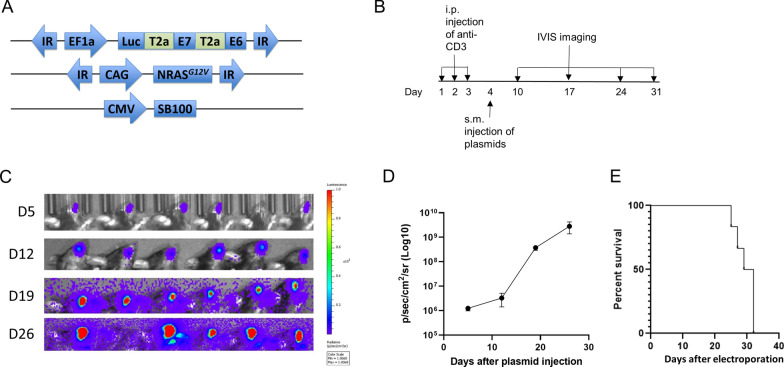
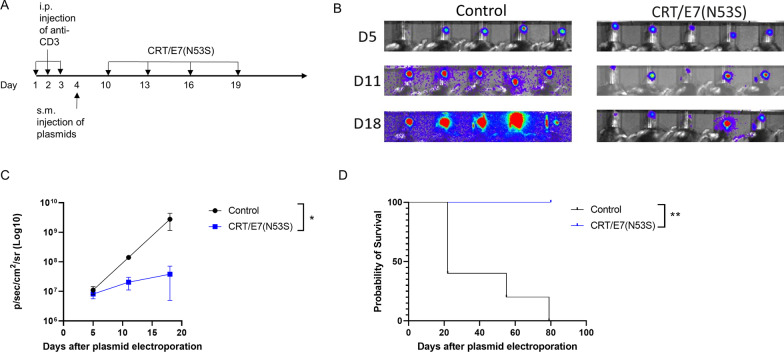
In the current studies, we characterized the HLA-A2 restricted HPV16 E7-specific CD8 + T cell mediated immune responses in the HLA-A2 (AAD) transgenic mice using a therapeutic naked DNA vaccine encoding calreticulin (CRT) linked to a mutated E7(N53S). We also employed oncogenic DNA plasmids that encoded HPV16E6/E7/Luc, NRas, and sleeping beauty transposase for the transfection into the submucosal of oral cavity of the transgenic mice with electroporation to create a spontaneous oral tumor. Furthermore, we characterized the therapeutic antitumor effects of CRT/E7(N53S) DNA vaccine using the spontaneous HPV16 E6/E7-expressing oral tumor model in HLA-A2 (AAD) transgenic mice.
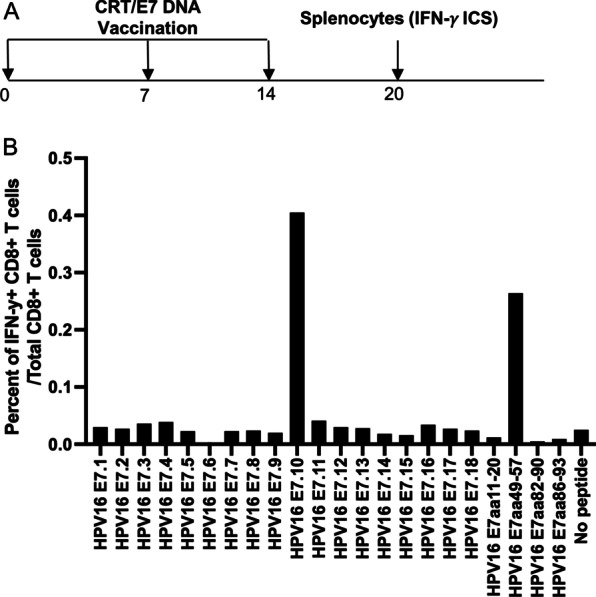
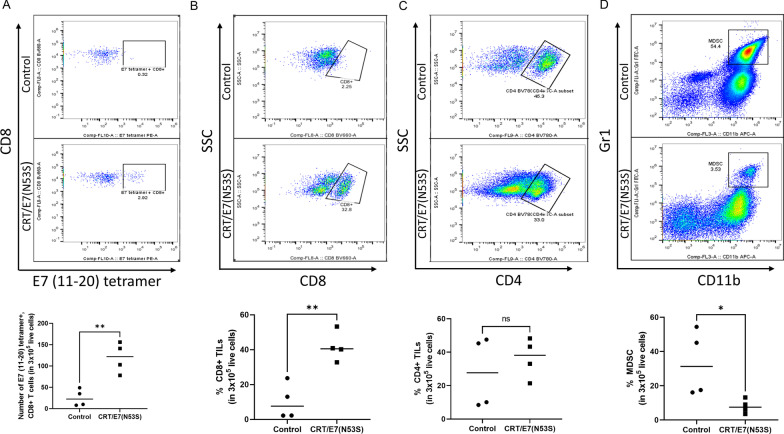
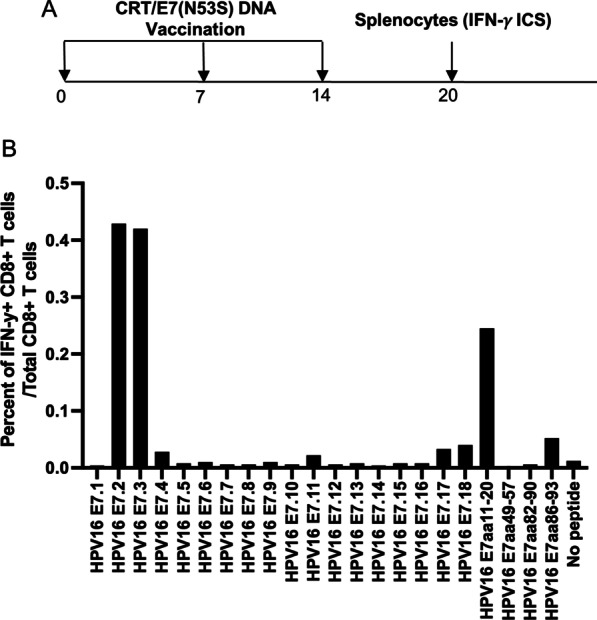
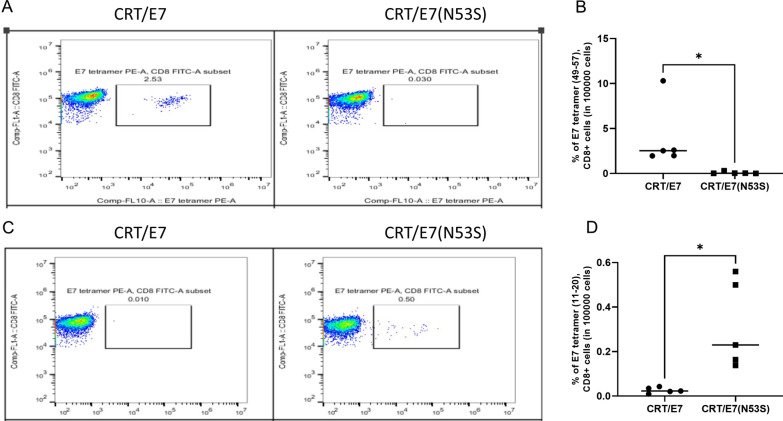
We found that CRT/E7(N53S) DNA vaccine primarily generated human HPV16 E7 peptide (aa11-20) specific CD8 + T cells, as compared to the wild-type CRT/E7 vaccine, which primarily generated murine H-2D restricted E7 peptide (aa49-57) specific CD8 + T cell responses. We also observed transfection of the oncogenic DNA plasmids with electroporation generated spontaneous oral tumor in all of the injected mice. Additionally, treatment with CRT/E7(N53S) DNA vaccine intramuscularly followed by electroporation resulted in significant antitumor effects against the spontaneous HPV16 E6/E7-expressing oral tumors in HLA-A2 (AAD) transgenic mice.
Taken together, the data indicated that the combination of HPV16 E6/E7-expressing DNA, NRas DNA and DNA encoding sleeping beauty transposase is able to generate spontaneous oral tumor in HLA-A2 (AAD) transgenic mice, which can be successfully controlled by treatment with CRT/E7(N53S) DNA vaccine. The translational potential of our studies are discussed.
人乳头瘤病毒 16 型(HPV16)与一部分头颈部癌症有关。两种 HPV 编码的致癌蛋白,E6 和 E7,对于 HPV 相关癌症的恶性进展很重要。在 HLA-A2(AAD)转基因小鼠中建立一种自发的 HPV16 E6/E7 表达的口腔肿瘤模型对于开发治疗性 HPV 疫苗控制 HPV 相关头颈部癌症将非常重要。
在目前的研究中,我们使用一种编码 CRT 与突变 E7(N53S)融合的治疗性裸 DNA 疫苗,在 HLA-A2(AAD)转基因小鼠中鉴定了 HPV16 E7 特异性 CD8+T 细胞介导的免疫反应。我们还使用了编码 HPV16E6/E7/Luc、NRAS 和睡眠美女转座酶的致癌 DNA 质粒,通过电穿孔转染到转基因小鼠的粘膜下,以创建自发的口腔肿瘤。此外,我们使用 HLA-A2(AAD)转基因小鼠中自发表达 HPV16 E6/E7 的口腔肿瘤模型,研究了 CRT/E7(N53S)DNA 疫苗的治疗抗肿瘤作用。
我们发现,与野生型 CRT/E7 疫苗相比,CRT/E7(N53S)DNA 疫苗主要产生人类 HPV16 E7 肽(aa11-20)特异性 CD8+T 细胞反应,而野生型 CRT/E7 疫苗主要产生鼠 H-2D 限制性 E7 肽(aa49-57)特异性 CD8+T 细胞反应。我们还观察到电穿孔转染致癌 DNA 质粒可在所有注射的小鼠中产生自发的口腔肿瘤。此外,肌肉内注射 CRT/E7(N53S)DNA 疫苗并随后进行电穿孔处理可显著抑制 HLA-A2(AAD)转基因小鼠中自发表达 HPV16 E6/E7 的口腔肿瘤。
综上所述,数据表明,表达 HPV16 E6/E7、NRAS DNA 和编码睡眠美女转座酶的 DNA 的组合能够在 HLA-A2(AAD)转基因小鼠中产生自发的口腔肿瘤,这些肿瘤可以通过 CRT/E7(N53S)DNA 疫苗治疗成功控制。我们还讨论了本研究的转化潜力。