Department of Emergency and Critical Care Medicine, Shanghai General Hospital, Shanghai Jiao Tong University School of Medicine, Shanghai, 201620, China.
Department of Critical Care Medicine, Union Hospital, Tongji Medical College, Huazhong University of Science and Technology, Wuhan, 430022, China.
Virol Sin. 2021 Dec;36(6):1532-1542. doi: 10.1007/s12250-021-00433-4. Epub 2021 Sep 14.
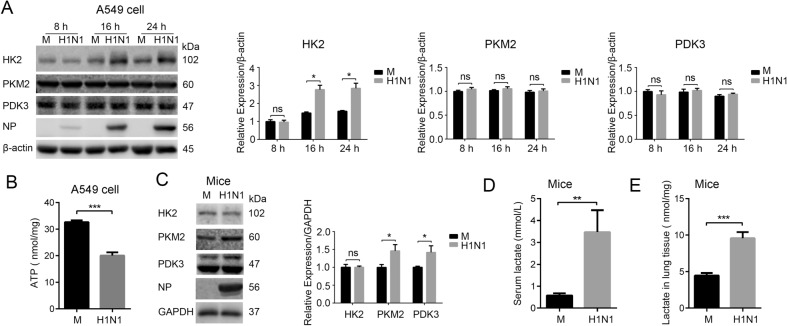
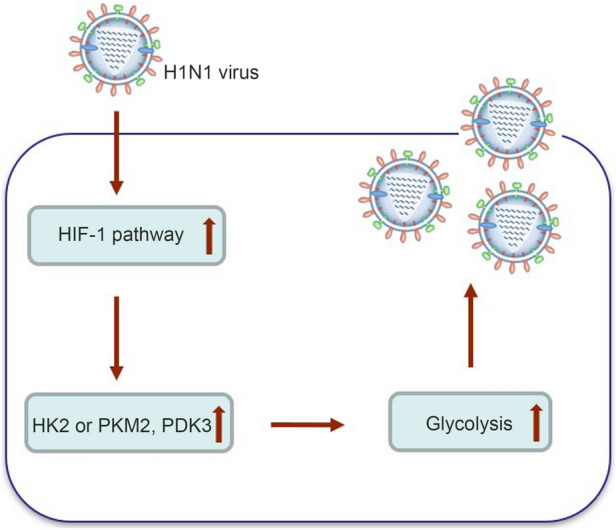
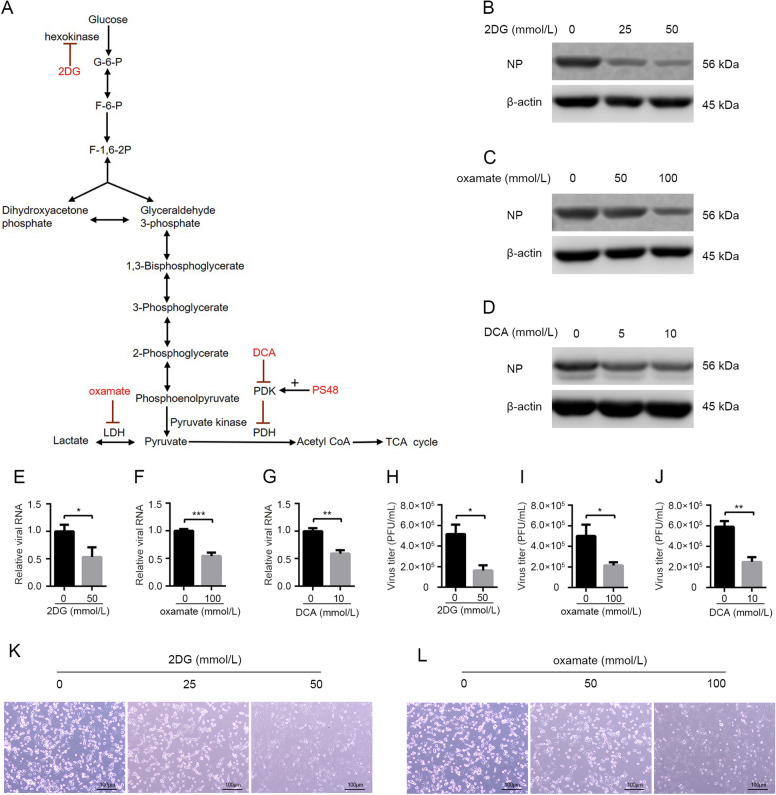
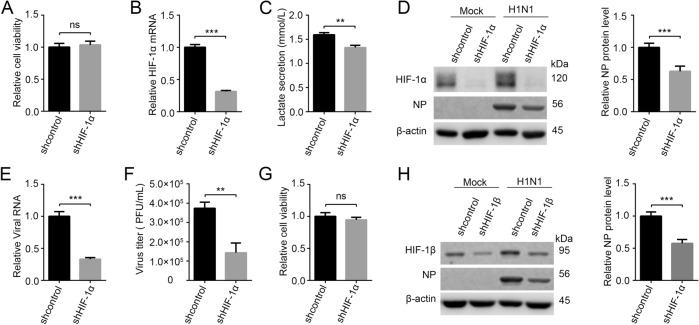
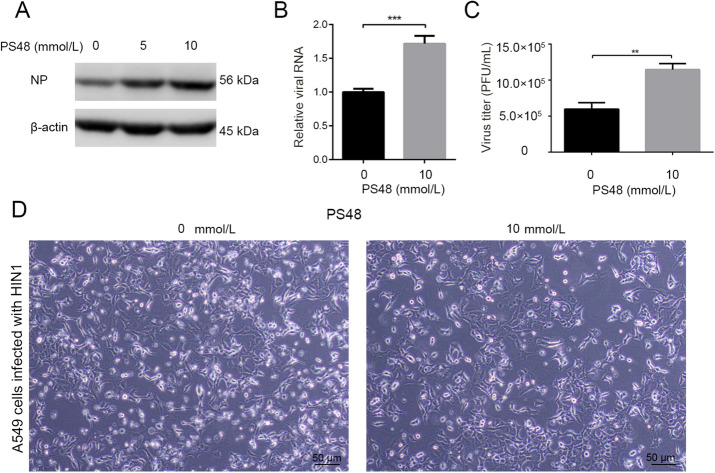
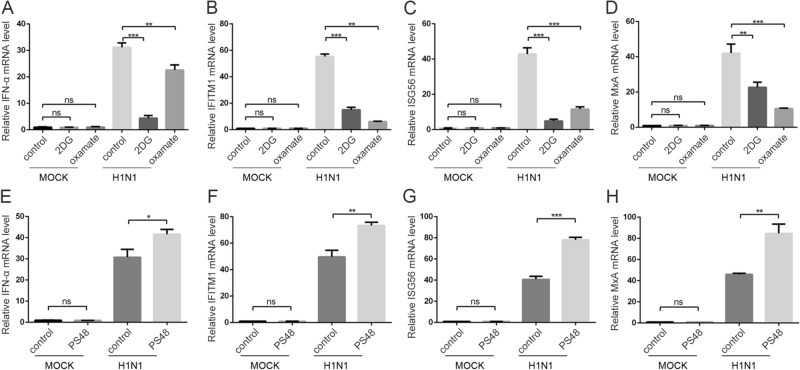
Viruses depend on host cellular metabolism to provide the energy and biosynthetic building blocks required for their replication. In this study, we observed that influenza A virus (H1N1), a single-stranded, negative-sense RNA virus with an eight-segmented genome, enhanced glycolysis both in mouse lung tissues and in human lung epithelial (A549) cells. In detail, the expression of hexokinase 2 (HK2), the first enzyme in glycolysis, was upregulated in H1N1-infected A549 cells, and the expression of pyruvate kinase M2 (PKM2) and pyruvate dehydrogenase kinase 3 (PDK3) was upregulated in H1N1-infected mouse lung tissues. Pharmacologically inhibiting the glycolytic pathway or targeting hypoxia-inducible factor 1 (HIF-1), the central transcriptional factor critical for glycolysis, significantly reduced H1N1 replication, revealing a requirement for glycolysis during H1N1 infection. In addition, pharmacologically enhancing the glycolytic pathway further promoted H1N1 replication. Furthermore, the change of H1N1 replication upon glycolysis inhibition or enhancement was independent of interferon signaling. Taken together, these findings suggest that influenza A virus induces the glycolytic pathway and thus facilitates efficient viral replication. This study raises the possibility that metabolic inhibitors, such as those that target glycolysis, could be used to treat influenza A virus infection in the future.
病毒依赖宿主细胞代谢来提供复制所需的能量和生物合成构建块。在这项研究中,我们观察到甲型流感病毒(H1N1),一种具有八个分段基因组的单链、负义 RNA 病毒,增强了小鼠肺组织和人肺上皮(A549)细胞中的糖酵解。具体来说,糖酵解的第一步酶己糖激酶 2(HK2)在 H1N1 感染的 A549 细胞中上调表达,而丙酮酸激酶 M2(PKM2)和丙酮酸脱氢酶激酶 3(PDK3)在 H1N1 感染的小鼠肺组织中上调表达。通过药理学抑制糖酵解途径或靶向缺氧诱导因子 1(HIF-1),即糖酵解的关键转录因子,可显著降低 H1N1 的复制,表明 H1N1 感染期间需要糖酵解。此外,药理学增强糖酵解途径进一步促进了 H1N1 的复制。此外,糖酵解抑制或增强对 H1N1 复制的影响与干扰素信号无关。总之,这些发现表明甲型流感病毒诱导糖酵解途径,从而促进病毒的有效复制。这项研究提出了一种可能性,即代谢抑制剂,如针对糖酵解的抑制剂,将来可能用于治疗甲型流感病毒感染。