The Key Laboratory of Cardiovascular Remodeling and Function Research, Chinese Ministry of Education, Chinese National Health Commission and Chinese Academy of Medical Sciences, The State and Shandong Province Joint Key Laboratory of Translational Cardiovascular Medicine, Department of Cardiology, Qilu Hospital, Cheeloo College of Medicine, Shandong University, Jinan 250012, Shandong, China.
Department of Geriatrics, Qilu Hospital, Cheeloo College of Medicine, Shandong University, Key Laboratory of Cardiovascular Proteomics of Shandong Province, Jinan 250012, Shandong, China.
Theranostics. 2021 Jul 25;11(18):8624-8639. doi: 10.7150/thno.48561. eCollection 2021.
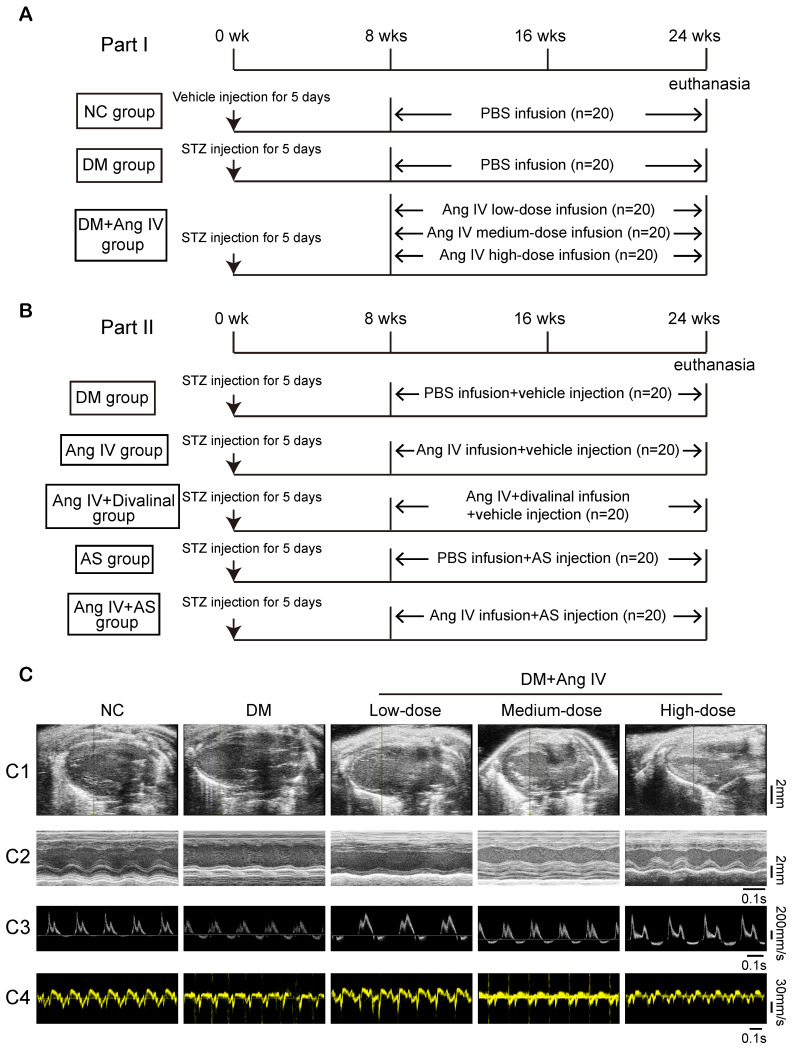
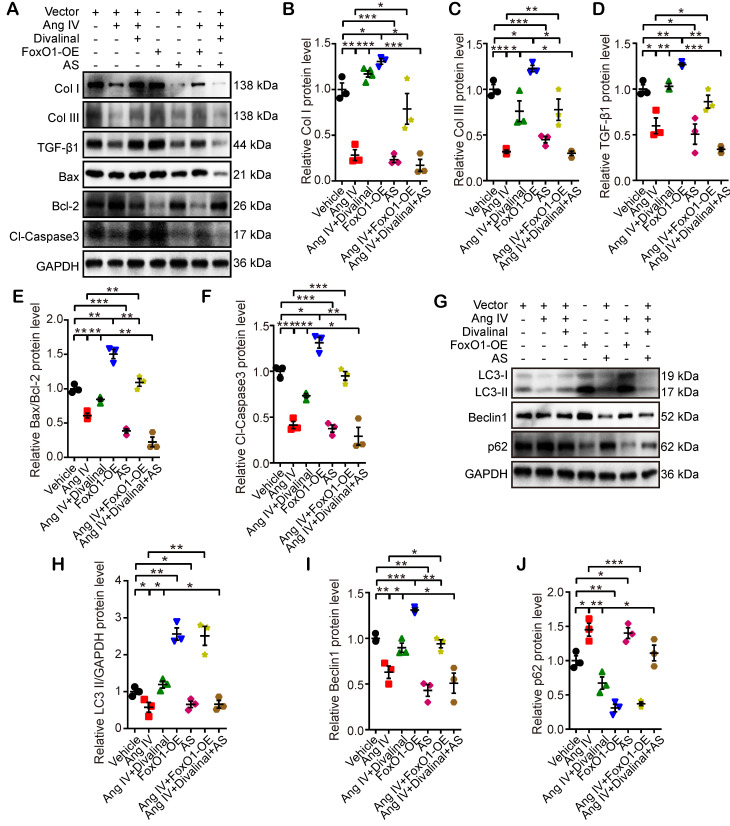
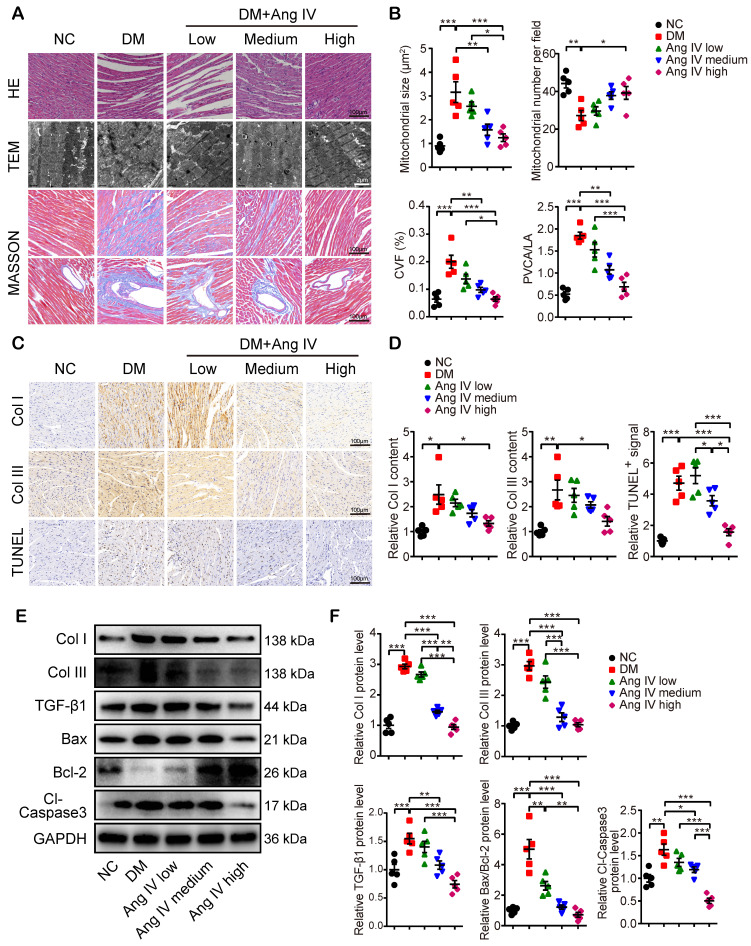
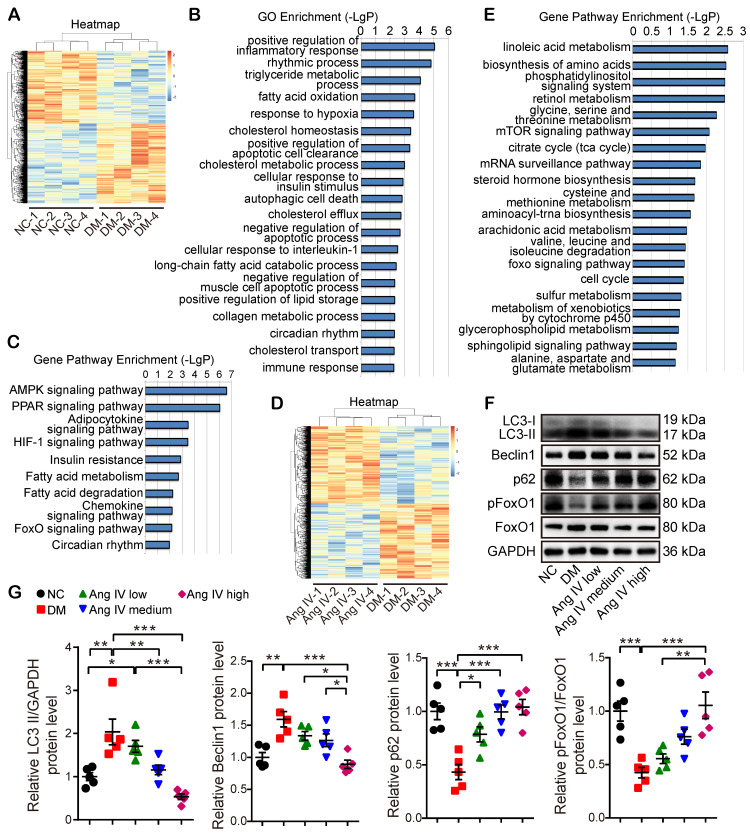
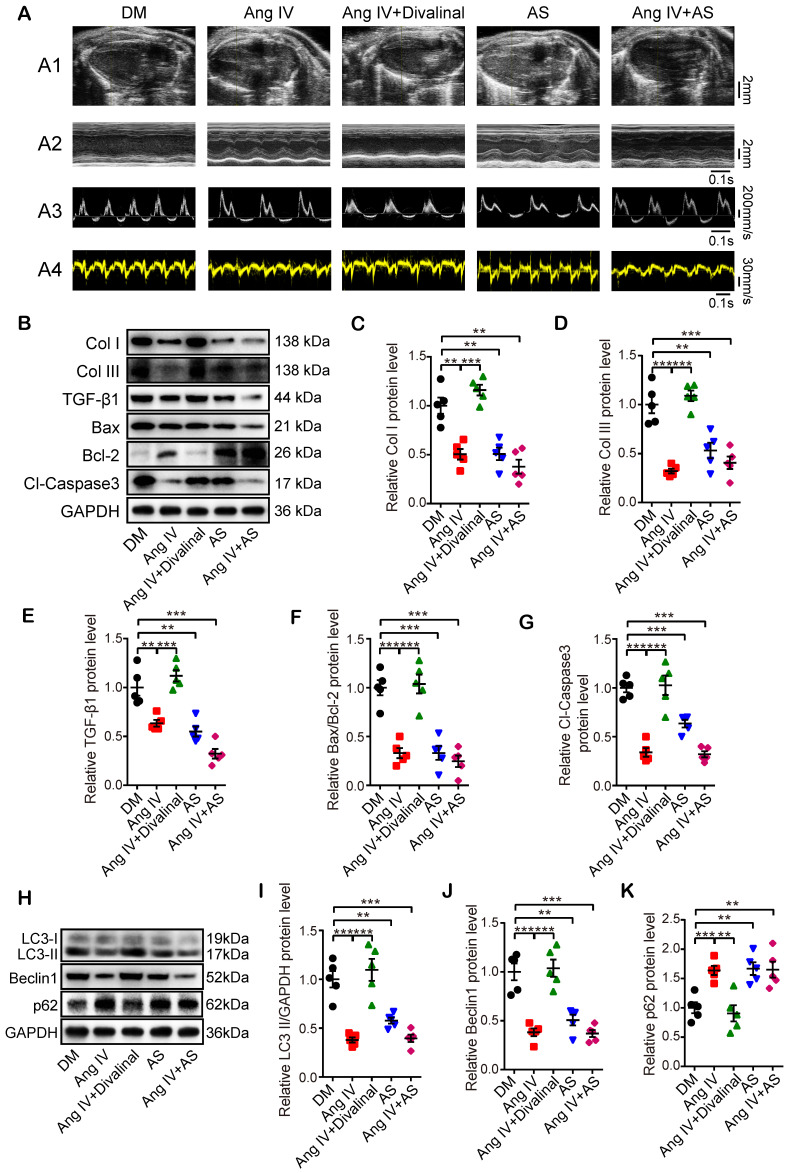
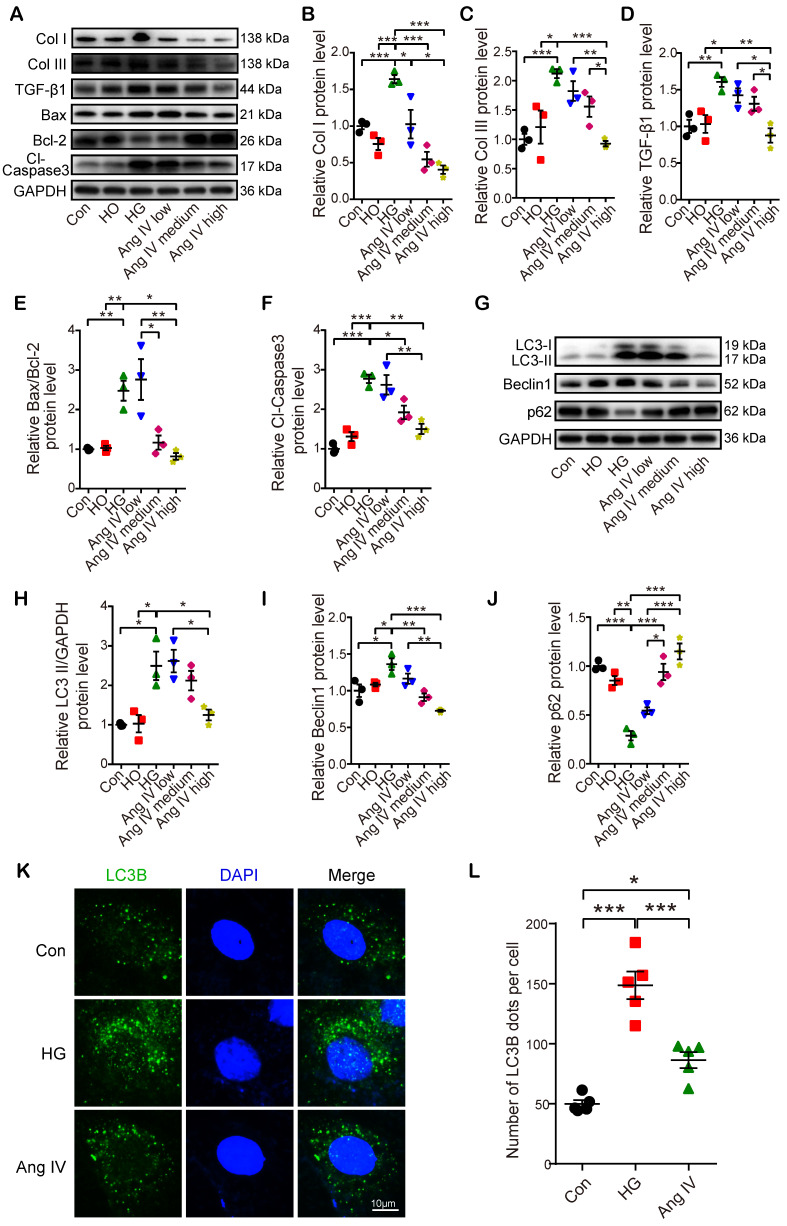
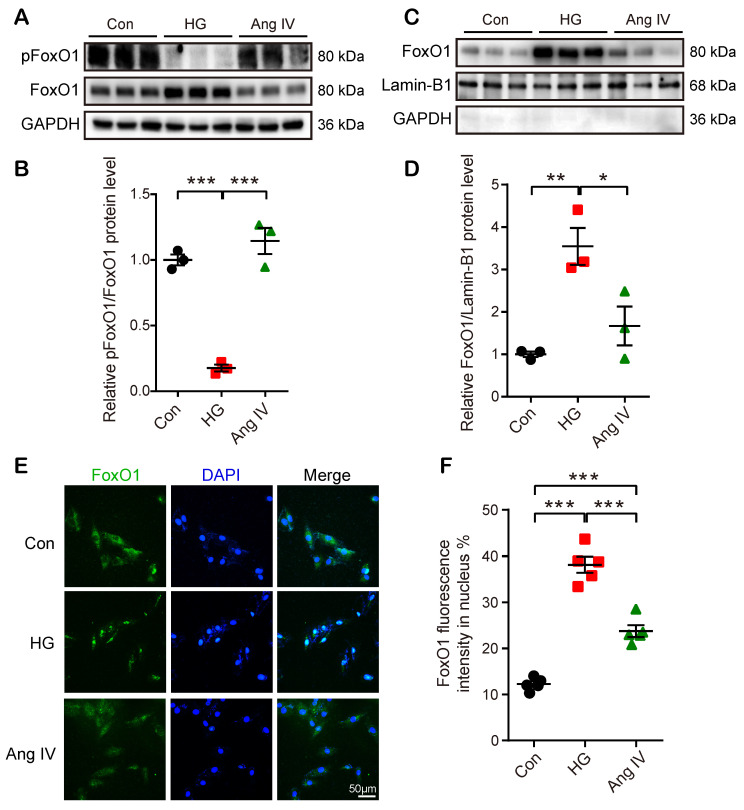
The rennin-angiotensin-aldosterone system (RAAS) plays a critical role in the pathogenesis of diabetic cardiomyopathy, but the role of a member of RAAS, angiotensin IV (Ang IV), in this disease and its underlying mechanism are unclear. This study was aimed to clarify the effects of Ang IV and its downstream mediator forkhead box protein O1 (FoxO1) on diabetic cardiomyopathy. , diabetic mice were treated with low-, medium- and high-dose Ang IV, ATR antagonist divalinal, FoxO1 inhibitor AS1842856 (AS), or their combinations. , H9C2 cardiomyocytes and cardiac fibroblasts were treated with different concentrations of glucose, low-, medium- and high-dose Ang IV, divalinal, FoxO1-overexpression plasmid (FoxO1-OE), AS, or their combinations. Ang IV treatment dose-dependently attenuated left ventricular dysfunction, fibrosis, and myocyte apoptosis in diabetic mice. Besides, enhanced autophagy and FoxO1 protein expression by diabetes were dose-dependently suppressed by Ang IV treatment. However, these cardioprotective effects of Ang IV were completely abolished by divalinal administration. Bioinformatics analysis revealed that the differentially expressed genes were enriched in autophagy, apoptosis, and FoxO signaling pathways among control, diabetes, and diabetes+high-dose Ang IV groups. Similar to Ang IV, AS treatment ameliorated diabetic cardiomyopathy in mice. , high glucose stimulation increased collagen expression, apoptosis, overactive autophagy flux and FoxO1 nuclear translocation in cardiomyocytes, and upregulated collagen and FoxO1 expression in cardiac fibroblasts, which were substantially attenuated by Ang IV treatment. However, these protective effects of Ang IV were completely blocked by the use of divalinal or FoxO1-OE, and these detrimental effects were reversed by the additional administration of AS. Ang IV treatment dose-dependently attenuated left ventricular dysfunction and remodeling in a mouse model of diabetic cardiomyopathy, and the mechanisms involved stimulation of ATR and suppression of FoxO1-mediated fibrosis, apoptosis, and overactive autophagy.
肾素-血管紧张素-醛固酮系统(RAAS)在糖尿病心肌病的发病机制中起着关键作用,但 RAAS 成员血管紧张素 IV(Ang IV)在该疾病中的作用及其潜在机制尚不清楚。本研究旨在阐明 Ang IV 及其下游介质叉头框蛋白 O1(FoxO1)对糖尿病心肌病的影响。
将糖尿病小鼠分别用低、中、高剂量 Ang IV、ATR 拮抗剂二戊烯、FoxO1 抑制剂 AS1842856(AS)或它们的组合处理。体外实验中,将 H9C2 心肌细胞和心肌成纤维细胞分别用不同浓度的葡萄糖、低、中、高剂量 Ang IV、二戊烯、FoxO1 过表达质粒(FoxO1-OE)、AS 或它们的组合处理。
Ang IV 处理剂量依赖性地减轻了糖尿病小鼠的左心室功能障碍、纤维化和心肌细胞凋亡。此外,糖尿病引起的自噬和 FoxO1 蛋白表达增强也被 Ang IV 处理剂量依赖性地抑制。然而,这些 Ang IV 的心脏保护作用在二戊烯给药后完全被消除。生物信息学分析显示,在对照组、糖尿病组和糖尿病+高剂量 Ang IV 组中,差异表达的基因在自噬、凋亡和 FoxO 信号通路中富集。与 Ang IV 相似,AS 处理也改善了糖尿病小鼠的心肌病。
Ang IV 处理剂量依赖性地减轻了糖尿病心肌病小鼠的左心室功能障碍和重构,其机制涉及 ATR 的刺激和 FoxO1 介导的纤维化、凋亡和过度自噬的抑制。