Momtazi-Borojeni Amir Abbas, Jaafari Mahmoud Reza, Afshar Mohammad, Banach Maciej, Sahebkar Amirhossein
Nanotechnology Research Center, Bu-Ali Research Institute, Mashhad University of Medical Sciences, Mashhad, Iran.
Department of Medical Biotechnology, School of Medicine, Alborz University of Medical Sciences, Karaj, Iran.
Arch Med Sci. 2021 Mar 18;17(5):1365-1377. doi: 10.5114/aoms/133885. eCollection 2021.
The aim of the study was to study a nanoliposomal anti-PCSK9 vaccine as a novel approach for cholesterol lowering via PCSK9 inhibition.
An immunogenic peptide construct termed immunogenic fused PCSK9-tetanus (IFPT) was displayed on the surface of liposome nanoparticles (L-IFPT) and mixed into alum adjuvant (L-IFPTA+). The manufactured vaccine formulations IFPT, L-IFPT, L-IFPTA+, IFPTA+, and free nanoliposomes were subcutaneously injected four times with bi-weekly intervals in C57BL/6 mice on a severe atherogenic protocol.
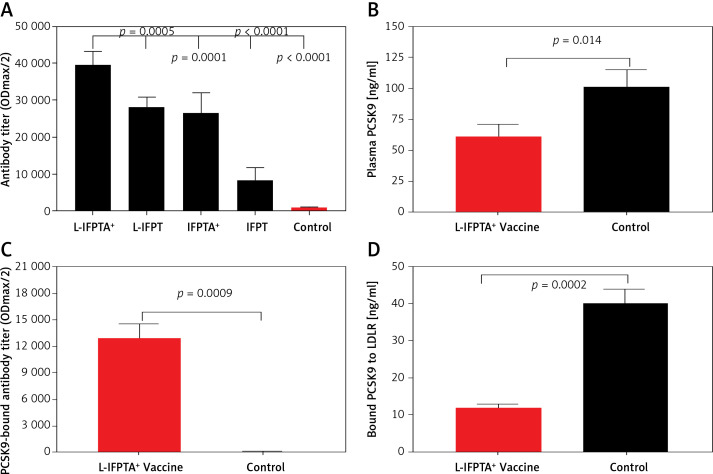
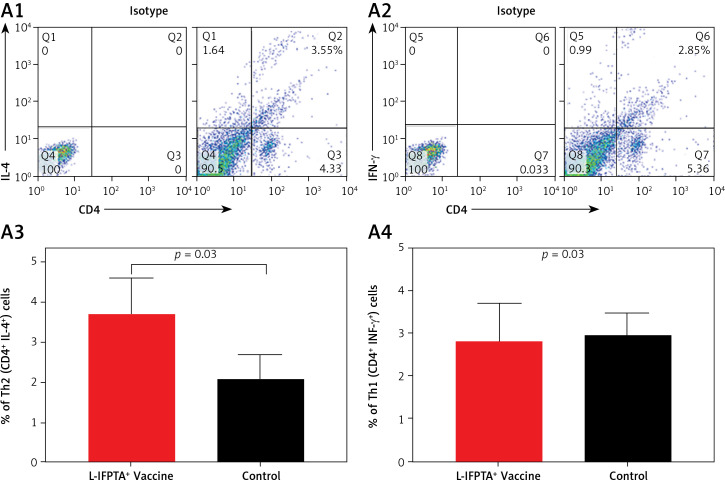
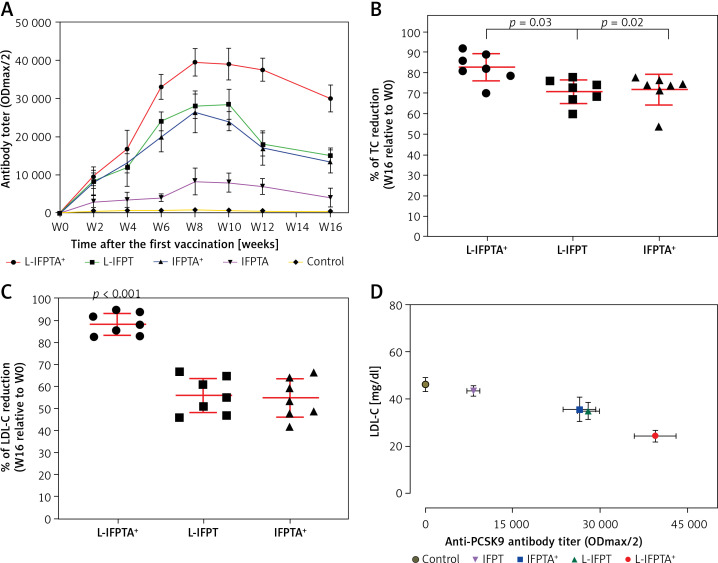
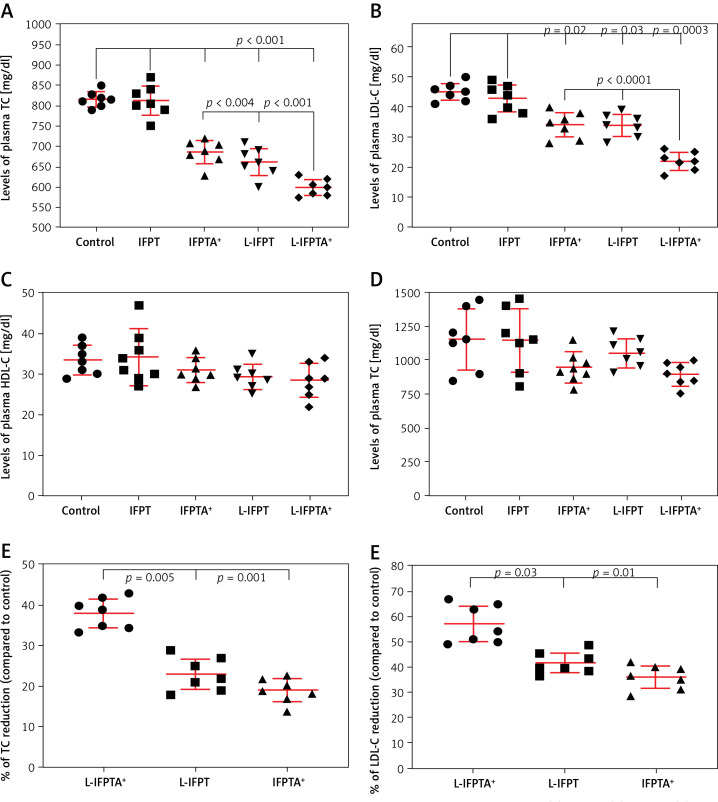
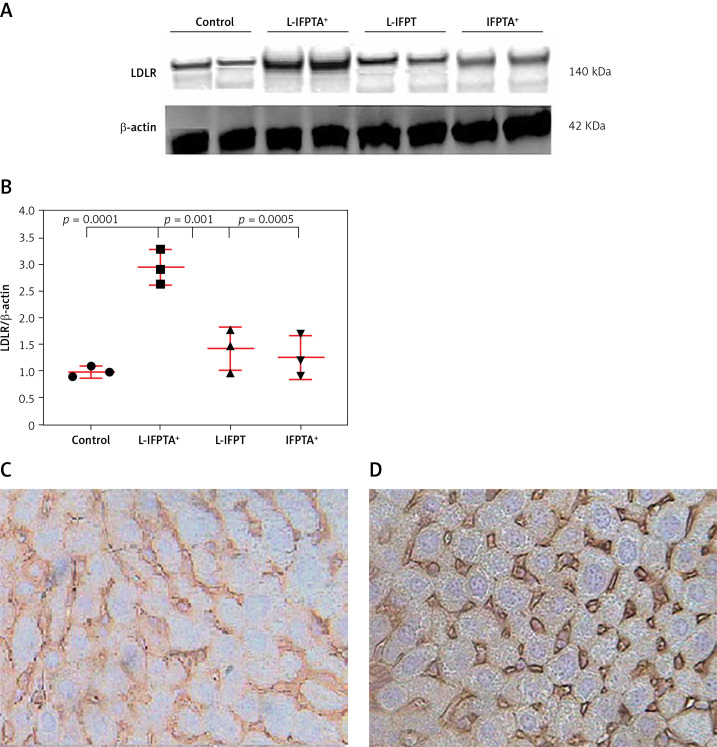
Among the formulations, L-IFPTA+ vaccine was found to elicit the highest IgG response against PCSK9 peptide. The induced PCSK9 antibodies inhibited PCSK9-LDLR interaction through binding to PCSK9 in vaccinated mice. Liver low-density lipoprotein receptor (LDLR) protein was increased in vaccinated mice. L-IFPTA+, L-IFPT and IFPTA+ vaccines reduced total cholesterol by up to -38.13 ±3.8% ( = 0.006), -23 ±4.1% ( = 0.027) and -19.12 ±3% ( = 0.038), and low-density lipoprotein cholesterol (LDL-C) by up to -57 ±7.7% ( = 0.0003), -41.67 ±4.2% ( = 0.03) and -36.11 ±5% ( = 0.02) in hypercholesterolemic mice, respectively, versus control mice after 8 weeks. Long-term assessment indicated that the vaccine formulations could stimulate a long-lasting humoral immune response against PCSK9 peptide, which was associated with a marked reduction of total cholesterol in L-IFPTA+, L-IFPT and IFPTA+ vaccine groups by up to -82.5 ±7.3% ( = 0.002), -70.54 ±6.2% ( = 0.013) and -72.02 ±8.7% ( = 0.004), respectively, and LDL-C by up to -88.14 ±5.6% ( = 0.002), -55.92 ±8.3% ( = 0.003) and 54.81 ±9.3% ( = 0.003), respectively, versus the pre-vaccination time point adjusted to the control group. Anti-inflammatory Th2 cells and IL-4 cytokine were considerably increased in splenocytes of vaccinated mice.
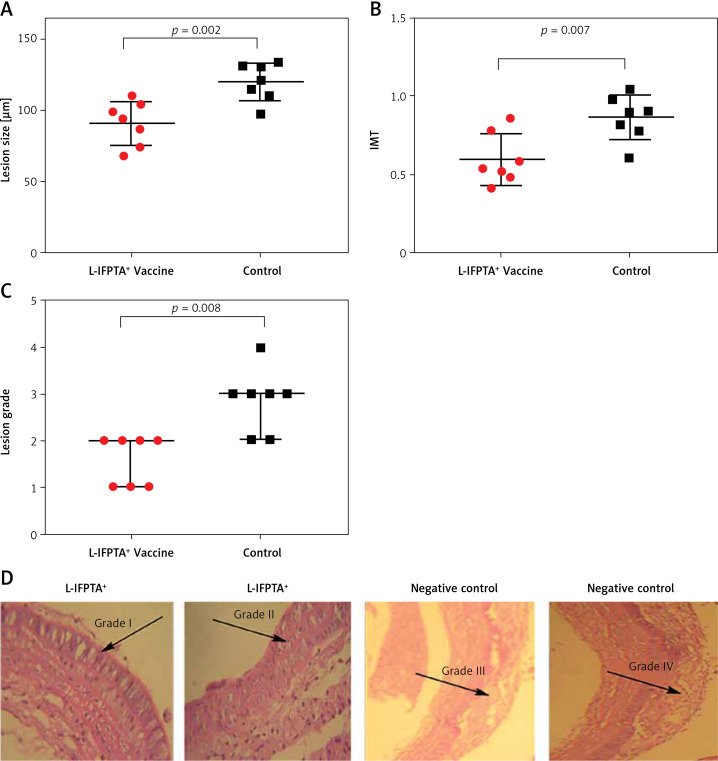
L-IFPTA+ vaccine can induce long-lasting, functional and safe PCSK9-specific antibodies in hypercholesterolemic C57BL/6 mice, providing a long-term protective impact on dyslipidemia and atherosclerosis.
本研究旨在探讨一种纳米脂质体抗PCSK9疫苗,作为通过抑制PCSK9降低胆固醇的新方法。
一种称为免疫原性融合PCSK9-破伤风(IFPT)的免疫原性肽构建体展示在脂质体纳米颗粒(L-IFPT)表面,并与明矾佐剂混合(L-IFPTA+)。将制备的疫苗制剂IFPT、L-IFPT、L-IFPTA+、IFPTA+和游离纳米脂质体以每两周一次的间隔皮下注射到采用严重致动脉粥样硬化方案的C57BL/6小鼠体内,共注射四次。
在这些制剂中,发现L-IFPTA+疫苗对PCSK9肽引发的IgG反应最高。诱导产生的PCSK9抗体通过与接种疫苗小鼠体内的PCSK9结合,抑制PCSK9-LDLR相互作用。接种疫苗小鼠的肝脏低密度脂蛋白受体(LDLR)蛋白增加。L-IFPTA+、L-IFPT和IFPTA+疫苗在高胆固醇血症小鼠中,8周后分别使总胆固醇降低高达-38.13±3.8%(P=0.006)、-23±4.1%(P=0.027)和-19.12±3%(P=0.038),低密度脂蛋白胆固醇(LDL-C)降低高达-57±7.7%(P=0.0003)、-41.67±4.2%(P=0.03)和-36.11±5%(P=0.02),与对照组小鼠相比。长期评估表明,疫苗制剂可刺激针对PCSK9肽的持久体液免疫反应,这与L-IFPTA+、L-IFPT和IFPTA+疫苗组的总胆固醇显著降低高达-82.5±7.3%(P=0.002)、-70.54±6.2%(P=0.013)和-72.02±8.7%(P=0.004),以及LDL-C分别降低高达-88.14±5.6%(P=0.002)、-55.92±8.3%(P=0.003)和54.81±9.3%(P=0.003)相关,与调整至对照组的接种疫苗前时间点相比。接种疫苗小鼠的脾细胞中抗炎性Th2细胞和IL-4细胞因子显著增加。
L-IFPTA+疫苗可在高胆固醇血症的C57BL/6小鼠中诱导持久、功能性且安全的PCSK9特异性抗体,对血脂异常和动脉粥样硬化提供长期保护作用。