Research Department, New England Biolabs, Inc., 240 County Road, Ipswich, MA01938, USA.
Chemistry Department, University of Massachusetts Boston, 100 William T. Morrissey Blvd. Boston, MA02125, USA.
Nucleic Acids Res. 2022 Apr 8;50(6):3001-3017. doi: 10.1093/nar/gkab781.
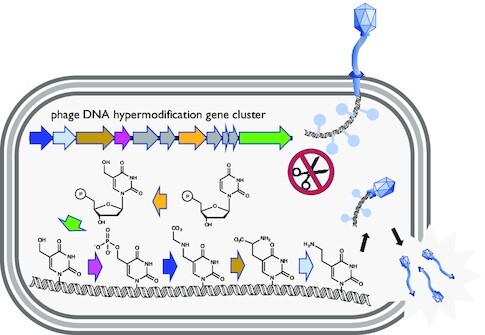
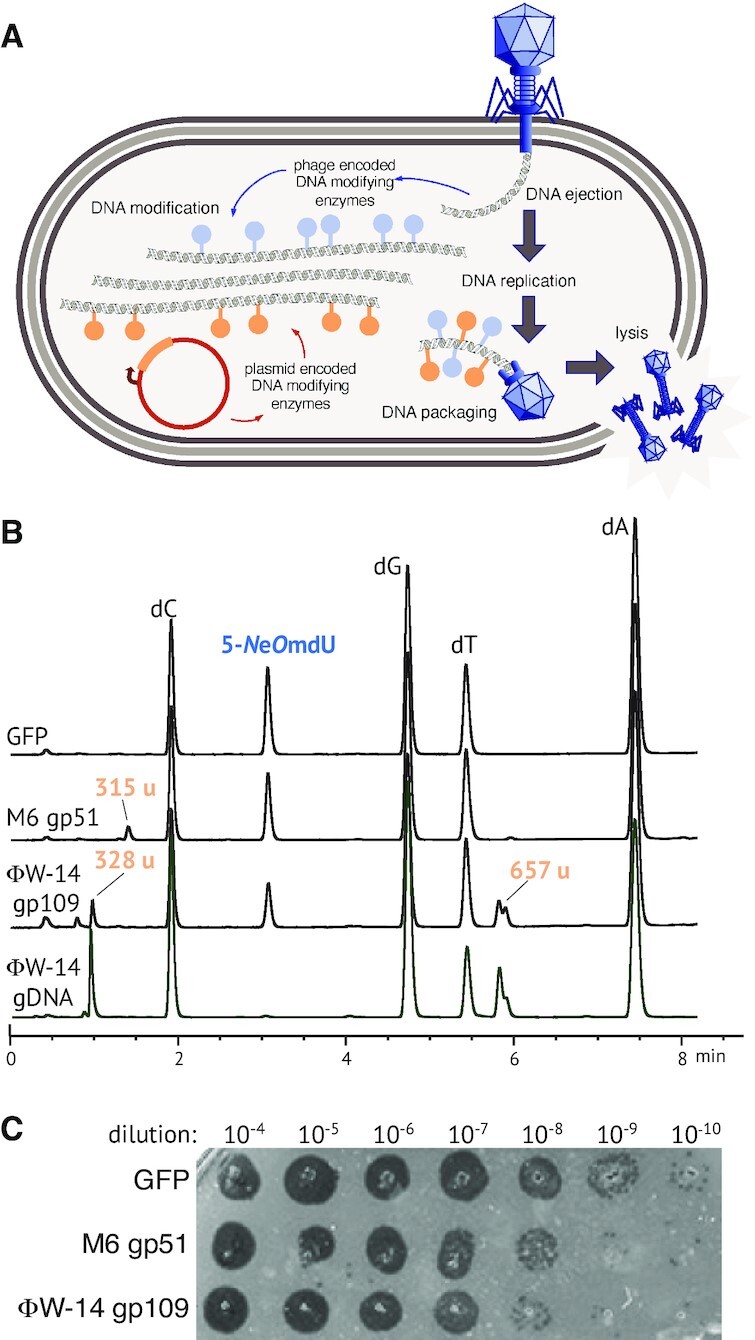
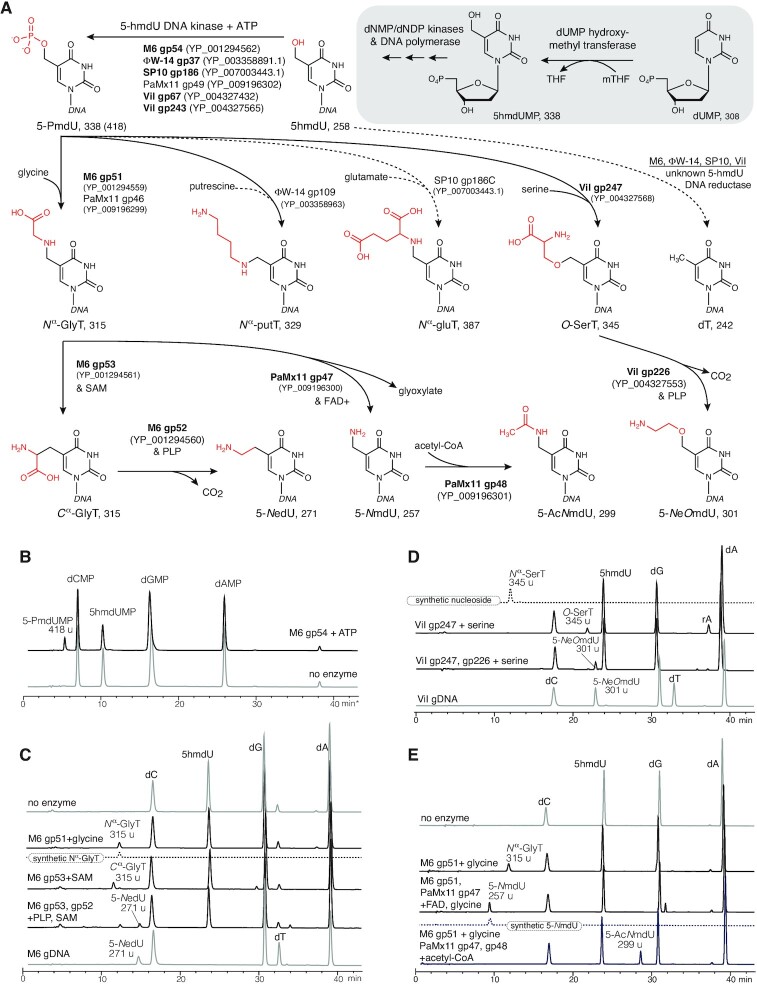
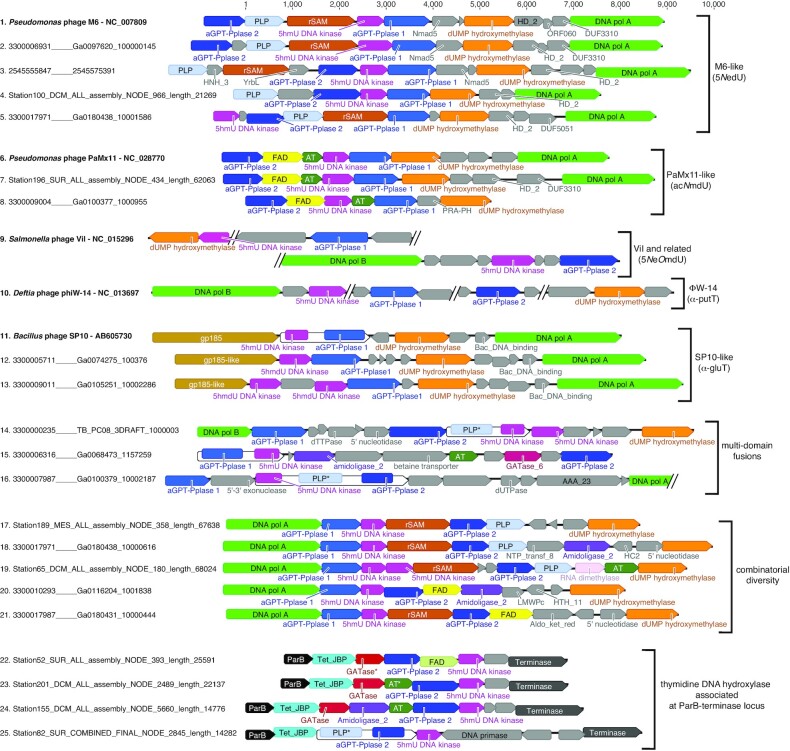
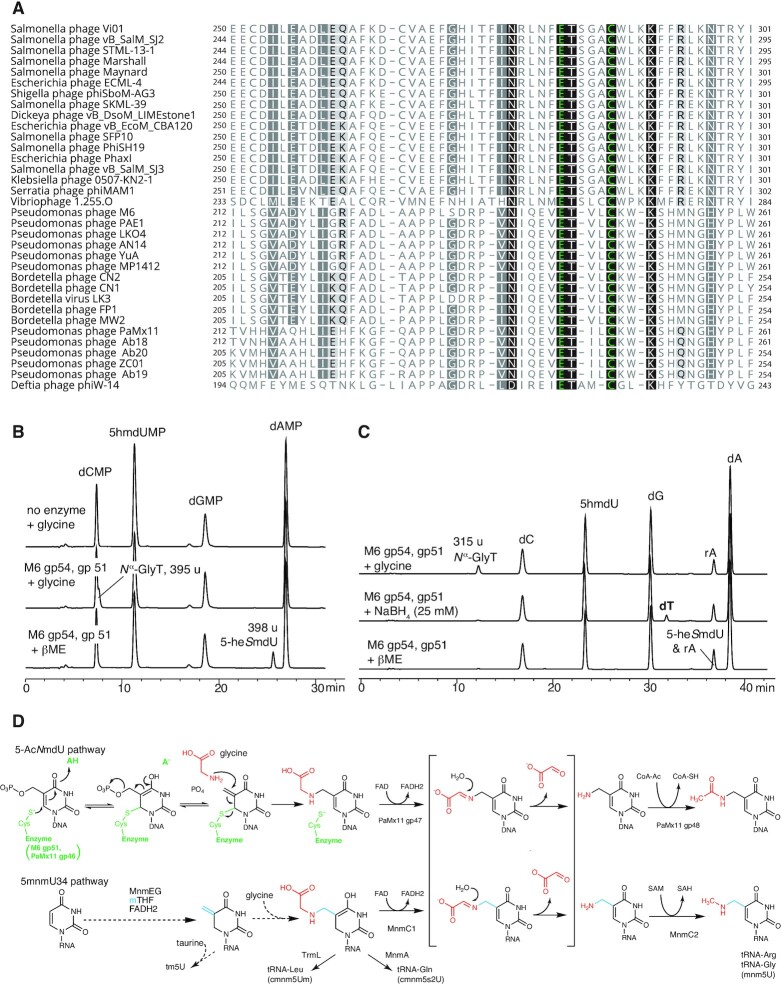
The DNAs of bacterial viruses are known to contain diverse, chemically complex modifications to thymidine that protect them from the endonuclease-based defenses of their cellular hosts, but whose biosynthetic origins are enigmatic. Up to half of thymidines in the Pseudomonas phage M6, the Salmonella phage ViI, and others, contain exotic chemical moieties synthesized through the post-replicative modification of 5-hydroxymethyluridine (5-hmdU). We have determined that these thymidine hypermodifications are derived from free amino acids enzymatically installed on 5-hmdU. These appended amino acids are further sculpted by various enzyme classes such as radical SAM isomerases, PLP-dependent decarboxylases, flavin-dependent lyases and acetyltransferases. The combinatorial permutations of thymidine hypermodification genes found in viral metagenomes from geographically widespread sources suggests an untapped reservoir of chemical diversity in DNA hypermodifications.
细菌病毒的 DNA 中已知含有多种化学结构复杂的胸苷修饰,这些修饰可以保护它们免受细胞宿主内切酶防御,但它们的生物合成起源却很神秘。在假单胞菌噬菌体 M6、沙门氏菌噬菌体 ViI 以及其他噬菌体中,多达一半的胸苷都含有通过 5-羟甲基尿嘧啶(5-hmdU)的复制后修饰合成的外来化学基团。我们已经确定,这些胸苷的超修饰是通过将游离氨基酸酶促连接到 5-hmdU 上形成的。这些附加的氨基酸进一步由各种酶类(如自由基 SAM 异构酶、PLP 依赖性脱羧酶、黄素依赖性裂解酶和乙酰基转移酶)进行修饰。从地理分布广泛的病毒宏基因组中发现的胸苷超修饰基因的组合排列表明,DNA 超修饰中的化学多样性还有待挖掘。