Flodman Kiersten, Corrêa Ivan R, Dai Nan, Weigele Peter, Xu Shuang-Yong
New England Biolabs, Inc., Ipswich, MA, United States.
Front Microbiol. 2020 Oct 27;11:604618. doi: 10.3389/fmicb.2020.604618. eCollection 2020.
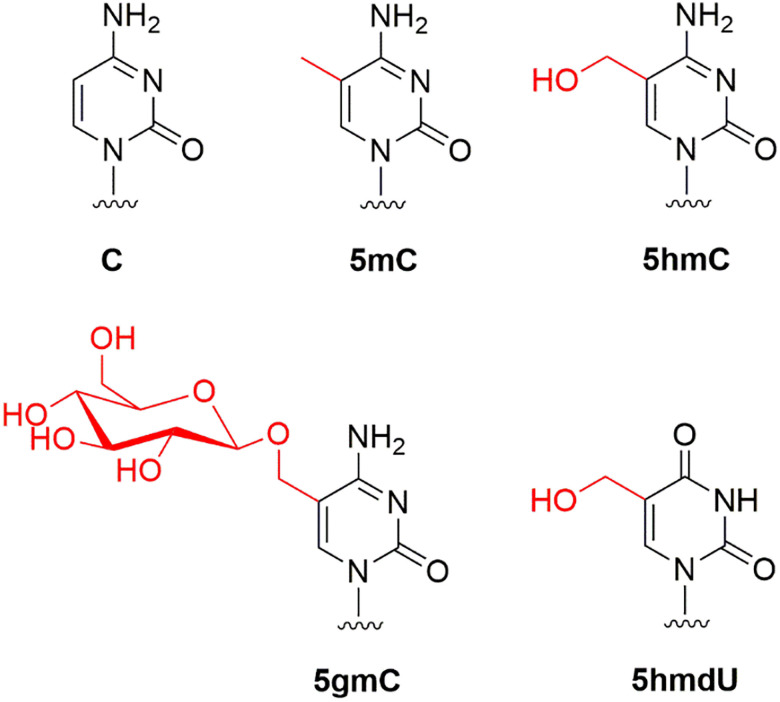
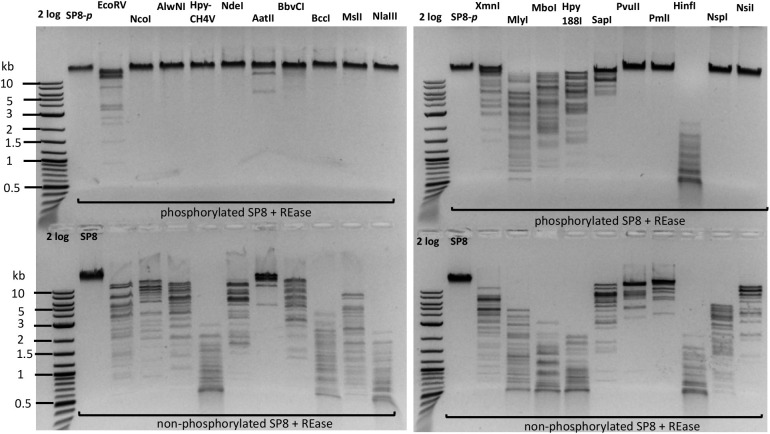
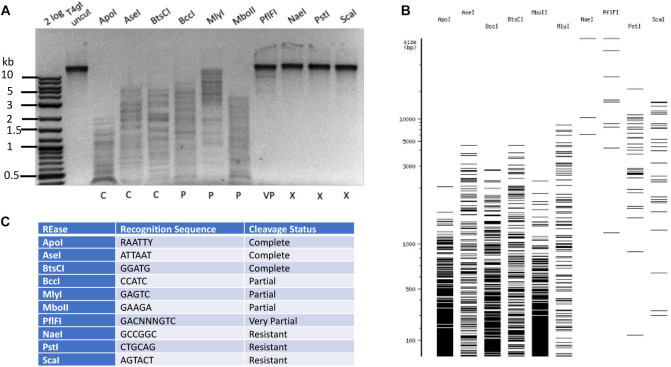
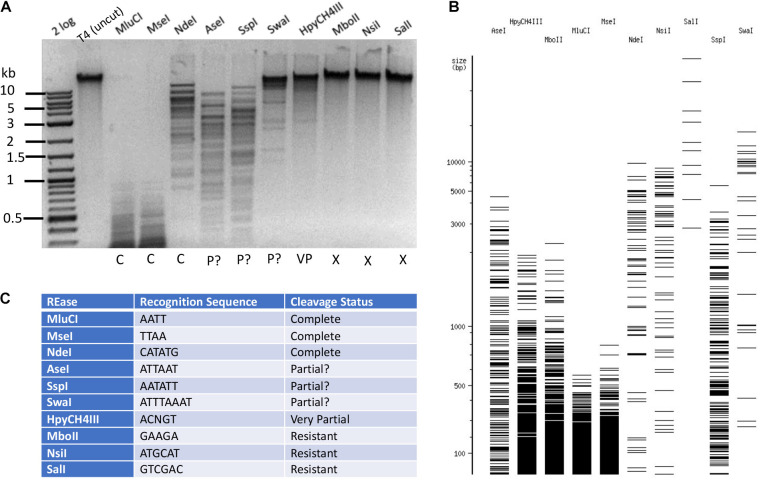
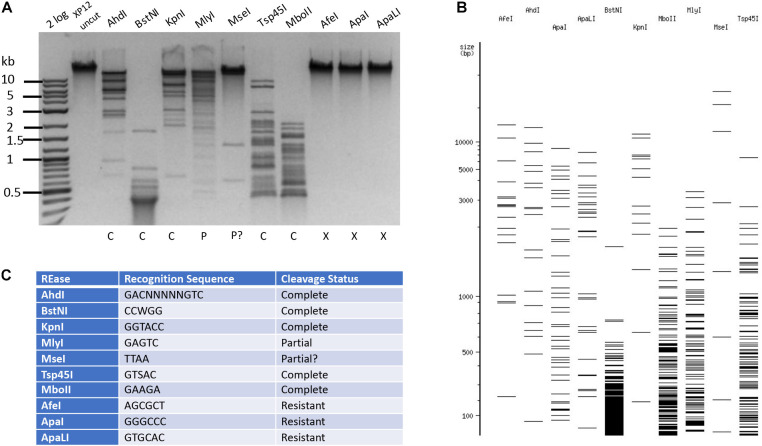
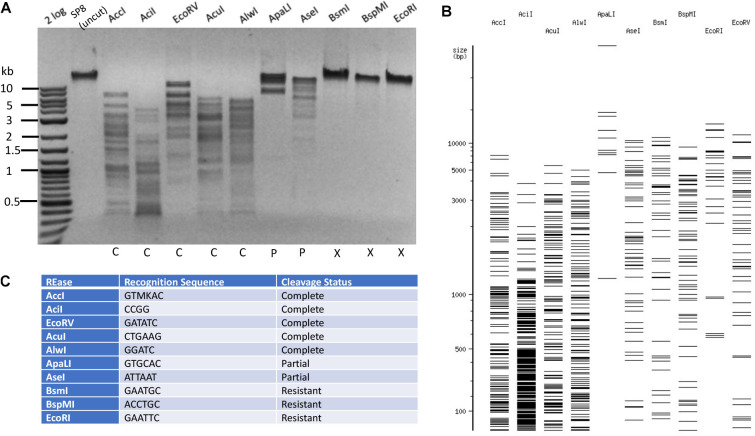
To counteract host-encoded restriction systems, bacteriophages (phages) incorporate modified bases in their genomes. For example, phages carry in their genomes modified pyrimidines such as 5-hydroxymethyl-cytosine (5hmC) in T4 deficient in α- and β-glycosyltransferases, glucosylated-5-hydroxymethylcytosine (5gmC) in T4, 5-methylcytosine (5mC) in Xp12, and 5-hydroxymethyldeoxyuridine (5hmdU) in SP8. In this work we sequenced phage Xp12 and SP8 genomes and examined Type II restriction of T4, T4, Xp12, and SP8 phage DNAs. T4, T4, and Xp12 genomes showed resistance to 81.9% (186 out of 227 enzymes tested), 94.3% (214 out of 227 enzymes tested), and 89.9% (196 out of 218 enzymes tested), respectively, commercially available Type II restriction endonucleases (REases). The SP8 genome, however, was resistant to only ∼8.3% of these enzymes (17 out of 204 enzymes tested). SP8 DNA could be further modified by adenine DNA methyltransferases (MTases) such as M.Dam and M.EcoGII as well as a number of cytosine DNA MTases, such as CpG methylase. The 5hmdU base in SP8 DNA was phosphorylated by treatment with a 5hmdU DNA kinase to achieve ∼20% phosphorylated 5hmdU, resulting resistance or partially resistant to more Type II restriction. This work provides a convenient reference for molecular biologists working with modified pyrimidines and using REases. The genomic sequences of phage Xp12 and SP8 lay the foundation for further studies on genetic pathways for 5mC and 5hmdU DNA base modifications and for comparative phage genomics.
为了对抗宿主编码的限制系统,噬菌体在其基因组中掺入修饰碱基。例如,噬菌体在其基因组中携带修饰的嘧啶,如缺乏α-和β-糖基转移酶的T4中的5-羟甲基胞嘧啶(5hmC)、T4中的葡萄糖基化5-羟甲基胞嘧啶(5gmC)、Xp12中的5-甲基胞嘧啶(5mC)以及SP8中的5-羟甲基脱氧尿苷(5hmdU)。在这项工作中,我们对噬菌体Xp12和SP8的基因组进行了测序,并检测了T4、T4、Xp12和SP8噬菌体DNA的II型限制。T4、T4和Xp12基因组分别对81.9%(227种测试酶中的186种)、94.3%(227种测试酶中的214种)和89.9%(218种测试酶中的196种)市售II型限制性内切酶(REases)具有抗性。然而,SP8基因组仅对这些酶中的约8.3%(204种测试酶中的17种)具有抗性。SP8 DNA可以被腺嘌呤DNA甲基转移酶(MTases)如M.Dam和M.EcoGII以及一些胞嘧啶DNA MTases如CpG甲基化酶进一步修饰。通过用5hmdU DNA激酶处理,SP8 DNA中的5hmdU碱基被磷酸化,达到约20%的磷酸化5hmdU,从而对更多的II型限制产生抗性或部分抗性。这项工作为研究修饰嘧啶并使用REases的分子生物学家提供了便利的参考。噬菌体Xp12和SP8的基因组序列为进一步研究5mC和5hmdU DNA碱基修饰的遗传途径以及比较噬菌体基因组学奠定了基础。