Center for Evidence-Based Healthcare, University Hospital Carl Gustav Carus, Carl Gustav Carus Faculty of Medicine, Technische Universität Dresden, Dresden, Germany.
Comprehensive Pain Center, University Hospital Carl Gustav Carus Dresden, Dresden, Germany.
J Med Internet Res. 2021 Nov 17;23(11):e30042. doi: 10.2196/30042.
With the rise of digital health technologies and telemedicine, the need for evidence-based evaluation is growing. Patient-reported outcome measures (PROMs) and patient-reported experience measures (PREMs) are recommended as an essential part of the evaluation of telemedicine. For the first time, a systematic review has been conducted to investigate the use of PROMs and PREMs in the evaluation studies of telemedicine covering all application types and medical purposes.
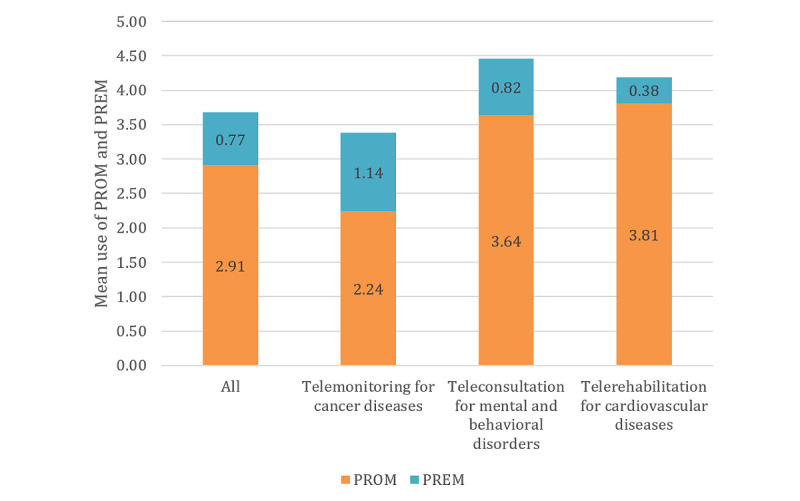
This study investigates the following research questions: in which scenarios are PROMs and PREMs collected for evaluation purposes, which PROM and PREM outcome domains have been covered and how often, which outcome measurement instruments have been used and how often, does the selection and quantity of PROMs and PREMs differ between study types and application types, and has the use of PROMs and PREMs changed over time.
We conducted a systematic literature search of the MEDLINE and Embase databases and included studies published from inception until April 2, 2020. We included studies evaluating telemedicine with patients as the main users; these studies reported PROMs and PREMs within randomized controlled trials, controlled trials, noncontrolled trials, and feasibility trials in English and German.
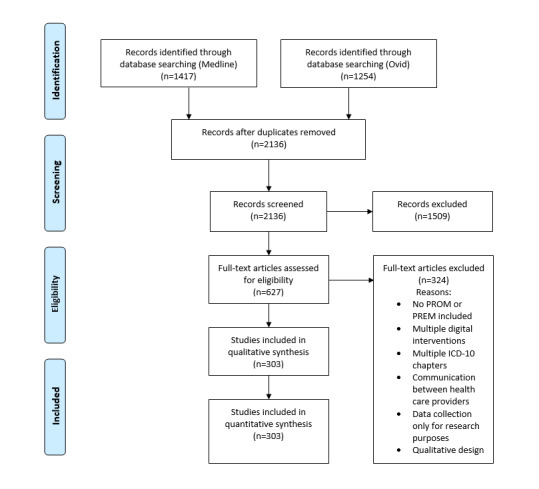
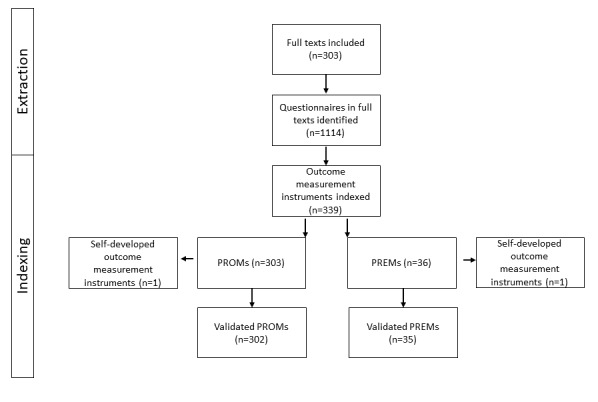
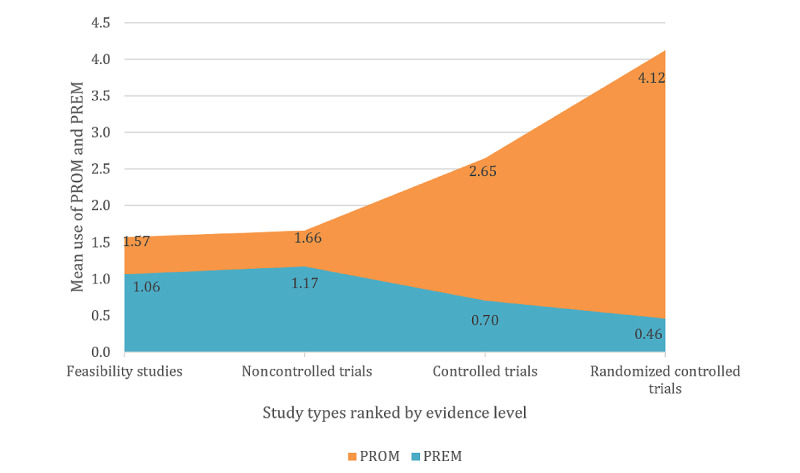
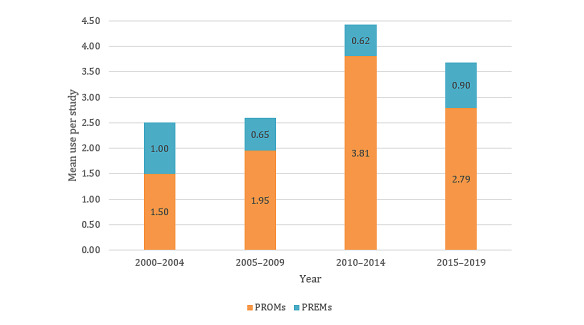
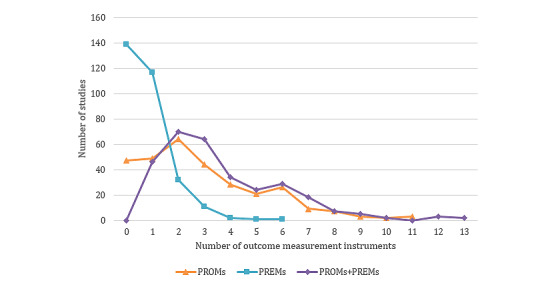
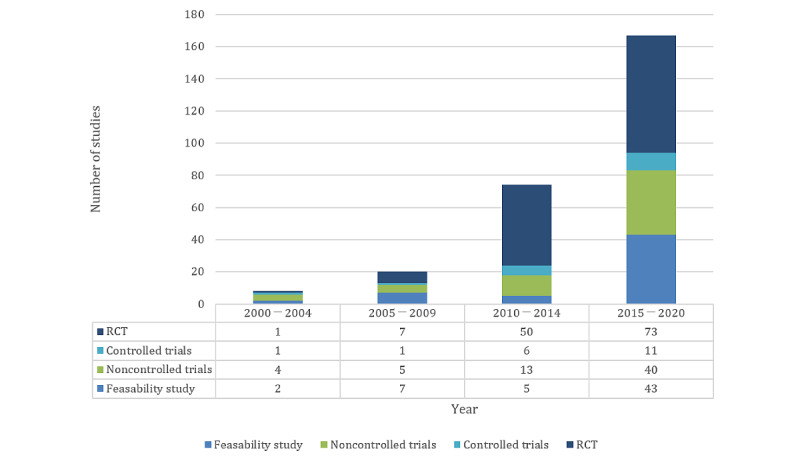
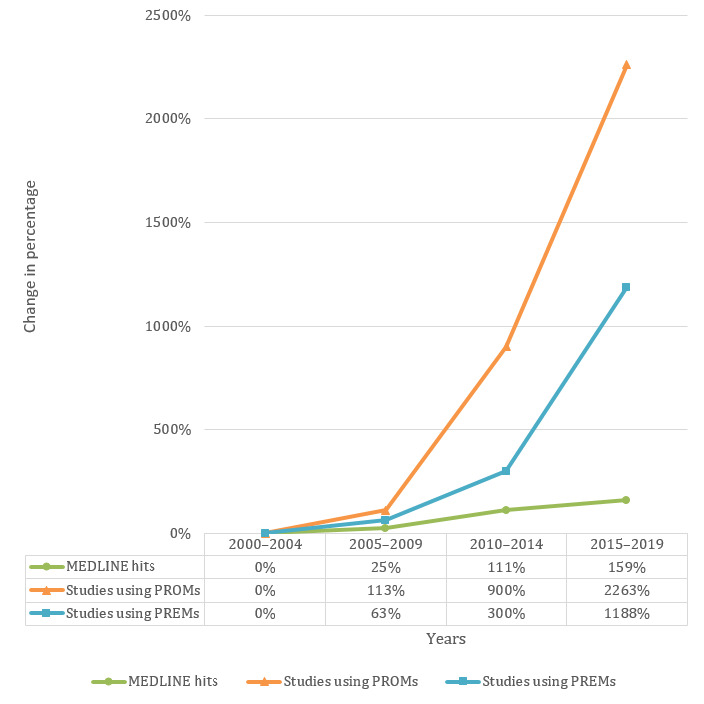
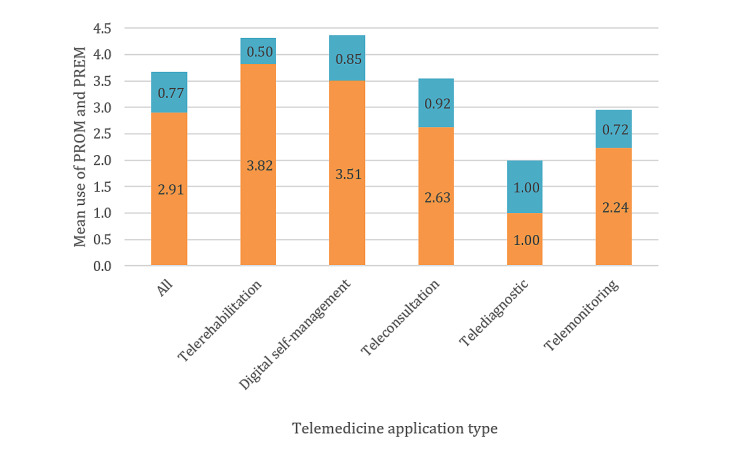
Of the identified 2671 studies, 303 (11.34%) were included; of the 303 studies, 67 (22.1%) were feasibility studies, 70 (23.1%) were noncontrolled trials, 20 (6.6%) were controlled trials, and 146 (48.2%) were randomized controlled trials. Health-related quality of life (n=310; mean 1.02, SD 1.05), emotional function (n=244; mean 0.81, SD 1.18), and adherence (n=103; mean 0.34, SD 0.53) were the most frequently assessed outcome domains. Self-developed PROMs were used in 21.4% (65/303) of the studies, and self-developed PREMs were used in 22.3% (68/303). PROMs (n=884) were assessed more frequently than PREMs (n=234). As the evidence level of the studies increased, the number of PROMs also increased (τ=-0.45), and the number of PREMs decreased (τ=0.35). Since 2000, not only has the number of studies using PROMs and PREMs increased, but the level of evidence and the number of outcome measurement instruments used have also increased, with the number of PREMs permanently remaining at a lower level.
There have been increasingly more studies, particularly high-evidence studies, which use PROMs and PREMs to evaluate telemedicine. PROMs have been used more frequently than PREMs. With the increasing maturity stage of telemedicine applications and higher evidence level, the use of PROMs increased in line with the recommendations of evaluation guidelines. Health-related quality of life and emotional function were measured in almost all the studies. Simultaneously, health literacy as a precondition for using the application adequately, alongside proper training and guidance, has rarely been reported. Further efforts should be pursued to standardize PROM and PREM collection in evaluation studies of telemedicine.
随着数字医疗技术和远程医疗的兴起,对基于证据的评估的需求日益增长。患者报告的结果测量(PROMs)和患者报告的体验测量(PREMs)被推荐为远程医疗评估的重要组成部分。本文首次进行了一项系统综述,旨在调查涵盖所有应用类型和医疗目的的远程医疗评估研究中 PROMs 和 PREMs 的使用情况。
本研究旨在回答以下研究问题:在哪些情况下为评估目的收集 PROMs 和 PREMs,涵盖了哪些 PROM 和 PREM 结果领域,使用了哪些和多少种结果测量工具,研究类型和应用类型之间 PROMs 和 PREMs 的选择和数量是否存在差异,以及 PROMs 和 PREMs 的使用是否随时间发生变化。
我们对 MEDLINE 和 Embase 数据库进行了系统文献检索,并纳入了从成立到 2020 年 4 月 2 日发表的研究。我们纳入了以患者为主要使用者的评估远程医疗的研究;这些研究报告了随机对照试验、对照试验、非对照试验和可行性试验中英语和德语的 PROMs 和 PREMs。
在确定的 2671 项研究中,有 303 项(11.34%)被纳入;在这 303 项研究中,有 67 项(22.1%)为可行性研究,70 项(23.1%)为非对照试验,20 项(6.6%)为对照试验,146 项(48.2%)为随机对照试验。健康相关生活质量(n=310;均数 1.02,标准差 1.05)、情绪功能(n=244;均数 0.81,标准差 1.18)和依从性(n=103;均数 0.34,标准差 0.53)是最常评估的结果领域。21.4%(65/303)的研究使用了自行开发的 PROMs,22.3%(68/303)的研究使用了自行开发的 PREMs。评估 PROMs 的频率高于 PREMs(n=884 vs n=234)。随着研究证据水平的提高,PROMs 的数量也增加(τ=-0.45),PREMs 的数量减少(τ=-0.35)。自 2000 年以来,不仅使用 PROMs 和 PREMs 的研究数量有所增加,而且证据水平和使用的结果测量工具数量也有所增加,PREMs 的数量始终保持在较低水平。
越来越多的研究,特别是高证据水平的研究,使用 PROMs 和 PREMs 来评估远程医疗。与 PREMs 相比,PROMs 更常被使用。随着远程医疗应用的成熟度阶段的提高和证据水平的提高,符合评估指南建议的 PROM 使用量增加。几乎所有研究都测量了健康相关生活质量和情绪功能。同时,健康素养作为充分利用应用程序的前提条件,以及适当的培训和指导,很少被报道。应进一步努力规范远程医疗评估研究中 PROM 和 PREM 的收集。