Department of Pharmacology, University of Cambridge, Tennis Court Road, Cambridge, CB2 1PD, UK.
Department of Civil, Environmental, and Geomatic Engineering, ETH Zürich, 8093 Zürich, Switzerland.
Lab Chip. 2021 Oct 26;21(21):4104-4117. doi: 10.1039/d1lc00347j.
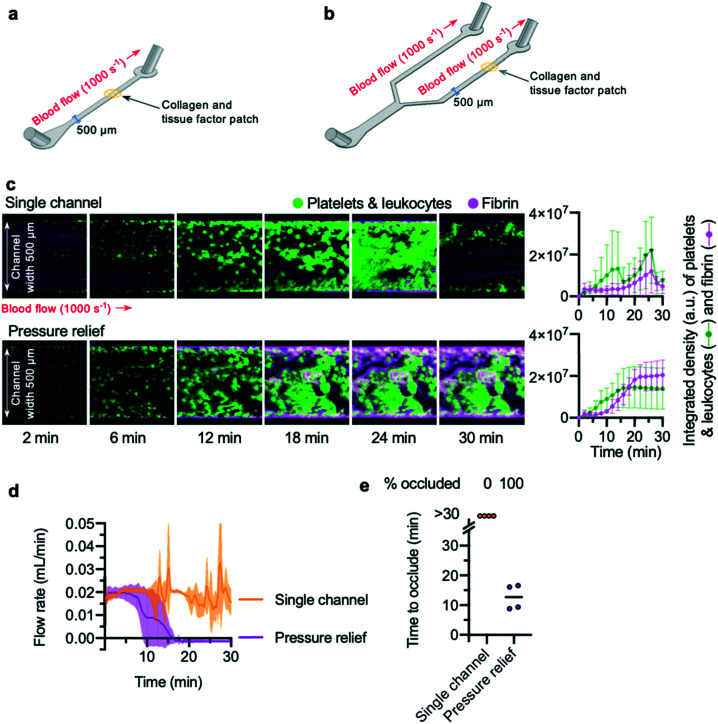
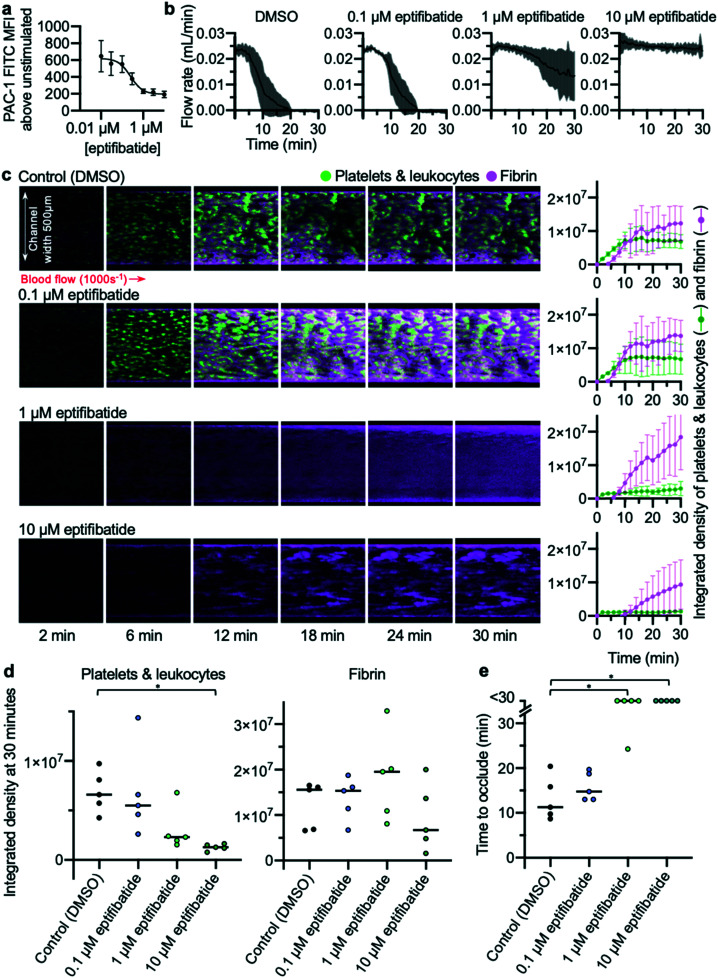
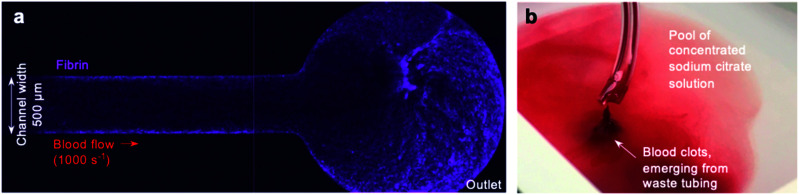
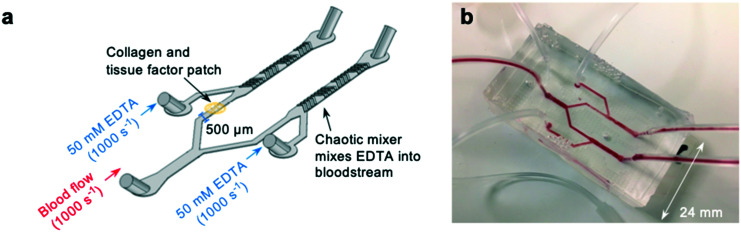
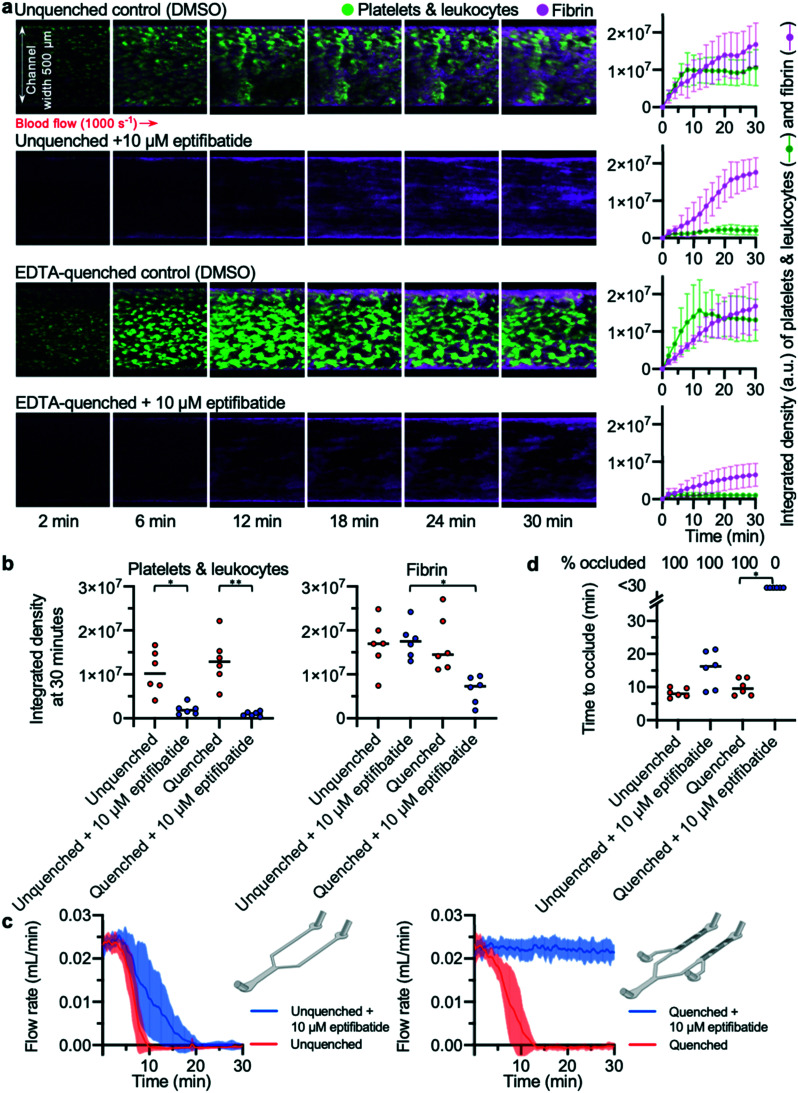
Cardiovascular disease remains one of the world's leading causes of death. Myocardial infarction (heart attack) is triggered by occlusion of coronary arteries by platelet-rich thrombi (clots). The development of new anti-platelet drugs to prevent myocardial infarction continues to be an active area of research and is dependent on accurately modelling the process of clot formation. Occlusive thrombi can be generated in a range of species, but these models are limited by variability and lack of relevance to human disease. Although models using human blood can overcome species-specific differences and improve translatability, many models do not generate occlusive thrombi. In those models that do achieve occlusion, time to occlusion is difficult to measure in an unbiased and objective manner. In this study we developed a simple and robust approach to determine occlusion time of a novel microfluidic assay. This highlighted the potential for occlusion to occur in thrombosis microfluidic devices through off-site coagulation, obscuring the effect of anti-platelet drugs. We therefore designed a novel occlusive thrombosis-on-a-chip microfluidic device that reliably generates occlusive thrombi at arterial shear rates by quenching downstream coagulation. We further validated our device and methods by using the approved anti-platelet drug, eptifibatide, recording a significant difference in the "time to occlude" in treated devices compared to control conditions. These results demonstrate that this device can be used to monitor the effect of antithrombotic drugs on time to occlude, and, for the first time, delivers this essential data in an unbiased and objective manner.
心血管疾病仍然是世界上主要的死亡原因之一。心肌梗死(心脏病发作)是由富含血小板的血栓(血栓)阻塞冠状动脉引起的。开发新的抗血小板药物以预防心肌梗死仍然是一个活跃的研究领域,并且依赖于准确模拟血栓形成的过程。闭塞性血栓可以在多种物种中产生,但这些模型受到变异性和与人类疾病相关性的限制。尽管使用人血的模型可以克服物种特异性差异并提高可翻译性,但许多模型不会产生闭塞性血栓。在那些确实发生闭塞的模型中,闭塞时间很难以公正和客观的方式进行测量。在这项研究中,我们开发了一种简单而强大的方法来确定新型微流控测定法的闭塞时间。这突出了通过异位凝血在血栓形成微流控装置中发生闭塞的潜力,掩盖了抗血小板药物的作用。因此,我们设计了一种新颖的闭塞性血栓形成芯片微流控装置,通过抑制下游凝血来可靠地在动脉剪切速率下产生闭塞性血栓。我们进一步通过使用批准的抗血小板药物依替巴肽验证了我们的装置和方法,在治疗装置中与对照条件相比,“闭塞时间”有显著差异。这些结果表明,该装置可用于监测抗血栓药物对闭塞时间的影响,并且首次以公正和客观的方式提供了这一重要数据。