From the Clinical Psychology and Psychotherapy, Institute of Psychology, Faculty of Psychology and Movement Sciences (Berezowski, Ludwig), University of Hamburg, Hamburg; Department of Clinical Psychology and Psychotherapy (Martin), University of Wuppertal, Wuppertal; Department of Psychosomatic Medicine and Psychotherapy (Löwe, Shedden-Mora), University Medical Center Hamburg-Eppendorf; and Department of Psychology (Shedden-Mora), University Medical Center Hamburg-Eppendorf & Medical School Hamburg, Hamburg, Germany.
Psychosom Med. 2022 Apr 1;84(3):325-338. doi: 10.1097/PSY.0000000000001011.
Psychological treatments for somatic symptom disorder and functional somatic syndromes (SSD/FSS) achieve moderate effects only, potentially because of the high chronicity in these patients. Therefore, we aimed to evaluate whether early treatment, that is, treatment in populations at risk or with recent onset, improves outcome.
We conducted a systematic review and meta-analysis of (cluster-)randomized controlled trials evaluating early psychological interventions in the prevention and treatment of SSD/FSS in adults compared with inactive control conditions, standard care, or placebo. Individuals at risk for SSD/FSS, suffering from subthreshold symptoms or new onsets of SSD/FSS, or presenting with SSD/FSS for the first time were included.
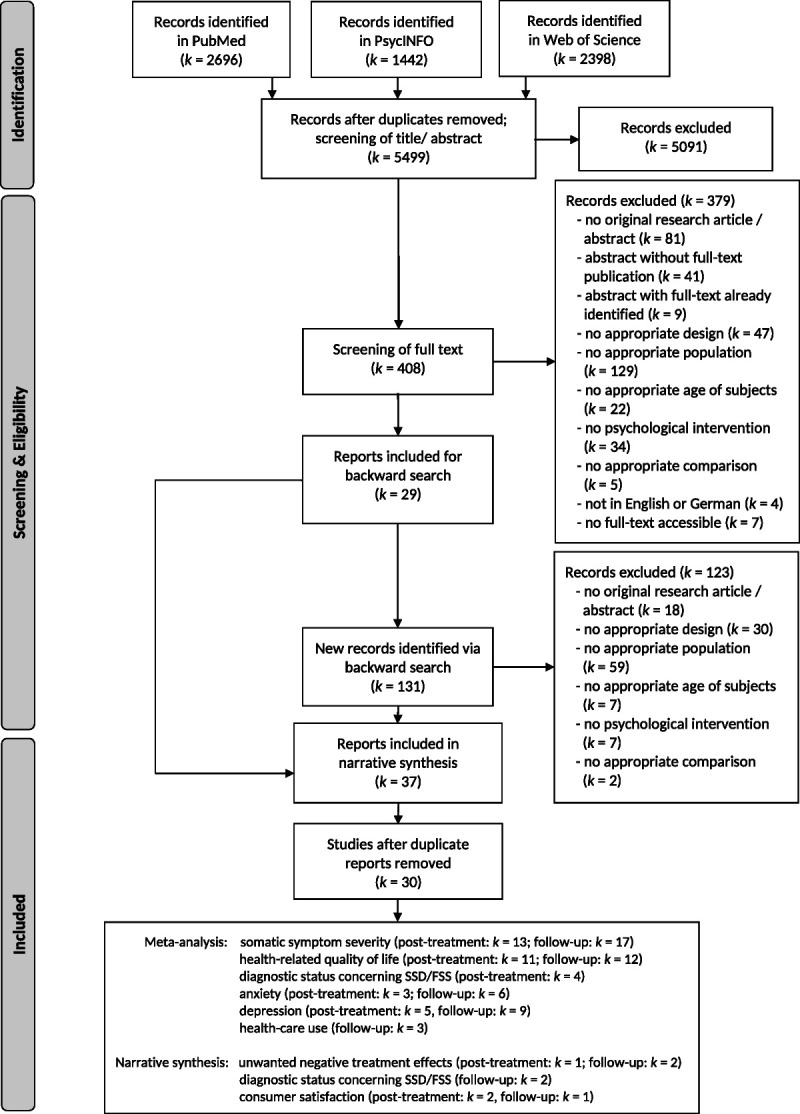
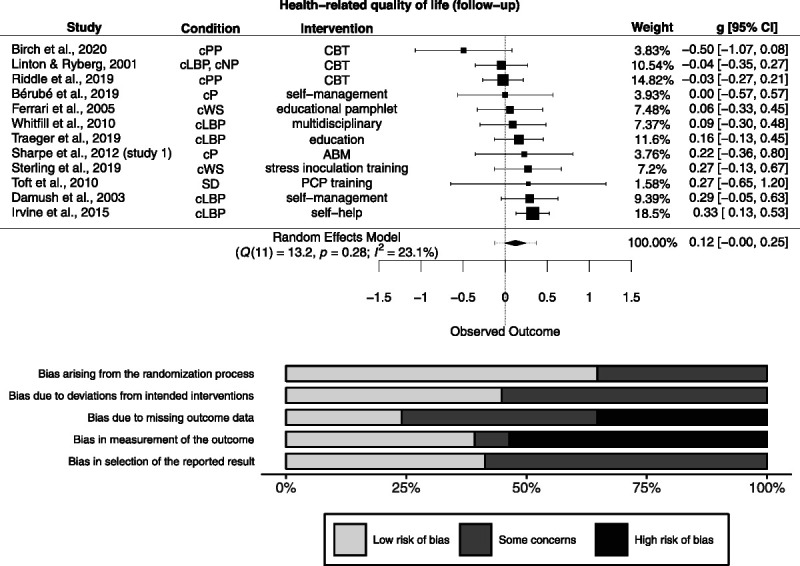
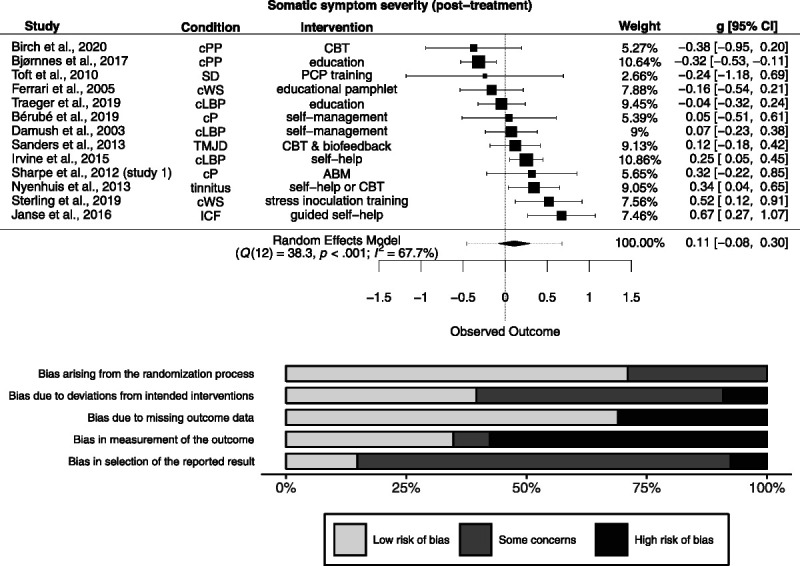
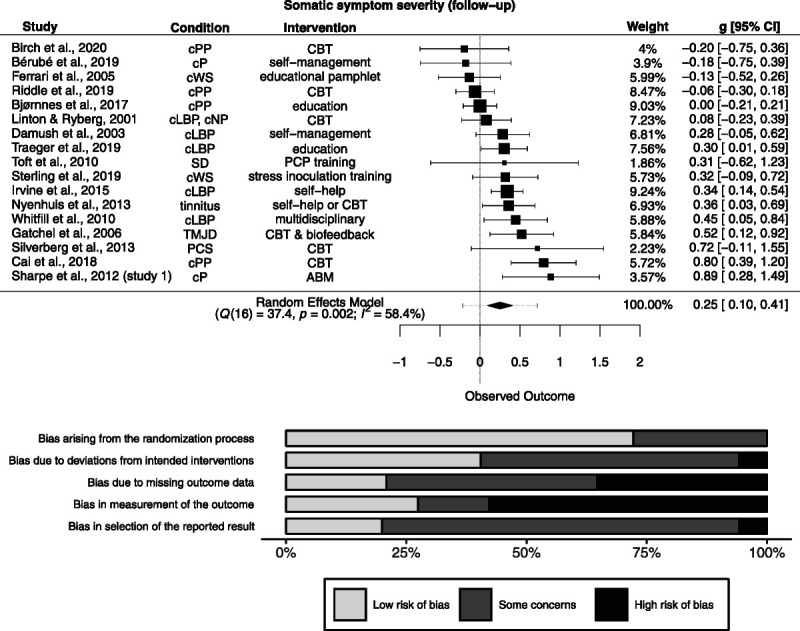
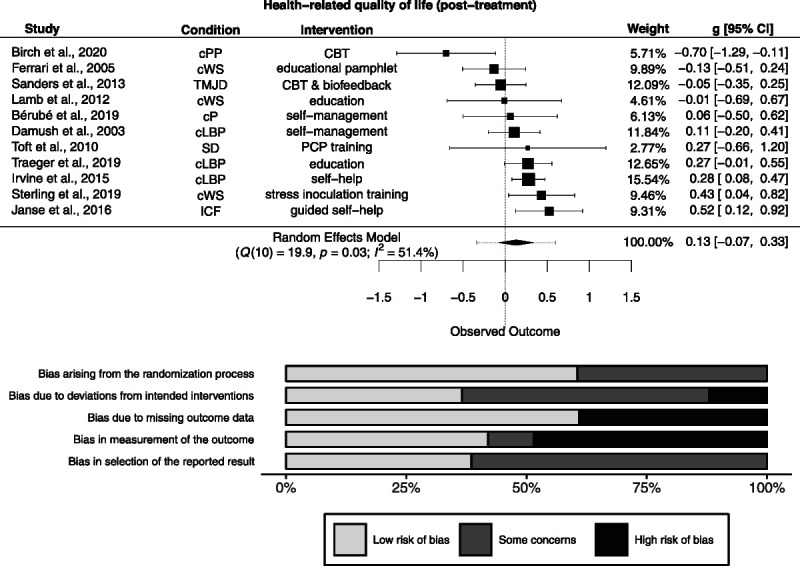
We identified 30 eligible studies, mostly examining pain-related conditions. Interventions were diverse, ranging from bibliotherapy to cognitive-behavioral therapy. We found positive effects on depression post-treatment (Hedges' g = 0.12 [95% confidence interval = 0.03-0.2], k = 5) as well as on somatic symptom severity (g = 0.25 [0.096-0.41], k = 17) and health care utilization (g = 0.31 [0.18-0.44], k = 3) at follow-up. However, because of a high risk of bias, sensitivity to corrections for meta-bias, and missing outcome data, findings should be interpreted cautiously.
Our review shows that targeting SSD/FSS at an early stage represents a conceptual and practical challenge. Readily accessible interventions addressing transsymptomatic processes of SSD/FSS development and consolidation are highly needed. Future studies are needed to evaluate individuals with diverse symptoms, examine symptom history thoroughly, use placebo controls, and report outcomes completely to determine the efficacy of early psychological interventions for SSD/FSS.PROSPERO Registration:CRD42020140122.
针对躯体症状障碍和功能性躯体综合征(SSD/FSS)的心理治疗仅取得了中等效果,这可能是由于这些患者的慢性程度较高。因此,我们旨在评估早期治疗(即在高危人群或新近发病的患者中进行治疗)是否能改善治疗效果。
我们对(群组)随机对照试验进行了系统评价和荟萃分析,评估了针对成年人 SSD/FSS 的早期心理干预措施,这些措施与非活动对照条件、标准护理或安慰剂进行了比较。包括处于 SSD/FSS 风险中的个体、患有亚阈值症状或 SSD/FSS 新发病例的个体、或首次出现 SSD/FSS 的个体。
我们确定了 30 项符合条件的研究,这些研究主要针对与疼痛相关的疾病。干预措施多种多样,从阅读疗法到认知行为疗法都有涉及。我们发现,在治疗后对抑郁有积极影响(Hedges' g = 0.12 [95%置信区间 0.03-0.2],k = 5),在随访时对躯体症状严重程度(g = 0.25 [0.096-0.41],k = 17)和医疗保健利用(g = 0.31 [0.18-0.44],k = 3)也有积极影响。然而,由于存在高偏倚风险、对元偏倚校正的敏感性以及缺失的结局数据,因此应谨慎解释研究结果。
我们的综述表明,在早期阶段针对 SSD/FSS 进行治疗是一个概念和实践上的挑战。迫切需要易于获得的干预措施来解决 SSD/FSS 发展和巩固的跨症状过程。未来的研究需要评估具有不同症状的个体,全面检查症状史,使用安慰剂对照,并完整报告结局,以确定早期心理干预措施对 SSD/FSS 的疗效。
PROSPERO 注册号:CRD42020140122。