University of Health Sciences, Faculty of International Medicine, Department of Biophysics, Istanbul, Turkey.
Namik Kemal University, Faculty of Medicine, Tekirdag, Turkey.
Curr Neuropharmacol. 2021;19(11):1865-1883. doi: 10.2174/1570159X19666210826125341.
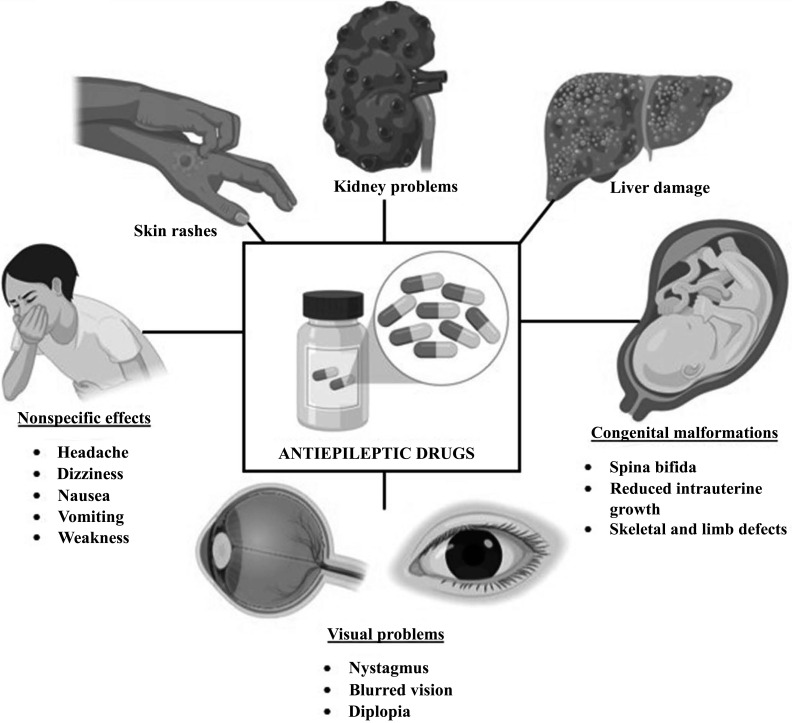
Over the decades, various interventions have been developed and utilized to treat epilepsy. However, the majority of epileptic patients are often first prescribed anti-epileptic drugs (AED), now known as anti-seizure drugs (ASD), as the first line of defense to suppress their seizures and regain their quality of life. ASDs exert their anti-convulsant effects through various mechanisms of action, including regulation of ion channels, blocking glutamate-mediated stimulating neurotransmitter interaction, and enhancing the inhibitory GABA transmission. About one-third of epileptic patients are often resistant to anti-convulsant drugs, while others develop numerous side effects, which may lead to treatment discontinuation and further deterioration of quality of life. Common side effects of ASDs include headache, nausea and dizziness. However, more adverse effects, such as auditory and visual problems, skin problems, liver dysfunction, pancreatitis and kidney disorders may also be witnessed. Some ASDs may even result in life-threatening conditions as well as serious abnormalities, especially in patients with comorbidities and in pregnant women. Nevertheless, some clinicians had observed a reduction in the development of side effects post individualized ASD treatment. This suggests that a careful and well-informed ASD recommendation to patients may be crucial for an effective and side-effect-free control of their seizures. Therefore, this review aimed to elucidate the anticonvulsant effects of ASDs as well as their side effect profile by discussing their mechanism of action and reported adverse effects based on clinical and preclinical studies, thereby providing clinicians with a greater understanding of the safety of current ASDs.
几十年来,人们开发并应用了各种干预措施来治疗癫痫。然而,大多数癫痫患者通常首先被开处方抗癫痫药物(AED),即现在的抗癫痫药物(ASD),作为抑制发作和恢复生活质量的一线治疗方法。ASD 通过多种作用机制发挥抗惊厥作用,包括调节离子通道、阻断谷氨酸介导的刺激神经递质相互作用以及增强抑制性 GABA 传递。大约三分之一的癫痫患者往往对抗惊厥药物耐药,而其他患者则出现许多副作用,这可能导致治疗中断和生活质量进一步恶化。ASD 的常见副作用包括头痛、恶心和头晕。然而,更严重的副作用,如听觉和视觉问题、皮肤问题、肝功能障碍、胰腺炎和肾脏疾病也可能发生。一些 ASD 甚至可能导致危及生命的情况和严重的异常,特别是在合并症患者和孕妇中。然而,一些临床医生观察到个体化 ASD 治疗后副作用的发展减少。这表明,仔细和充分了解 ASD 并向患者推荐,对于有效控制癫痫发作和避免副作用至关重要。因此,本综述旨在通过讨论 ASD 的作用机制和基于临床前和临床研究报告的不良反应,阐明 ASD 的抗惊厥作用及其副作用概况,从而使临床医生更好地了解当前 ASD 的安全性。