Critical Care Unit, Shanghai General Hospital, Shanghai Jiao Tong University School of Medicine, 650 New Songjiang Road, Songjiang, Shanghai, 201600, People's Republic of China.
Critical Care Unit, Wuhan Third Hospital, Wuhan University, Wuhan, China.
BMC Infect Dis. 2021 Sep 15;21(1):955. doi: 10.1186/s12879-021-06638-y.
Our goal is to further elucidate the clinical condition and prognosis of patients with severe acute COVID-19 with EBV reactivation.
This is a retrospective single-center study of COVID-19 patients admitted to the intensive care unit of Wuhan No. 3 Hospital (January 31 to March 27, 2020). According to whether Epstein-Barr virus reactivation was detected, the patients were divided into an EBV group and a Non-EBV group. Baseline data were collected including epidemiological, larithmics, clinical and imaging characteristics, and laboratory examination data.
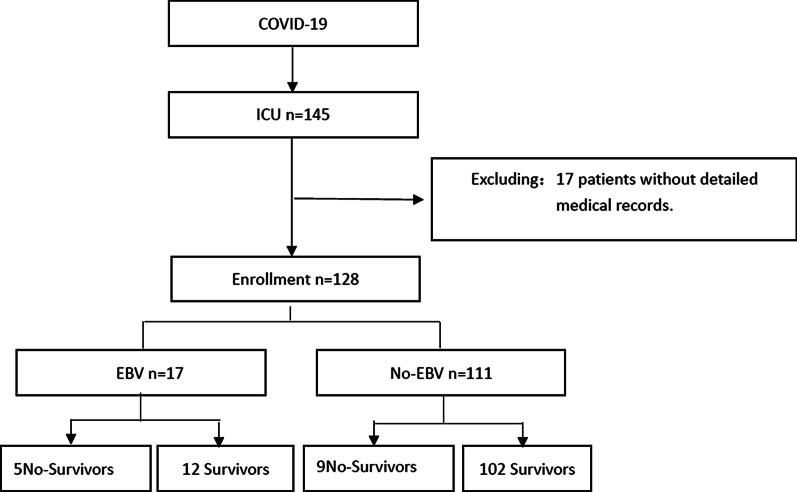
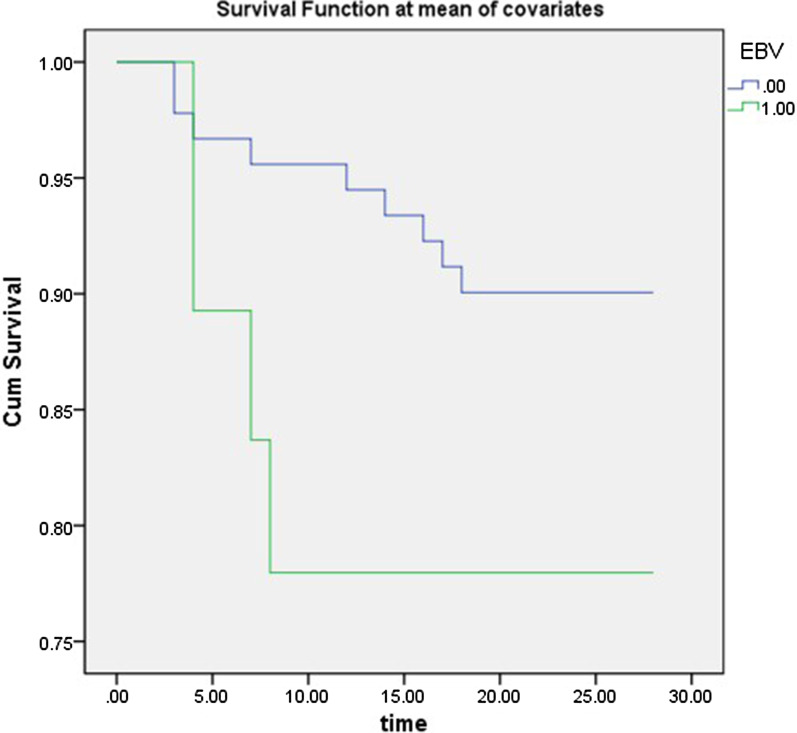
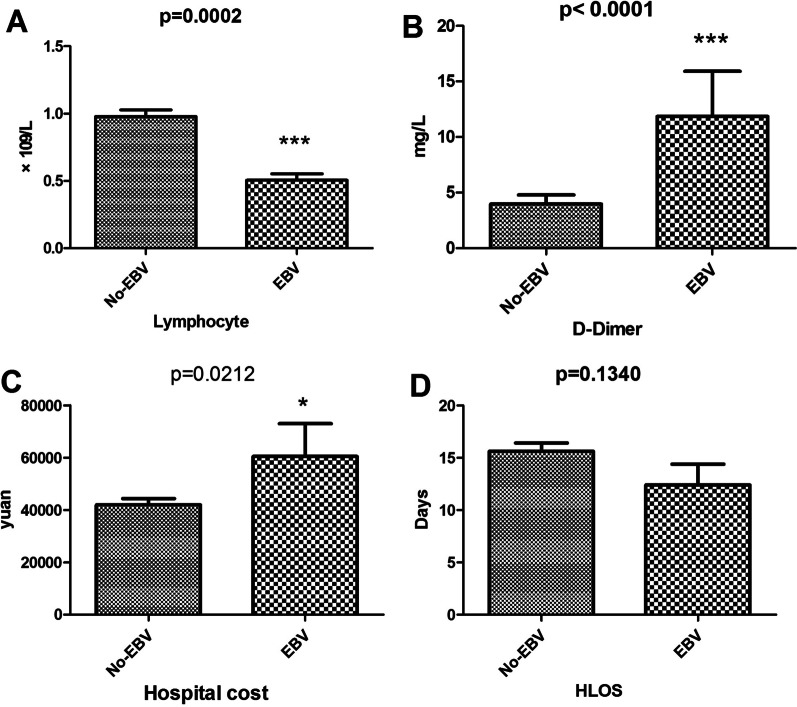
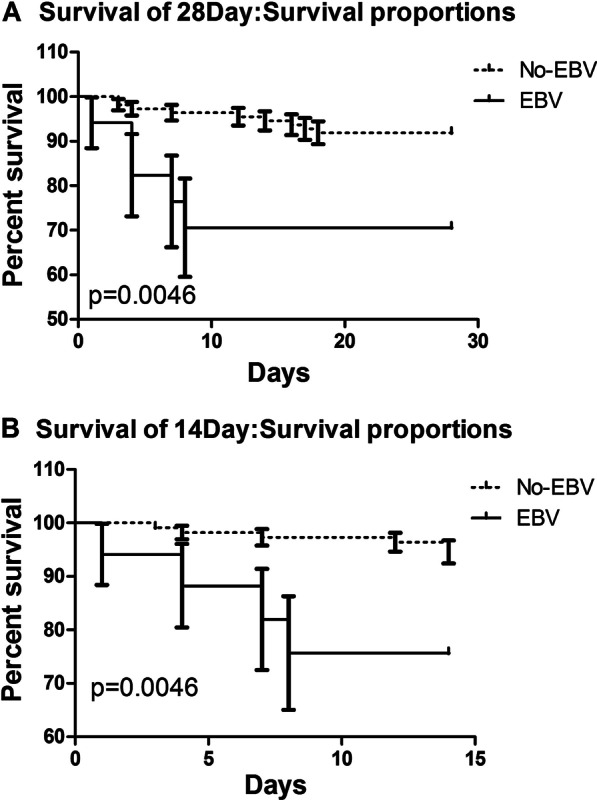
Of the 128 patients with COVID-19, 17 (13.3%) were infected with Epstein-Barr virus reactivation. In the symptoms,the rate of tachypnoea in the EBV group was apparently higher than that in the Non-EBV group. In lab tests, the lymphocyte and albumin of EBV group decreased more significantly than Non-EBV group, and the D-dimer and serum calcium of EBV group was higher than Non-EBV group. Regarding the infection index, CRP of EBV group was apparently above the Non-EBV group, and no significant difference was found in procalcitonin of the two groups. The incidence of respiratory failure, ARDS, and hypoproteinaemia of EBV group had more incidence than Non-EBV group. The 28-day and 14-day mortality rates of EBV group was significantly higher than that of Non-EBV group.
In the COVID-19 patients, patients with EBV reactivation had higher 28-day and 14-day mortality rates and received more immuno-supportive treatment than patients of Non-EBV group.
本研究旨在进一步阐明伴有 EBV 再激活的重症 COVID-19 患者的临床特征和预后。
这是一项回顾性单中心研究,纳入了 2020 年 1 月 31 日至 3 月 27 日期间入住武汉市第三医院重症监护病房的 COVID-19 患者。根据是否检测到 EBV 再激活,将患者分为 EBV 组和非 EBV 组。收集两组患者的基本资料,包括流行病学、临床和影像学特征以及实验室检查数据。
在 128 例 COVID-19 患者中,有 17 例(13.3%)发生 EBV 再激活。在症状方面,EBV 组患者呼吸急促的发生率明显高于非 EBV 组。在实验室检查方面,EBV 组患者的淋巴细胞和白蛋白下降更为明显,D-二聚体和血清钙水平高于非 EBV 组。在感染指标方面,EBV 组的 CRP 明显高于非 EBV 组,两组患者的降钙素原无明显差异。EBV 组患者发生呼吸衰竭、ARDS 和低蛋白血症的比例高于非 EBV 组。EBV 组患者的 28 天和 14 天病死率明显高于非 EBV 组。
在 COVID-19 患者中,伴有 EBV 再激活的患者 28 天和 14 天病死率更高,接受免疫支持治疗的比例也高于非 EBV 组。