Yan Wuping, Ye Zhouchen, Cao Shijia, Yao Guanglong, Yu Jing, Yang Dongmei, Chen Ping, Zhang Junfeng, Wu Yougen
College of Horticulture, Hainan University, Haikou, Hainan, China.
PeerJ. 2021 Aug 26;9:e12025. doi: 10.7717/peerj.12025. eCollection 2021.
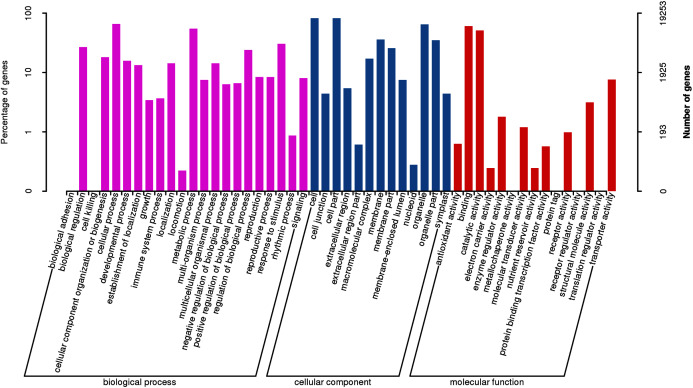
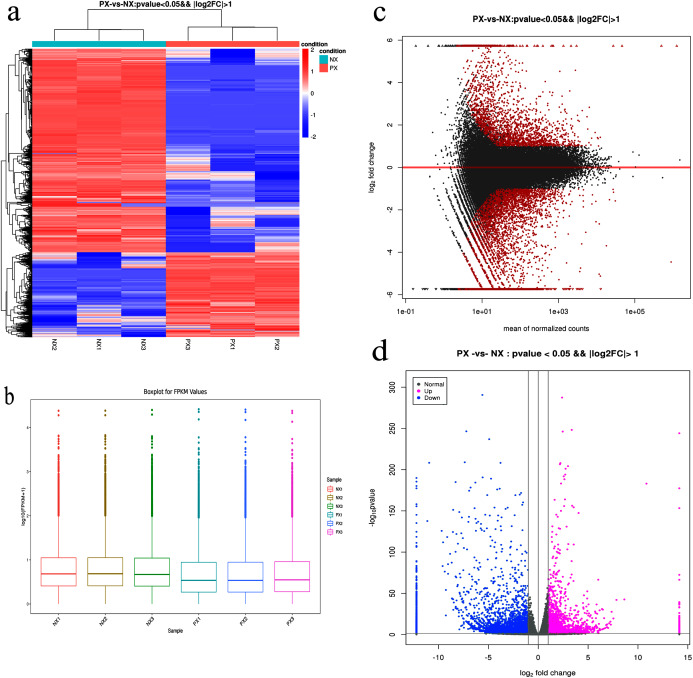
, a medicinally and economically important perennial herb, is cultivated around the world due to its medicinal and aromatic properties. Different cultivars exhibit different morphological traits and patchouli oil components and contents (especially patchouli alcohol (PA) and pogostone (PO)). According to the signature constituent of the leaf, was classified into two different chemotypes, including PA-type and PO-type. To better understand the molecular mechanisms of PA biosynthesis, the transcriptomes of Chinese-cultivated cv. PA-type "Nanxiang" (NX) and PO-type "Paixiang" (PX) were analyzed and compared with ribonucleic acid sequencing (RNA-Seq) technology. We obtained a total of 36.83 G clean bases from the two chemotypes, compared them with seven databases and revealed 45,394 annotated unigenes. Thirty-six candidate unigenes participating in the biosynthesis of PA were found in the transcriptomes. Overall, 8,390 differentially expressed unigenes were identified between the chemotypes, including 2,467 upregulated and 5,923 downregulated unigenes. Furthermore, six and nine differentially expressed genes (DEGs) were mapped to the terpenoid backbone biosynthetic and sesquiterpenoid and triterpenoid biosynthetic pathways, respectively. One key sesquiterpene synthase gene involved in the sesquiterpenoid and triterpenoid biosynthetic pathways, encoding patchoulol synthase variant 1, was significantly upregulated in NX. Additionally, GC-MS analysis of the two chemotypes in this study showed that the content of PA in NX was significantly higher than that of PX, while the content of PO showed the opposite phenotype. Quantitative real-time polymerase chain reaction (qRT-PCR) analysis showed that the DEG expression tendency was consistent with the transcriptome sequencing results. Overall, 23 AP2/ERF, 13 bHLH, 11 MYB, 11 NAC, three Trihelix, 10 WRKY and three bZIP genes that were differentially expressed may act as regulators of terpenoid biosynthesis. Altogether, 8,314 SSRs were recognized within 6,825 unigenes, with a distribution frequency of 18.32%, among which 1,202 unigenes contained more than one SSR. The transcriptomic characteristics of the two chemotypes are comprehensively reported in this study, and these results will contribute to a better understanding of the molecular mechanism of PA biosynthesis. Our transcriptome data also provide a valuable genetic resource for further studies on .
[植物名称]是一种具有重要药用和经济价值的多年生草本植物,因其药用和芳香特性而在全球范围内种植。不同品种表现出不同的形态特征以及广藿香油的成分和含量(尤其是广藿香醇(PA)和广藿香酮(PO))。根据叶片的标志性成分,[植物名称]被分为两种不同的化学型,包括PA型和PO型。为了更好地理解PA生物合成的分子机制,利用核糖核酸测序(RNA-Seq)技术对中国种植的PA型“南香”(NX)和PO型“排香”(PX)的转录组进行了分析和比较。我们从这两种化学型中总共获得了36.83 G的干净碱基,将它们与七个数据库进行比较,共鉴定出45,394个注释的单基因。在[植物名称]转录组中发现了36个参与PA生物合成的候选单基因。总体而言,在这两种化学型之间鉴定出8390个差异表达的单基因,其中包括2467个上调和5923个下调的单基因。此外,分别有6个和9个差异表达基因(DEG)被定位到萜类骨架生物合成途径以及倍半萜和三萜生物合成途径。一个参与倍半萜和三萜生物合成途径的关键倍半萜合酶基因,编码广藿香醇合酶变体1,在NX中显著上调。此外,本研究中对这两种化学型的气相色谱-质谱(GC-MS)分析表明,NX中PA的含量显著高于PX,而PO的含量则呈现相反的表型。定量实时聚合酶链反应(qRT-PCR)分析表明,DEG的表达趋势与转录组测序结果一致。总体而言,23个AP2/ERF、13个bHLH、11个MYB、11个NAC、3个Trihelix、10个WRKY和3个bZIP差异表达基因可能作为萜类生物合成的调节因子。总共在6825个单基因中识别出8314个简单序列重复(SSR),分布频率为18.32%,其中1202个单基因包含多个SSR。本研究全面报道了这两种[植物名称]化学型的转录组特征,这些结果将有助于更好地理解PA生物合成的分子机制。我们的转录组数据也为[植物名称]的进一步研究提供了宝贵的遗传资源。