Department of Neuroscience, Mortimer B. Zuckerman Institute Mind Brain Behavior, Columbia University, New York, NY 10027, USA.
Department of Neuroscience, Mortimer B. Zuckerman Institute Mind Brain Behavior, Columbia University, New York, NY 10027, USA; Kavli Institute for Brain Science, Columbia University, New York, NY 10027, USA.
Dev Cell. 2021 Sep 27;56(18):2649-2663.e6. doi: 10.1016/j.devcel.2021.08.020. Epub 2021 Sep 15.
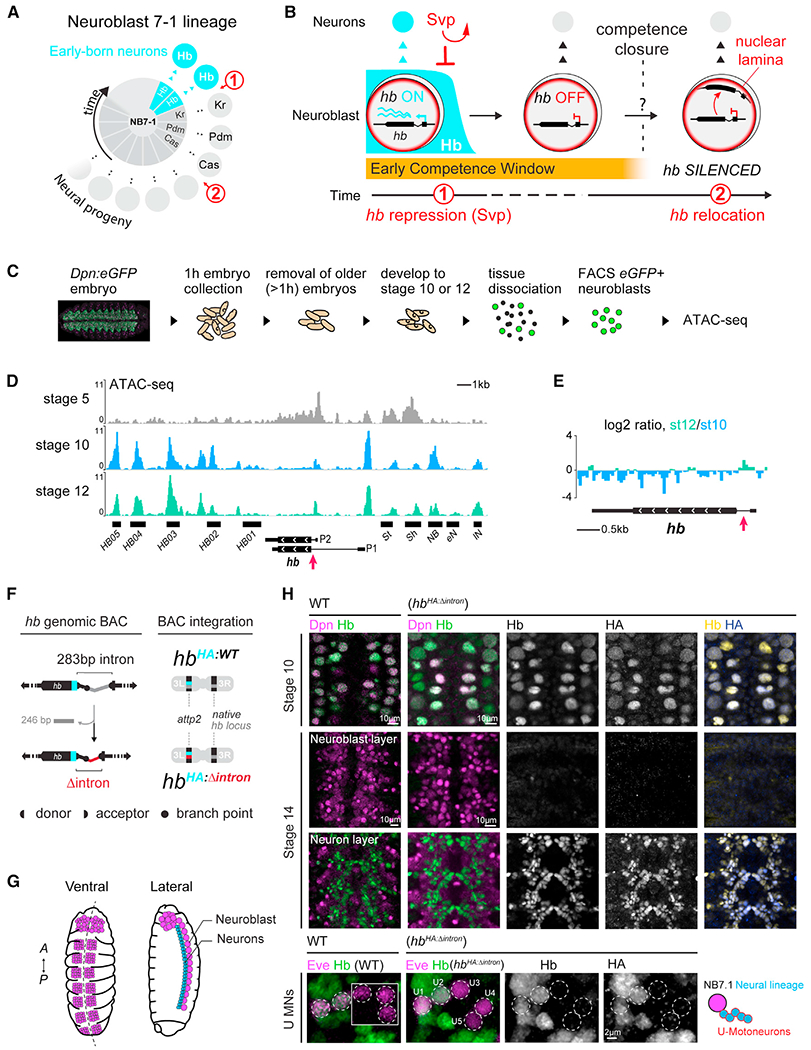
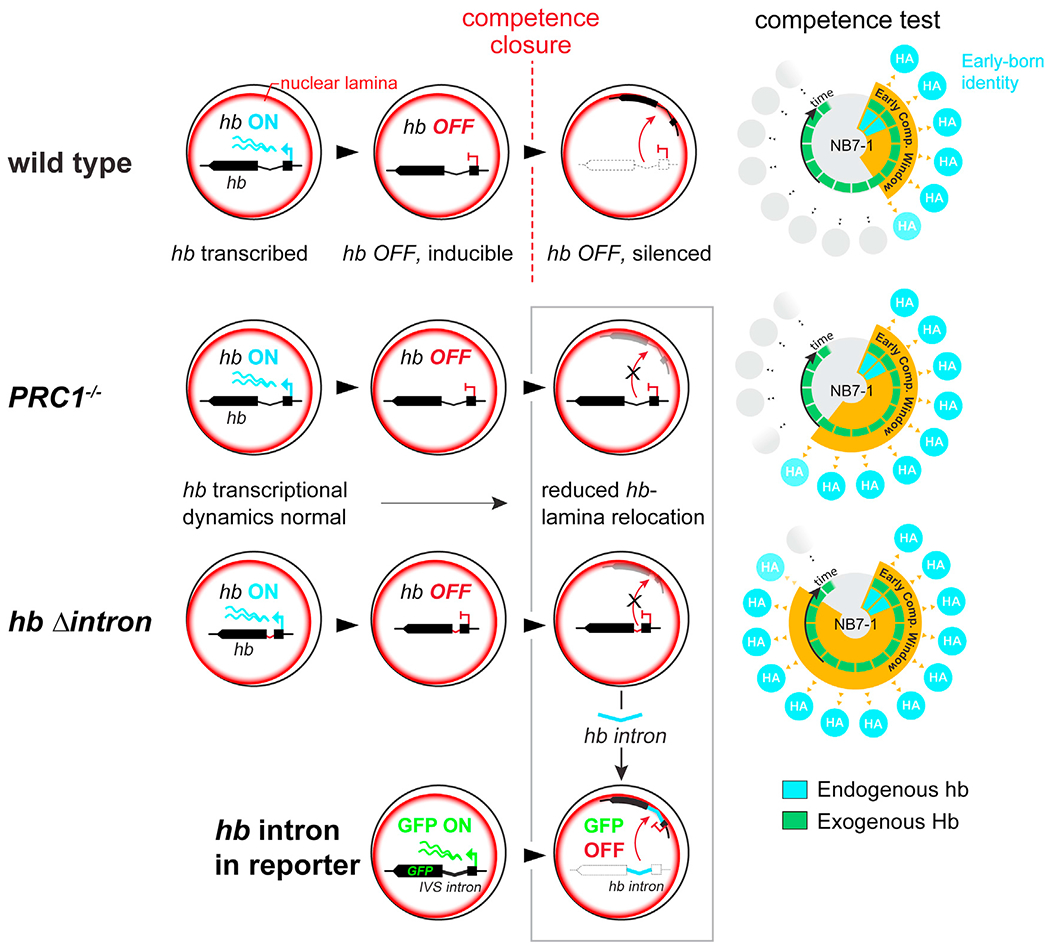
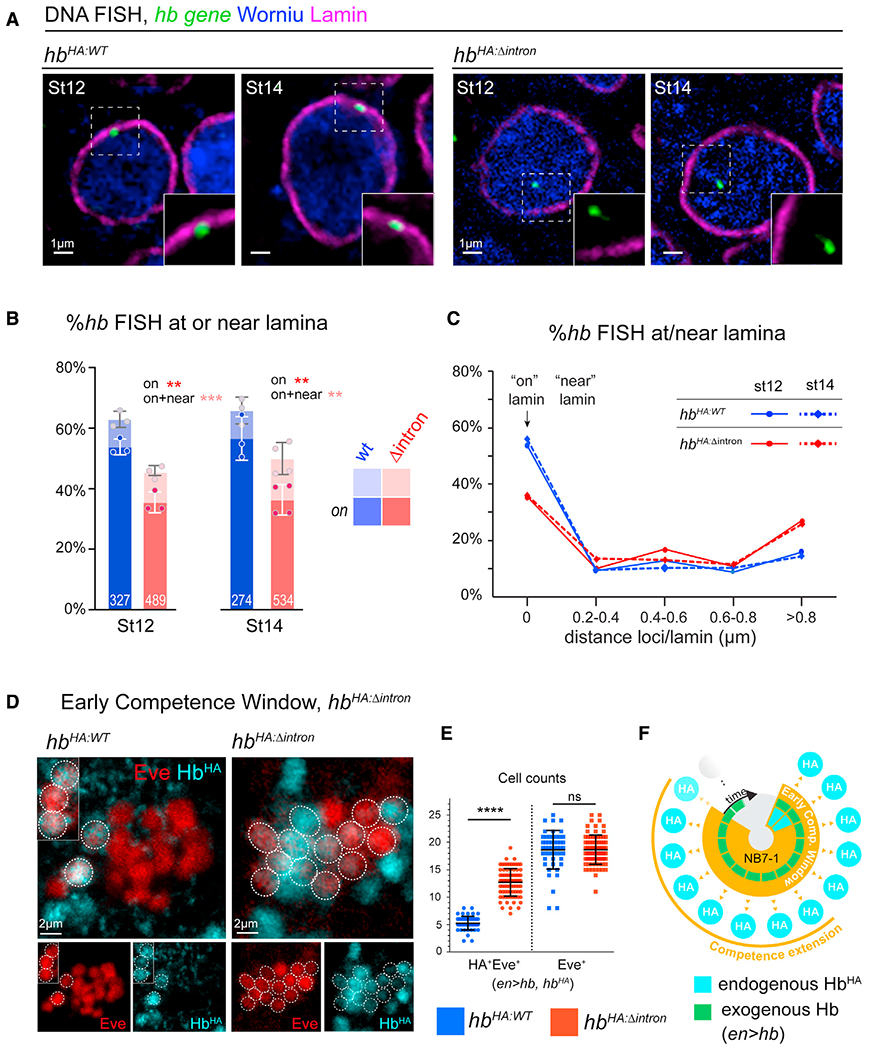
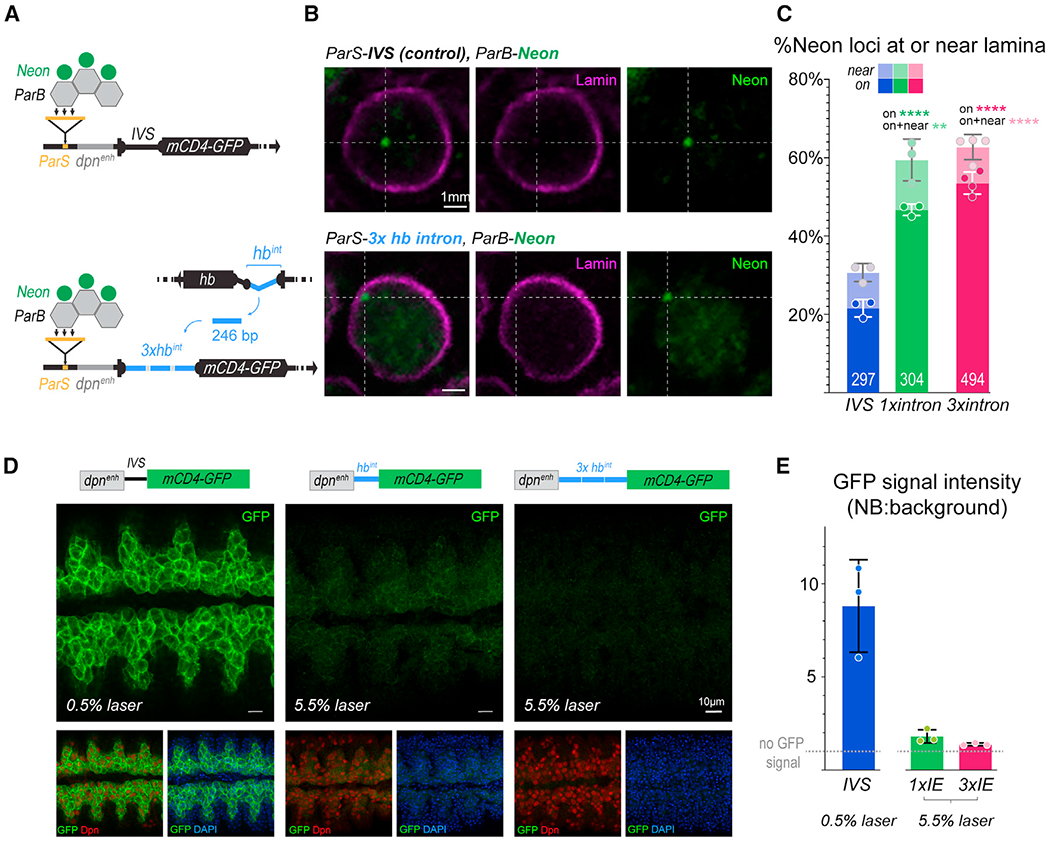
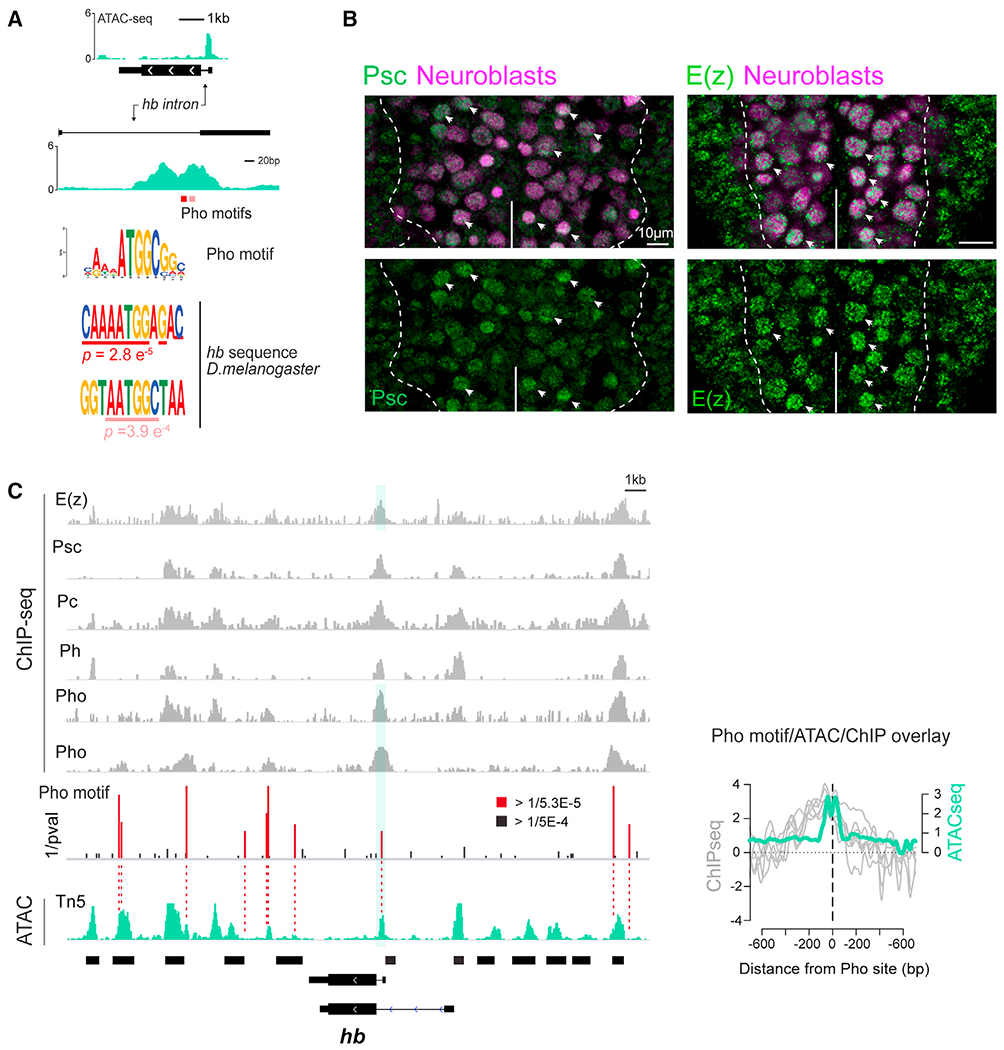
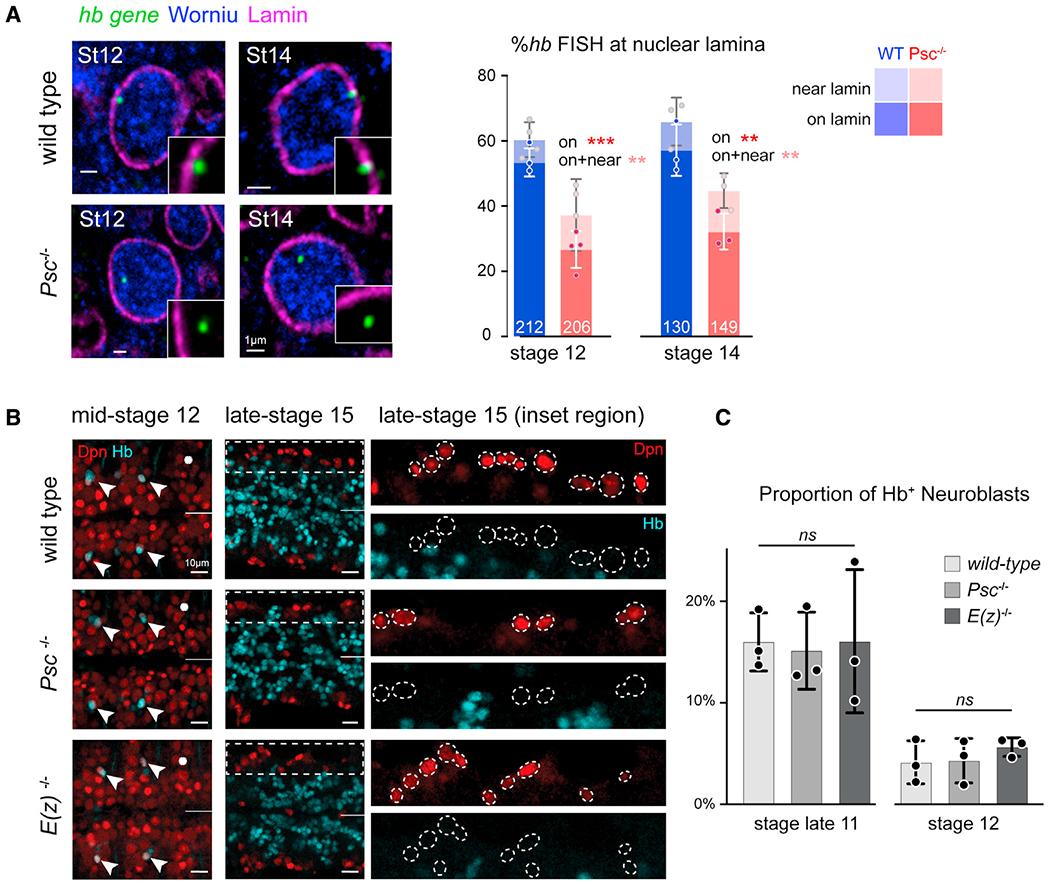
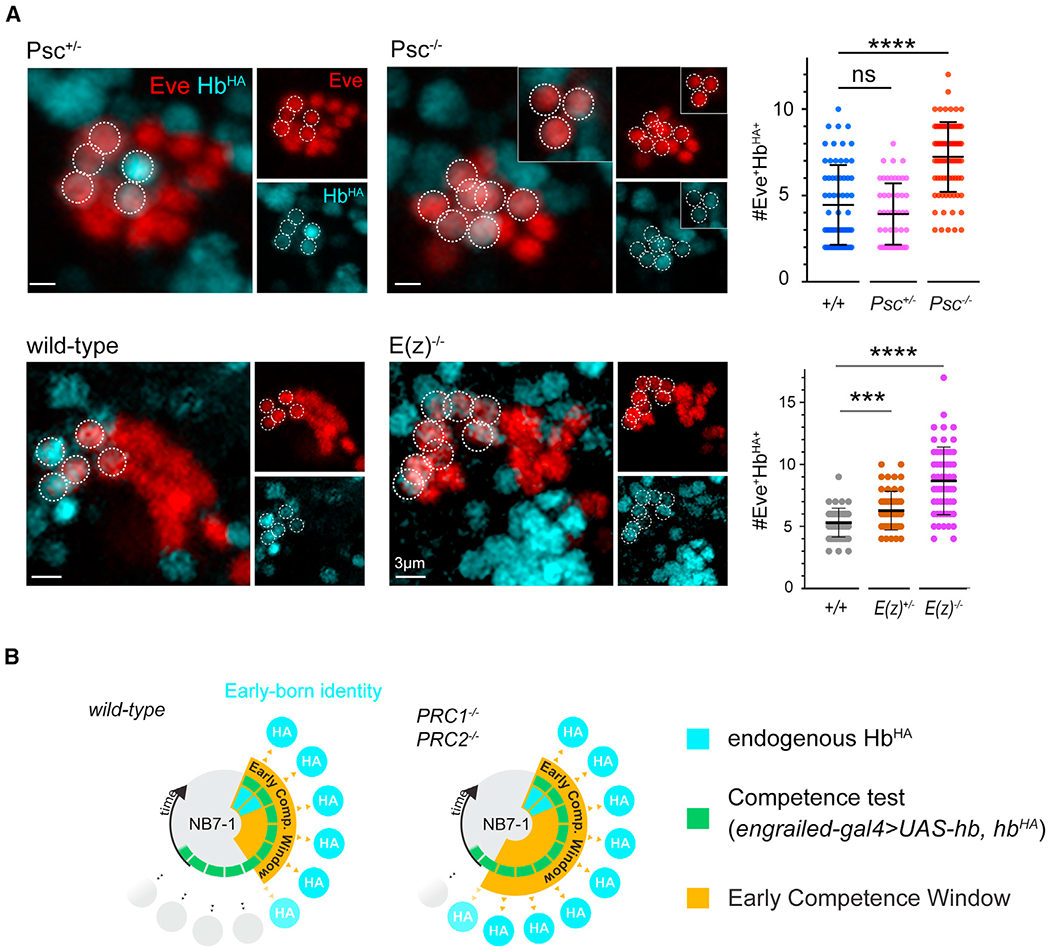
The nuclear lamina is typically associated with transcriptional silencing, and peripheral relocation of genes highly correlates with repression. However, the DNA sequences and proteins regulating gene-lamina interactions are largely unknown. Exploiting the developmentally timed hunchback gene movement to the lamina in Drosophila neuroblasts, we identified a 250 bp intronic element (IE) both necessary and sufficient for relocation. The IE can target a reporter transgene to the lamina and silence it. Endogenously, however, hunchback is already repressed prior to relocation. Instead, IE-mediated relocation confers a heritably silenced gene state refractory to activation in descendent neurons, which terminates neuroblast competence to specify early-born identity. Surprisingly, we found that the Polycomb group chromatin factors bind the IE and are required for lamina relocation, revealing a nuclear architectural role distinct from their well-known function in transcriptional repression. Together, our results uncover in vivo mechanisms underlying neuroblast competence and lamina association in heritable gene silencing.
核层通常与转录沉默有关,基因的外周重定位与抑制高度相关。然而,调节基因-核层相互作用的 DNA 序列和蛋白质在很大程度上是未知的。利用果蝇神经母细胞中发育时间上有规律的 hunchback 基因向核层的移动,我们鉴定出一个 250bp 的内含子元件(IE),它对于重定位是必需和充分的。IE 可以将报告基因转座到核层并使其沉默。然而,内源性的 hunchback 在重定位之前就已经被抑制了。相反,IE 介导的重定位赋予了一个可遗传沉默的基因状态,使其对后代神经元中的激活具有抗性,从而终止神经母细胞指定早期出生身份的能力。令人惊讶的是,我们发现 Polycomb 组染色质因子结合 IE,并且对于核层重定位是必需的,揭示了一种不同于其在转录抑制中已知功能的核结构作用。总之,我们的结果揭示了神经母细胞能力和可遗传基因沉默中核层关联的体内机制。