MOA Key Laboratory of Crop Ecophysiology and Farming System in the Middle Reaches of the Yangtze River, College of Plant Science and Technology, Huazhong Agricultural University, Wuhan, 430070, China.
Shenzhen Institute of Nutrition and Health, Huazhong Agricultural University, Shenzhen, China.
J Nanobiotechnology. 2021 Sep 16;19(1):276. doi: 10.1186/s12951-021-01026-9.
Salinity is a big threat to agriculture by limiting crop production. Nanopriming (seed priming with nanomaterials) is an emerged approach to improve plant stress tolerance; however, our knowledge about the underlying mechanisms is limited.
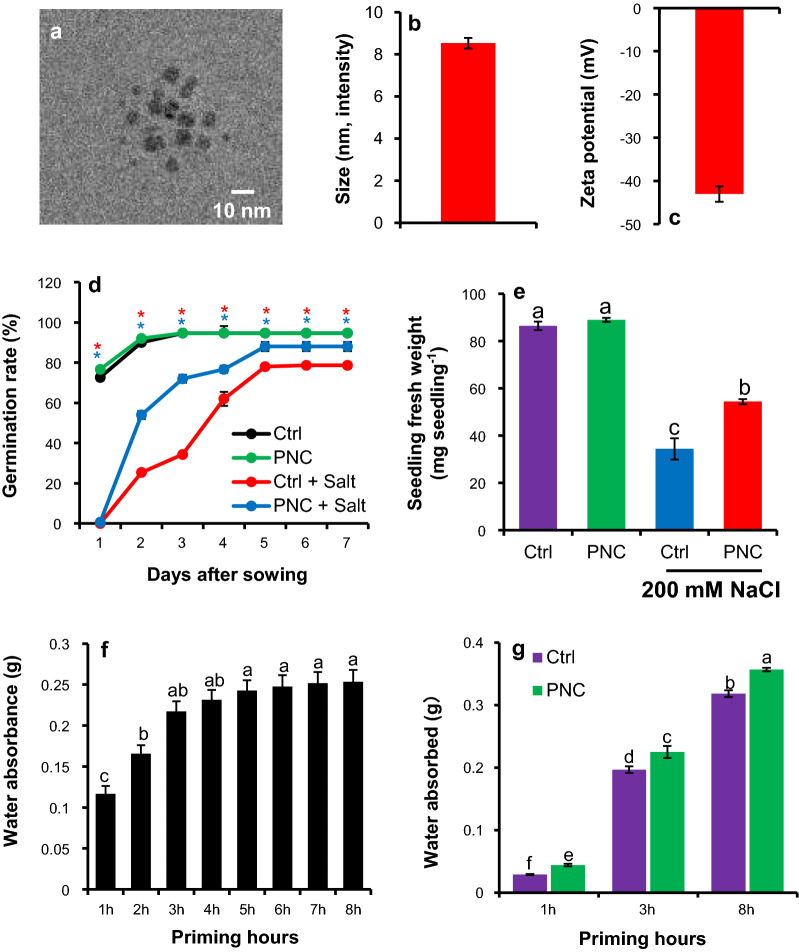
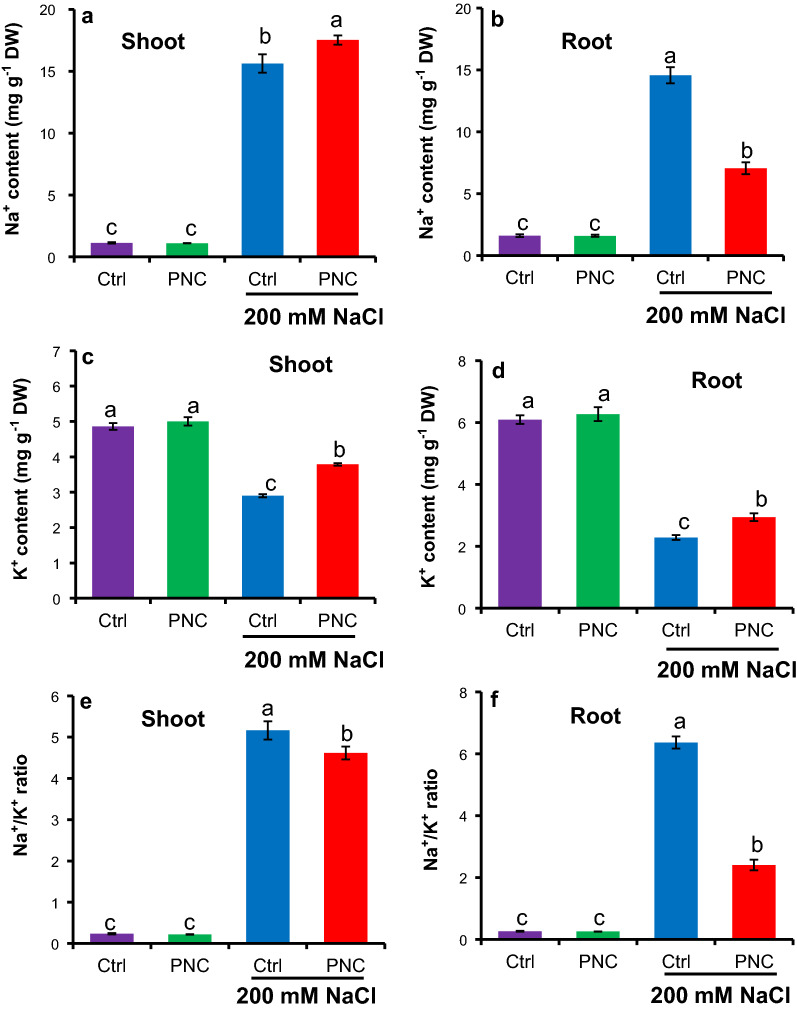
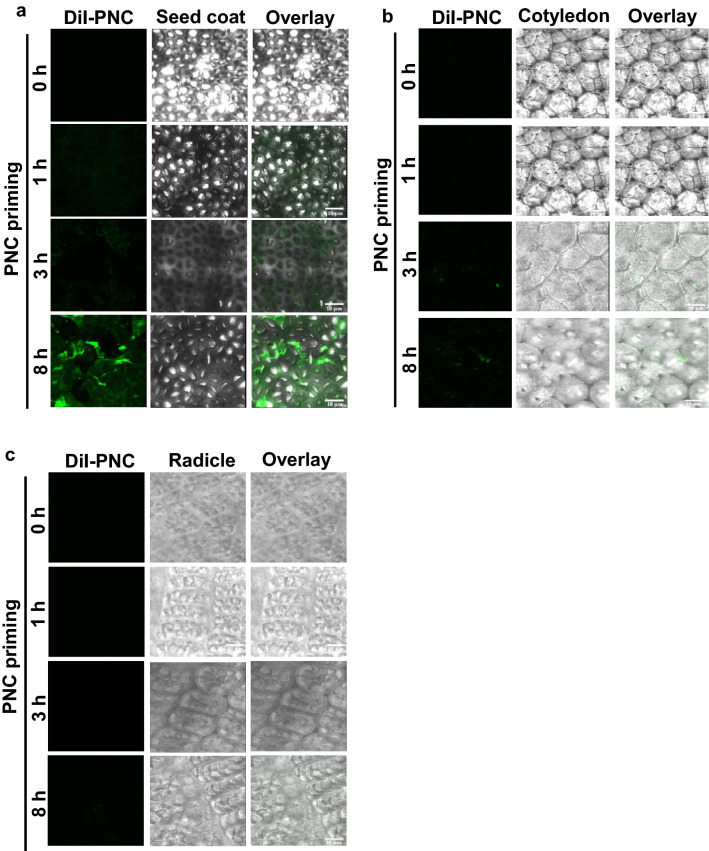
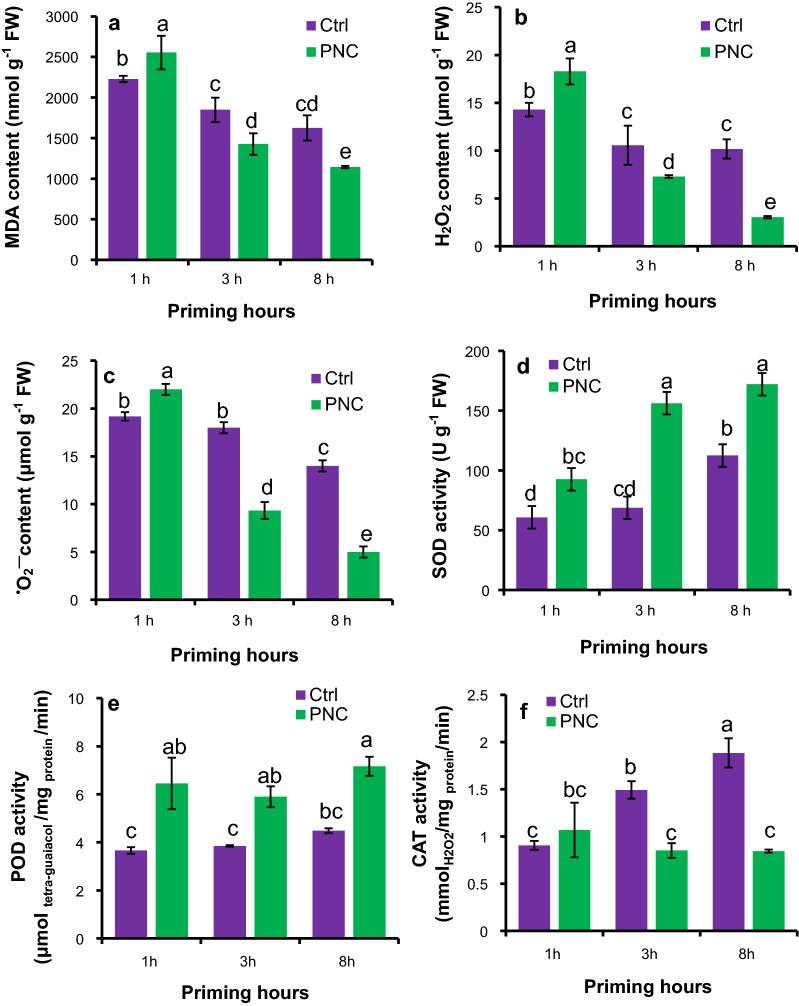
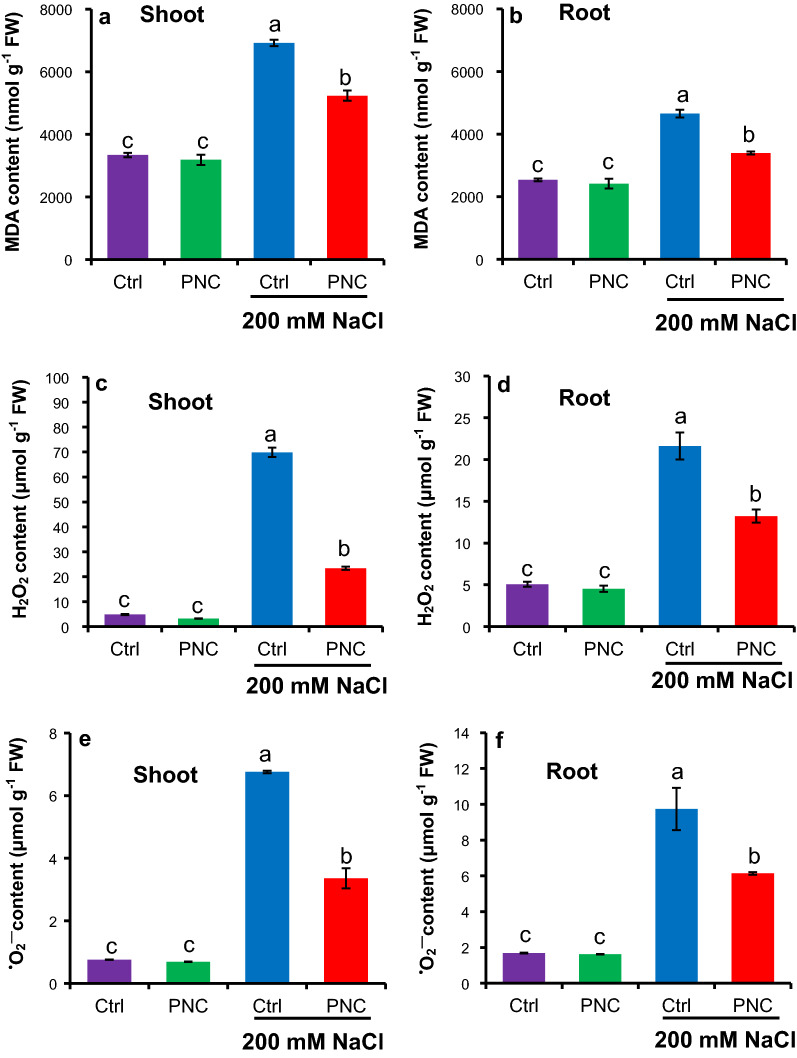
Herein, we used cerium oxide nanoparticles (nanoceria) to prime rapeseeds and investigated the possible mechanisms behind nanoceria improved rapeseed salt tolerance. We synthesized and characterized polyacrylic acid coated nanoceria (PNC, 8.5 ± 0.2 nm, -43.3 ± 6.3 mV) and monitored its distribution in different tissues of the seed during the imbibition period (1, 3, 8 h priming). Our results showed that compared with the no nanoparticle control, PNC nanopriming improved germination rate (12%) and biomass (41%) in rapeseeds (Brassica napus) under salt stress (200 mM NaCl). During the priming hours, PNC were located mostly in the seed coat, nevertheless the intensity of PNC in cotyledon and radicle was increased alongside with the increase of priming hours. During the priming hours, the amount of the absorbed water (52%, 14%, 12% increase at 1, 3, 8 h priming, respectively) and the activities of α-amylase were significantly higher (175%, 309%, 295% increase at 1, 3, 8 h priming, respectively) in PNC treatment than the control. PNC primed rapeseeds showed significantly lower content of MDA, HO, and O in both shoot and root than the control under salt stress. Also, under salt stress, PNC nanopriming enabled significantly higher K retention (29%) and significantly lower Na accumulation (18.5%) and Na/K ratio (37%) than the control.
Our results suggested that besides the more absorbed water and higher α-amylase activities, PNC nanopriming improves salt tolerance in rapeseeds through alleviating oxidative damage and maintaining Na/K ratio. It adds more knowledge regarding the mechanisms underlying nanopriming improved plant salt tolerance.
盐分是农业生产的一大威胁,限制了作物的产量。纳米引发(用纳米材料对种子进行引发处理)是一种提高植物抗逆性的新兴方法,但我们对其潜在机制的了解有限。
本文使用氧化铈纳米粒子(纳米氧化铈)对油菜种子进行引发处理,并研究了纳米氧化铈提高油菜耐盐性的可能机制。我们合成并表征了聚丙烯酸包覆的纳米氧化铈(PNC,8.5±0.2nm,-43.3±6.3mV),并在吸胀期(1、3、8h 引发)监测其在种子不同组织中的分布。结果表明,与无纳米粒子对照相比,PNC 纳米引发处理在盐胁迫(200mM NaCl)下提高了油菜种子(甘蓝型油菜)的发芽率(12%)和生物量(41%)。在引发过程中,PNC 主要位于种皮中,但随着引发时间的增加,子叶和胚根中 PNC 的强度增加。在引发过程中,PNC 处理吸收的水分量(分别增加 52%、14%和 12%,在 1、3 和 8h 引发时)和α-淀粉酶的活性(分别增加 175%、309%和 295%,在 1、3 和 8h 引发时)明显高于对照。与对照相比,在盐胁迫下,PNC 引发的油菜种子的 MDA、HO 和 O 的含量明显较低。此外,在盐胁迫下,与对照相比,PNC 纳米引发处理可显著提高油菜中 K 的保留量(29%),降低 Na 的积累量(18.5%)和 Na/K 比值(37%)。
我们的研究结果表明,除了吸收更多的水分和提高α-淀粉酶活性外,PNC 纳米引发处理还通过减轻氧化损伤和维持 Na/K 比值来提高油菜的耐盐性。它为纳米引发处理提高植物耐盐性的潜在机制提供了更多的知识。