Kheang Soy T, Por Ir, Sovannaroth Siv, Dysoley Lek, Chea Huch, Po Ly, AlMossawi Hala J, Imran Abu Al, Kak Neeraj
Health and Social Development (HSD), Cambodia.
National Institute of Public Health (NIPH), Cambodia.
Malariaworld J. 2021 Jul 1;12:5. eCollection 2021.
Cambodia has made significant progress in controlling malaria in the past decade. It now aims to eliminate malaria from the country by 2025. It launched the Malaria Elimination Action Framework (MEAF 2016-2020) in 2015 with strong political commitment targeting appropriate interventions on high-risk populations, particularly mobile and migrant groups.
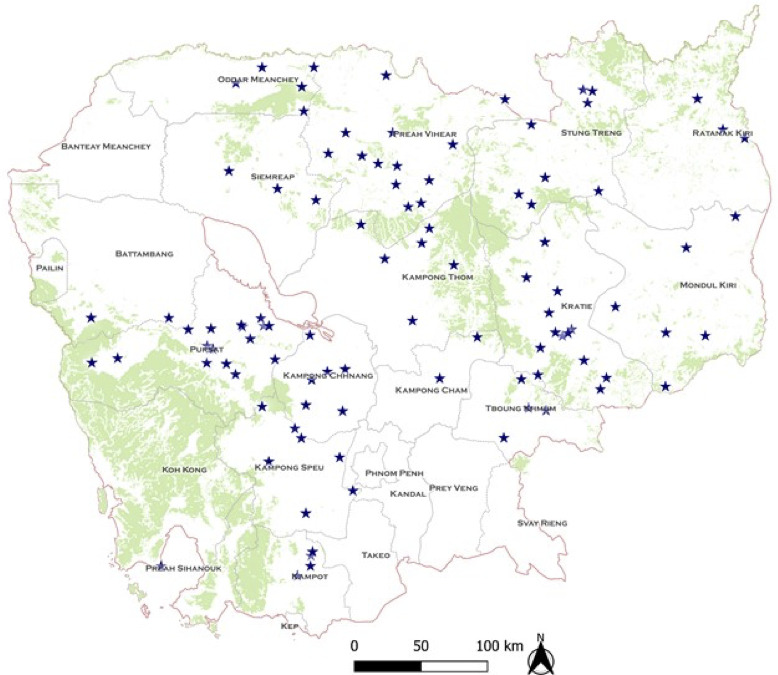
In 2020, the household-level Cambodia Malaria Survey 2020 (CMS 2020) was conducted with the objective to assess the performance of malaria control activities using the indicators outlined in MEAF 2016-2020. The survey used a cross-sectional probability proportional to size approach drawing 4,000 households from 100 villages across the malaria-endemic districts of the country.
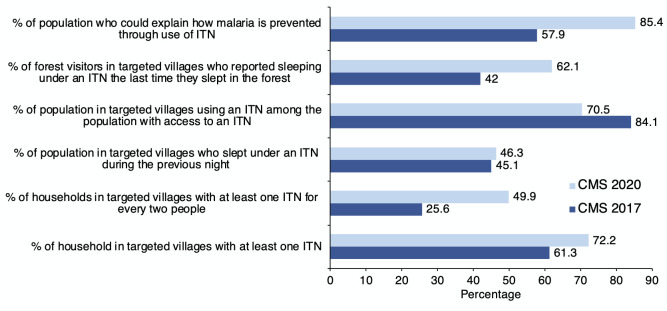
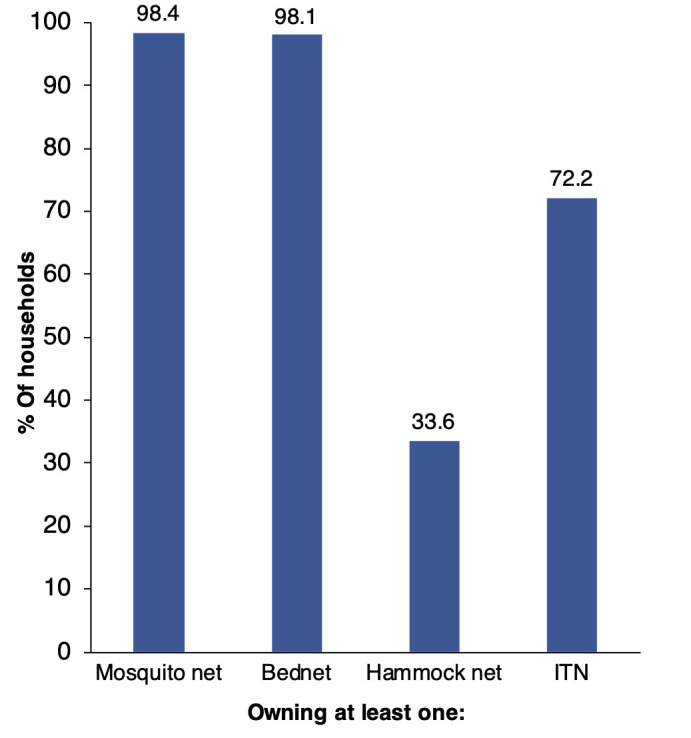
A total of 3,996 households with 17,415 inhabitants were interviewed. Of the surveyed households, 98.4% owned a long-lasting insecticide-treated bednet or hammock (LLIN/LLIHN). However, only 79.5% of these reported sleeping under a net the previous night, with only 45.7% sleeping under an insecticide treated net (ITN). Given that forest visitors are at the highest risk of getting malaria, the survey also targeted this group. Of the forest visitor respondents, 89.3% brought an ITN along and 88.9% reported to have used a net during their forest stay. About 10.8% of forest goers had received a forest kit for malaria prevention from mobile malaria workers the last time they went to the forest. Knowledge about mosquito repellents was high among forest goers (62.5%) but the actual use thereof during the last visit to the forest was low (22%). While awareness about malaria prevention with LLINs remained high among most respondents, knowledge about malaria diagnosis and treatment was not universal. Source of malaria knowledge and its treatment was usually from a household member, followed by a village malaria worker or a primary health care center staff. Of those who had fever during the previous two weeks, 93.6% sought advice or treatment outside the home, and the most commonly reported source for advice or treatment was private providers (39.4%) followed by health center/district hospital (31.3%).
ITN distribution and other malaria prevention interventions have largely benefited the high-risk groups including the forest visitors. Comparing the CMS 2020 results with the 2017 CMS results, it is clear that forest visitors' use of LLIN/LLIHN has improved considerably. However, more needs to be done to ensure forest visitors be protected either through using LLINs or repellents while working and staying in the forest areas. Also, given that sleeping under LLINs has decreased over the past several years among the at-risk populations, the programme will have to develop strategies to ensure that the communities do not lower their guard against malaria as cases further dwindle in malaria prone areas. Heightened awareness amongst the general population will be critical for eliminating malaria in Cambodia without any possibility of malaria re-emergence or re-establishment.
柬埔寨在过去十年中在控制疟疾方面取得了重大进展。该国目前的目标是到2025年消除疟疾。2015年,柬埔寨发起了《疟疾消除行动框架(2016 - 2020年)》,在强有力的政治承诺下,针对高风险人群,特别是流动和移民群体采取适当干预措施。
2020年,开展了家庭层面的《2020年柬埔寨疟疾调查》(CMS 2020),目的是使用《2016 - 2020年疟疾消除行动框架》中概述的指标评估疟疾控制活动的成效。该调查采用了与规模成比例的横断面抽样方法,从该国疟疾流行区的100个村庄中抽取了4000户家庭。
共采访了3996户家庭,涉及17415名居民。在接受调查的家庭中,98.4%拥有长效驱虫蚊帐或吊床(LLIN/LLIHN)。然而,这些家庭中只有79.5%报告前一晚睡在蚊帐下,其中只有45.7%睡在经杀虫剂处理的蚊帐(ITN)下。鉴于森林访客感染疟疾的风险最高,该调查也针对这一群体。在森林访客受访者中,89.3%携带了ITN,88.9%报告在森林停留期间使用了蚊帐。约10.8%的森林访客上次去森林时从流动疟疾防治人员那里获得了疟疾预防森林套装。森林访客对驱蚊剂的知晓率较高(62.5%),但上次去森林时实际使用率较低(22%)。虽然大多数受访者对使用LLIN预防疟疾的意识仍然很高,但对疟疾诊断和治疗的知识并不普及。疟疾知识及其治疗的来源通常是家庭成员,其次是村庄疟疾防治人员或初级卫生保健中心工作人员。在前两周发烧的人中,93.6%在家庭以外寻求建议或治疗,最常报告的建议或治疗来源是私人医疗服务提供者(39.4%),其次是卫生中心/地区医院(31.3%)。
ITN分发和其他疟疾预防干预措施在很大程度上使包括森林访客在内的高风险群体受益。将《2020年柬埔寨疟疾调查》结果与2017年的调查结果进行比较,可以明显看出森林访客对LLIN/LLIHN的使用率有了显著提高。然而,还需要做更多工作,以确保森林访客在林区工作和停留期间通过使用LLIN或驱蚊剂得到保护。此外,鉴于高危人群中睡在LLIN下的比例在过去几年有所下降,该项目将必须制定战略,以确保随着疟疾高发地区病例进一步减少,社区不会放松对疟疾的警惕。提高公众意识对于柬埔寨消除疟疾且确保疟疾不会再次出现或重新流行至关重要。