Smit-McBride Zeljka, Morse Lawrence S
Department of Ophthalmology & Vision Science, Vitreoretinal Research Laboratory, School of Medicine, University of California Davis, Davis, California, USA.
Ann Transl Med. 2021 Aug;9(15):1280. doi: 10.21037/atm-20-5189.
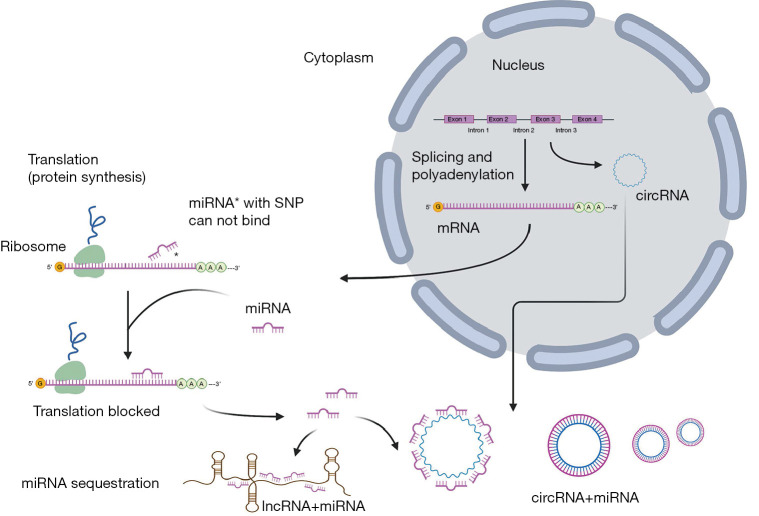
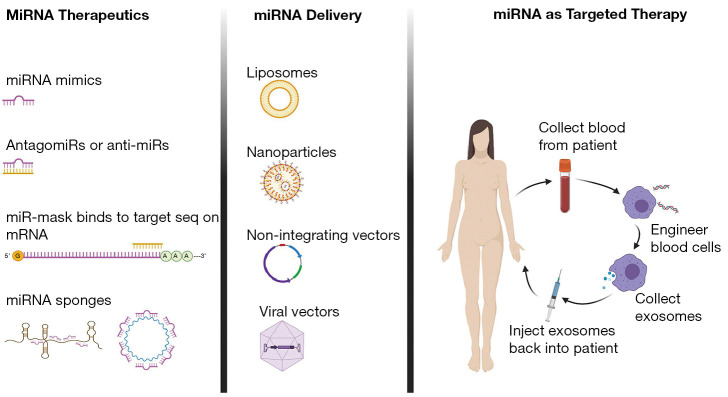
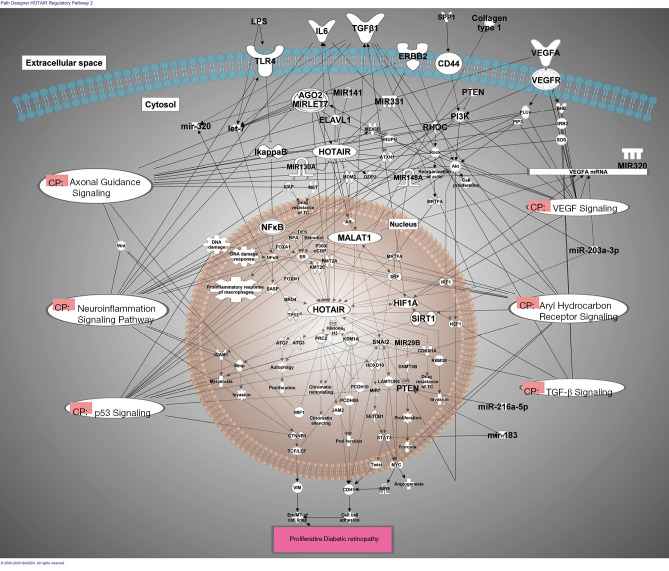
Diabetic retinopathy (DR) accounts for ~80% of legal blindness in persons aged 20-74 years and is associated with enormous social and health burdens. Current therapies are invasive, non-curative, and in-effective in 15-25% of DR patients. This review outlines the potential utility of microRNAs (miRNAs) as biomarkers and potential therapy for diabetic retinopathy. miRNAs are small noncoding forms of RNA that may play a role in the pathogenesis of DR by altering the level of expression of genes via single nucleotide polymorphism and regulatory loops. A majority of miRNAs are intracellular and specific intracellular microRNAs have been associated with cellular changes associated with DR. Some microRNAs are extracellular and called circulatory microRNAs. Circulatory miRNAs have been found to be differentially expressed in serum and bodily fluid in patients with diabetes mellitus (DM) with and without retinopathy. Some miRNAs have been associated with the severity of DR, and future studies may reveal whether circulatory miRNAs could serve as novel reliable biomarkers to detect or predict retinopathy progression. Therapeutic strategies can be developed utilizing the natural miRNA/long noncoding RNA (lncRNA) regulatory loops. miRNAs and lncRNAs are two major families of the non-protein-coding transcripts. They are regulatory molecules for fundamental cellular processes via a variety of mechanisms, and their expression and function are tightly regulated. The recent evidence indicates a cross-talk between miRNAs and lncRNAs. Therefore, dysregulation of miRNAs and lncRNAs is critical to human disease pathogenesis, such as diabetic retinopathy. miRNAs are long-distance communicators and reprogramming agents, and they embody an entirely novel paradigm in cellular and tissue signaling and interaction. By targeting specific miRNAs, whole pathways implicated in the pathogenesis of DR may potentially be altered. Understanding the endogenous roles of miRNAs in the pathogenesis of diabetic retinopathy could lead to novel diagnostic and therapeutic approaches to managing this frequently blinding retinal condition.
糖尿病视网膜病变(DR)占20 - 74岁人群法定失明病例的约80%,并带来了巨大的社会和健康负担。目前的治疗方法具有侵入性、无法治愈,且在15% - 25%的DR患者中无效。本综述概述了微小RNA(miRNA)作为糖尿病视网膜病变生物标志物和潜在治疗方法的潜在效用。miRNA是小型非编码RNA形式,可能通过单核苷酸多态性和调控环改变基因表达水平,从而在DR的发病机制中发挥作用。大多数miRNA存在于细胞内,特定的细胞内miRNA与DR相关的细胞变化有关。一些miRNA存在于细胞外,称为循环miRNA。已发现循环miRNA在患有和未患有视网膜病变的糖尿病(DM)患者的血清和体液中差异表达。一些miRNA与DR的严重程度相关,未来的研究可能会揭示循环miRNA是否可作为检测或预测视网膜病变进展的新型可靠生物标志物。可利用天然miRNA/长链非编码RNA(lncRNA)调控环制定治疗策略。miRNA和lncRNA是两大类非蛋白质编码转录本。它们通过多种机制作为基本细胞过程的调控分子,其表达和功能受到严格调控。最近的证据表明miRNA和lncRNA之间存在相互作用。因此,miRNA和lncRNA的失调对人类疾病发病机制至关重要,如糖尿病视网膜病变。miRNA是远距离通信者和重编程因子,它们在细胞和组织信号传导及相互作用中体现了一种全新的模式。通过靶向特定的miRNA,可能会改变DR发病机制中涉及的整个信号通路。了解miRNA在糖尿病视网膜病变发病机制中的内源性作用可能会带来管理这种常见致盲性视网膜疾病的新型诊断和治疗方法。