Department of Medicine University of OtagoChristchurch Christchurch New Zealand.
Department of Anatomical Pathology Prince of Wales Hospital Sydney New South Wales Australia.
J Am Heart Assoc. 2021 Sep 21;10(18):e021312. doi: 10.1161/JAHA.121.021312. Epub 2021 Sep 17.
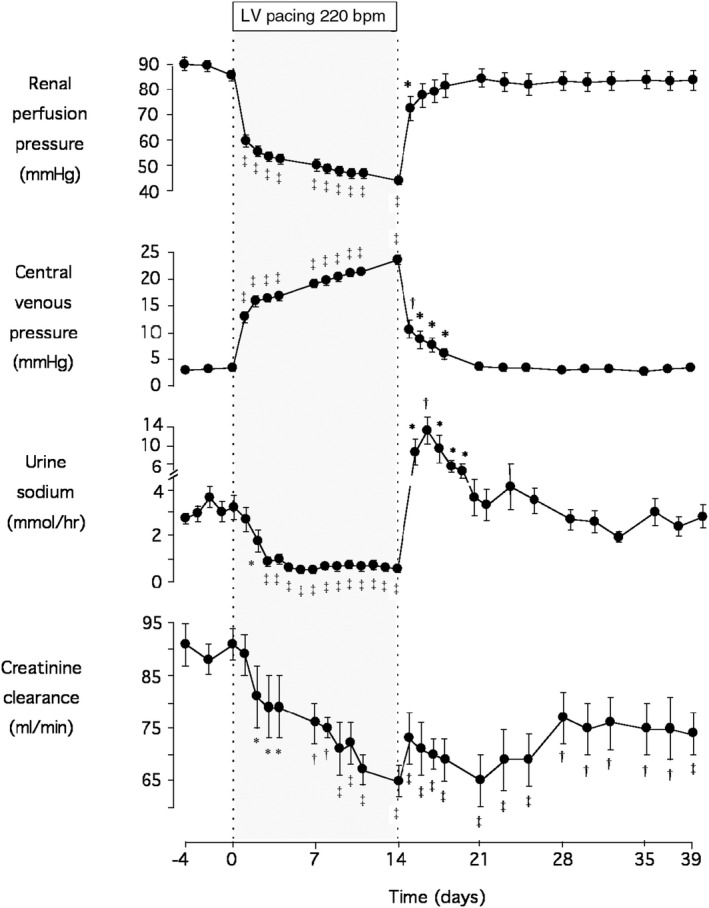
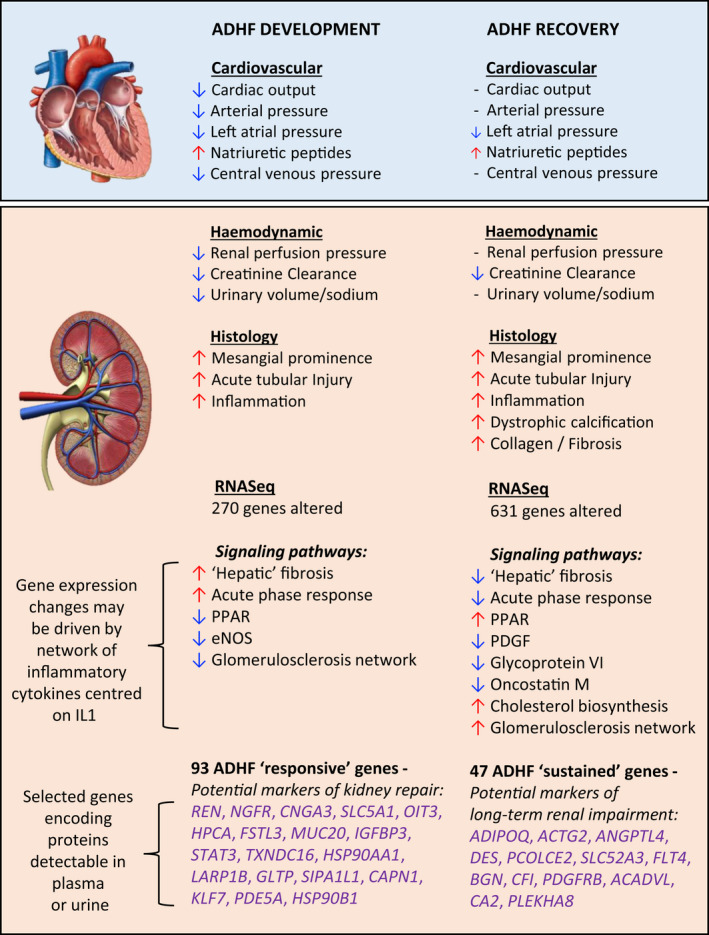
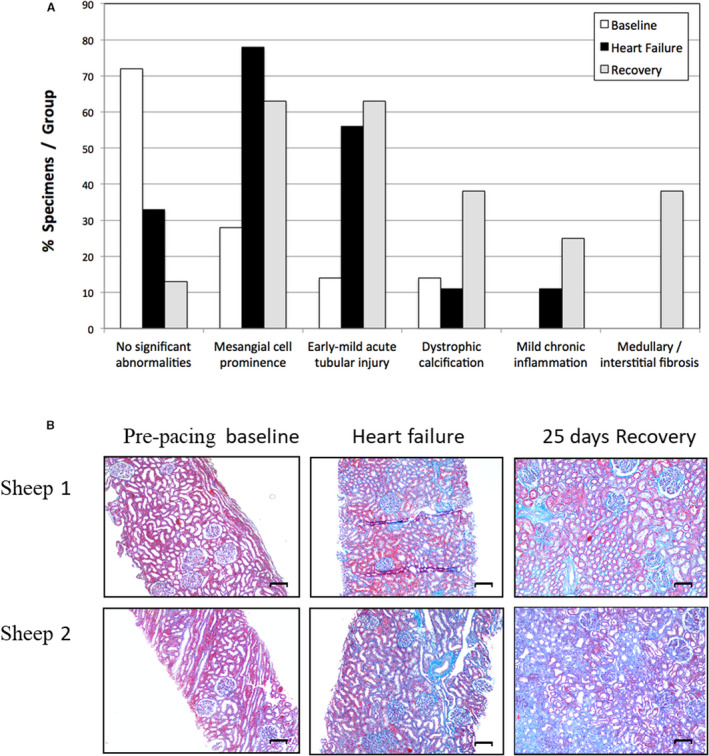
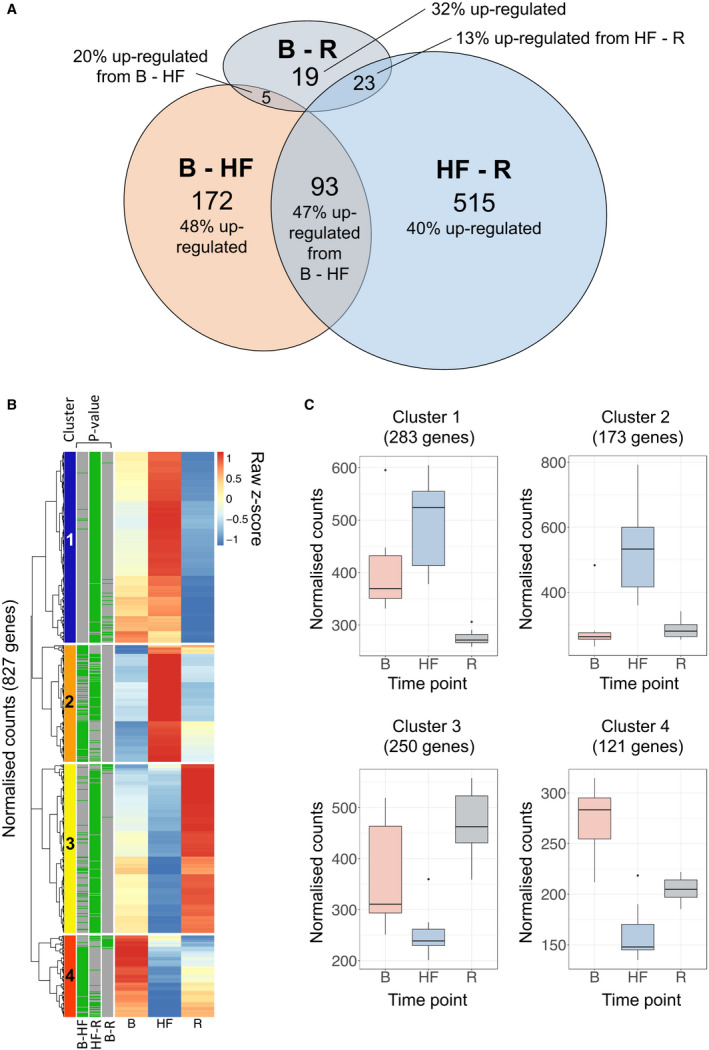
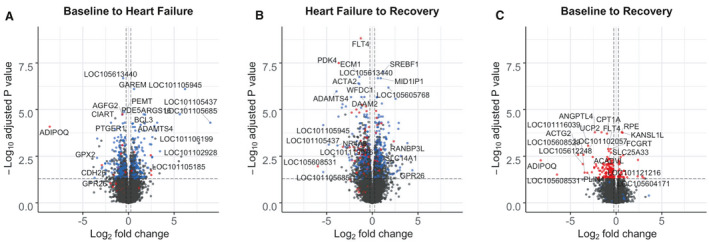
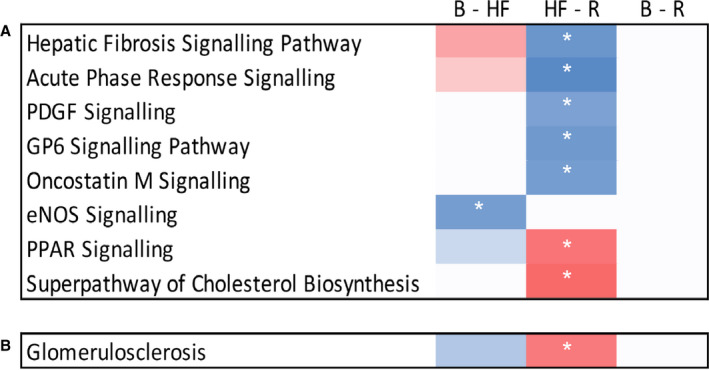
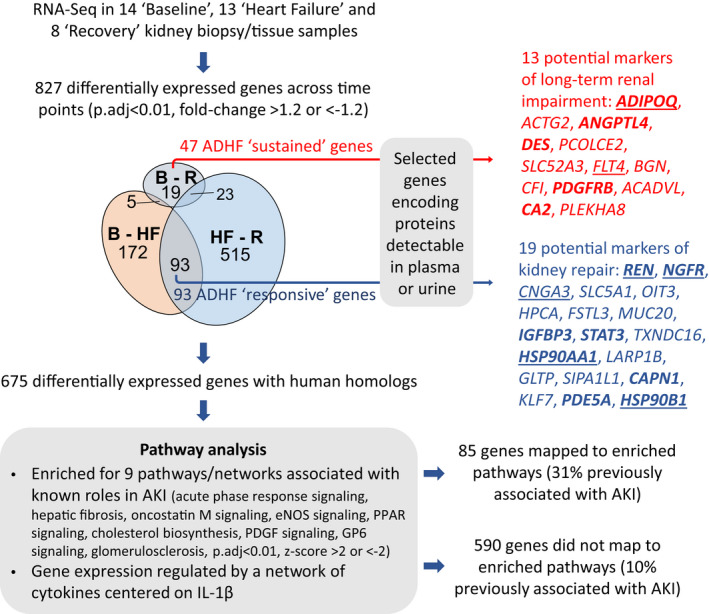
BACKGROUND Acute decompensated heart failure (ADHF) is associated with deterioration in renal function-an important risk factor for poor outcomes. Whether ADHF results in permanent kidney damage/dysfunction is unknown. METHODS AND RESULTS We investigated for the first time the renal responses to the development of, and recovery from, ADHF using an ovine model. ADHF development induced pronounced hemodynamic changes, neurohormonal activation, and decline in renal function, including decreased urine, sodium and urea excretion, and creatinine clearance. Following ADHF recovery (25 days), creatinine clearance reductions persisted. Kidney biopsies taken during ADHF and following recovery showed widespread mesangial cell prominence, early mild acute tubular injury, and medullary/interstitial fibrosis. Renal transcriptomes identified altered expression of 270 genes following ADHF development and 631 genes following recovery. A total of 47 genes remained altered post-recovery. Pathway analysis suggested gene expression changes, driven by a network of inflammatory cytokines centered on IL-1β (interleukin 1β), lead to repression of reno-protective eNOS (endothelial nitric oxide synthase) signaling during ADHF development, and following recovery, activation of glomerulosclerosis and reno-protective pathways and repression of proinflammatory/fibrotic pathways. A total of 31 dysregulated genes encoding proteins detectable in urine, serum, and plasma identified potential candidate markers for kidney repair (including [cyclic nucleotide gated channel subunit alpha 3] and [oncoprotein induced transcript 3]) or long-term renal impairment in ADHF (including [actin gamma 2, smooth muscle] and [angiopoietin like 4]). CONCLUSIONS In an ovine model, we provide the first direct evidence that an episode of ADHF leads to an immediate decline in kidney function that failed to fully resolve after ≈4 weeks and is associated with persistent functional/structural kidney injury. We identified molecular pathways underlying kidney injury and repair in ADHF and highlighted 31 novel candidate biomarkers for acute kidney injury in this setting.
急性失代偿性心力衰竭(ADHF)与肾功能恶化有关-这是预后不良的重要危险因素。ADHF 是否导致永久性肾脏损伤/功能障碍尚不清楚。
我们首次使用绵羊模型研究了 ADHF 发展和恢复过程中肾脏的反应。ADHF 发展引起了明显的血流动力学变化、神经激素激活和肾功能下降,包括尿量、钠和尿素排泄以及肌酐清除率降低。ADHF 恢复(25 天后)后,肌酐清除率降低仍持续存在。ADHF 期间和恢复后采集的肾脏活检显示广泛的肾小球系膜细胞突出、早期轻度急性肾小管损伤和髓质/间质纤维化。肾脏转录组学鉴定出 ADHF 发展后 270 个基因和恢复后 631 个基因的表达改变。恢复后共有 47 个基因仍发生改变。通路分析表明,由以白细胞介素 1β(IL-1β)为中心的炎症细胞因子网络驱动的基因表达变化,导致 ADHF 发展期间肾保护型 eNOS(内皮型一氧化氮合酶)信号通路的抑制,以及恢复后肾小球硬化和肾保护途径的激活和促炎/纤维化途径的抑制。总共 31 个失调基因编码可在尿液、血清和血浆中检测到的蛋白质,鉴定出潜在的候选肾脏修复标志物(包括 [环核苷酸门控通道亚基 alpha 3]和 [癌蛋白诱导转录物 3])或 ADHF 中晚期肾功能障碍的标志物(包括 [肌动蛋白 gamma 2,平滑肌]和 [血管生成素样蛋白 4])。
在绵羊模型中,我们首次直接证明,ADHF 发作会立即导致肾功能下降,在 ≈4 周后仍未完全恢复,并且与持续的功能性/结构性肾脏损伤相关。我们确定了 ADHF 中肾脏损伤和修复的分子途径,并突出了 31 个用于该情况下急性肾损伤的新候选生物标志物。