Departamento de Genética, Universidad de Sevilla, Sevilla, 41080, Spain.
Centro Andaluz de Biología Molecular y Medicina Regenerativa-CABIMER, Universidad de Sevilla-CSIC-Universidad Pablo de Olavide, Sevilla, 41092, Spain.
Nat Commun. 2021 Sep 17;12(1):5512. doi: 10.1038/s41467-021-25790-2.
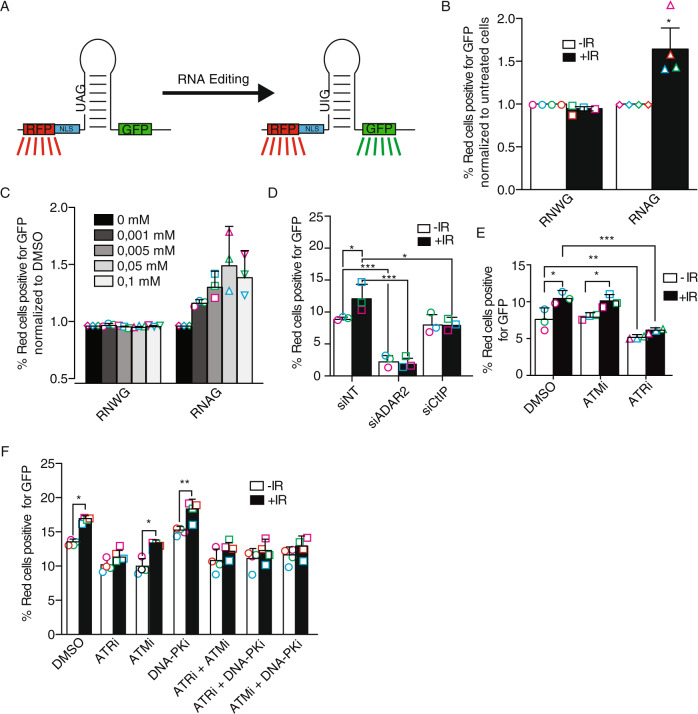
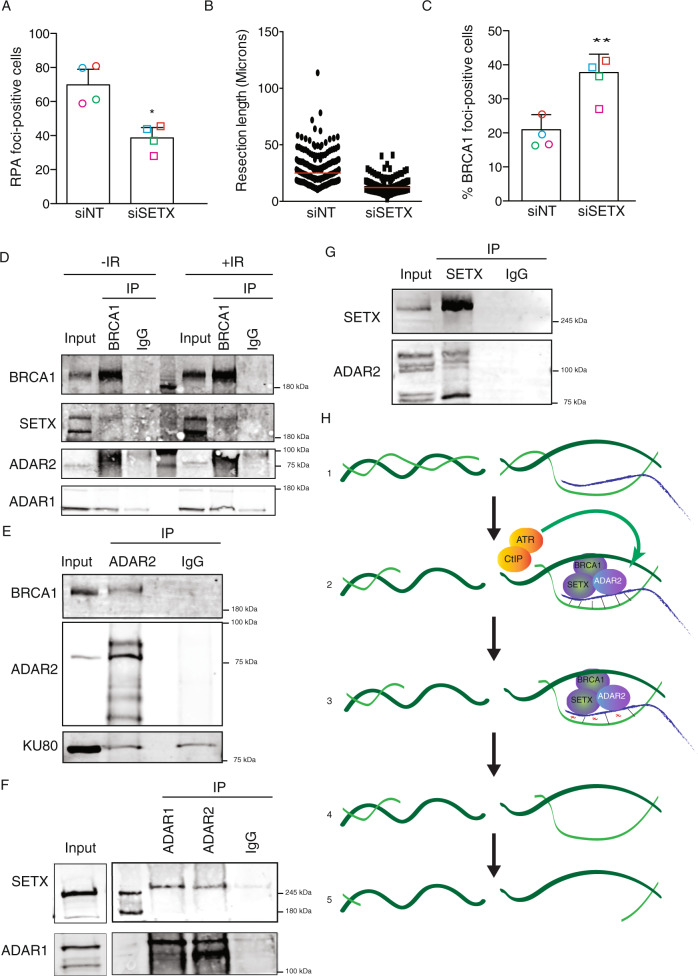
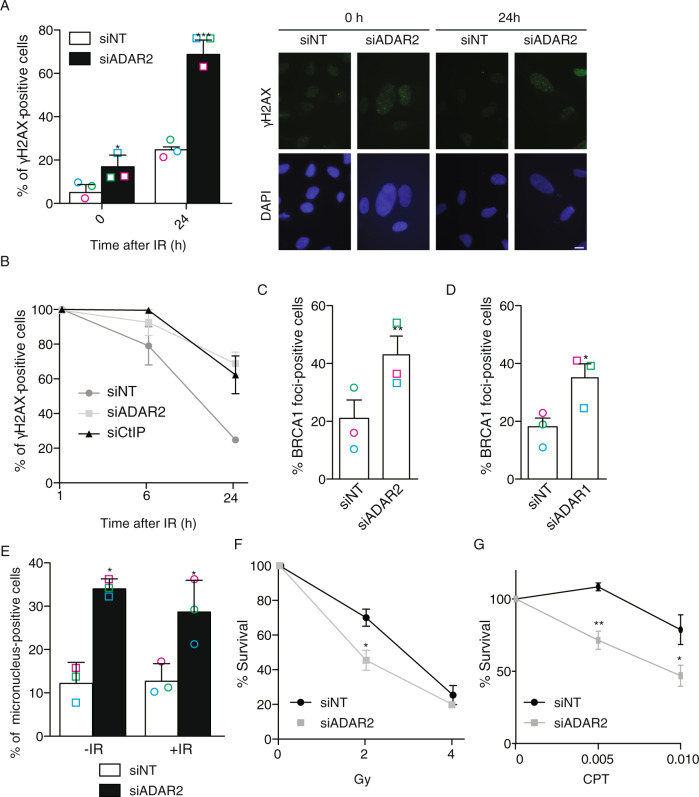
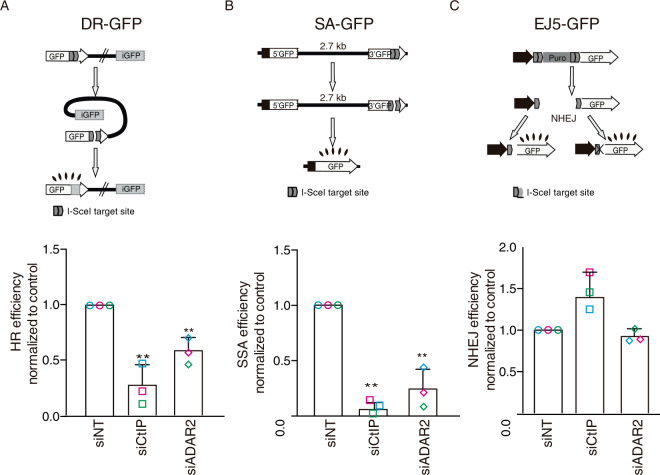
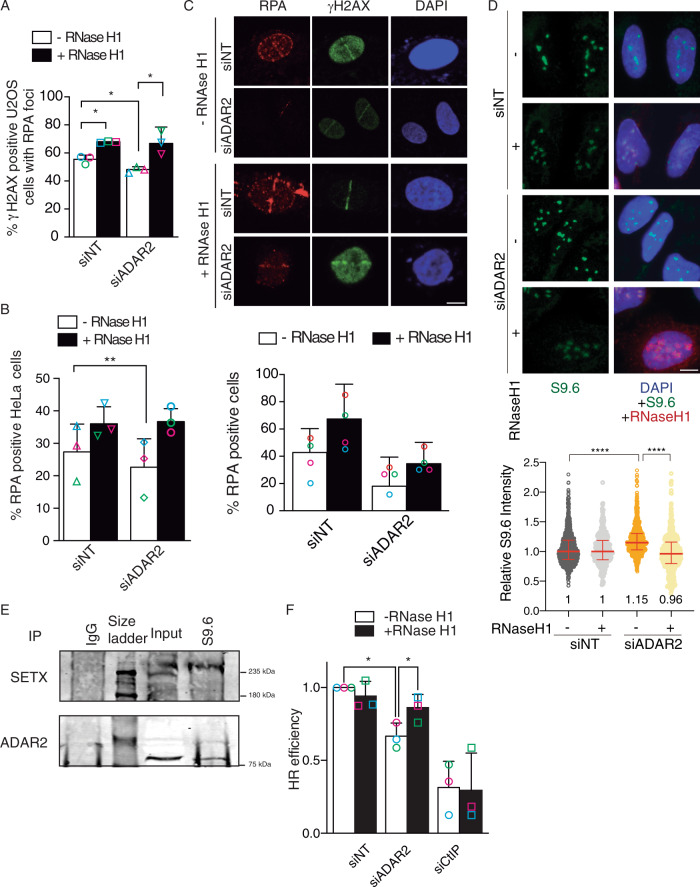
The maintenance of genomic stability requires the coordination of multiple cellular tasks upon the appearance of DNA lesions. RNA editing, the post-transcriptional sequence alteration of RNA, has a profound effect on cell homeostasis, but its implication in the response to DNA damage was not previously explored. Here we show that, in response to DNA breaks, an overall change of the Adenosine-to-Inosine RNA editing is observed, a phenomenon we call the RNA Editing DAmage Response (REDAR). REDAR relies on the checkpoint kinase ATR and the recombination factor CtIP. Moreover, depletion of the RNA editing enzyme ADAR2 renders cells hypersensitive to genotoxic agents, increases genomic instability and hampers homologous recombination by impairing DNA resection. Such a role of ADAR2 in DNA repair goes beyond the recoding of specific transcripts, but depends on ADAR2 editing DNA:RNA hybrids to ease their dissolution.
基因组稳定性的维持需要在 DNA 损伤出现时协调多个细胞任务。RNA 编辑是 RNA 的转录后序列改变,对细胞内稳态有深远影响,但它在 DNA 损伤反应中的作用以前并未被探索过。在这里,我们表明,在 DNA 断裂的情况下,观察到腺苷到肌苷 RNA 编辑的整体变化,我们称之为 RNA 编辑损伤反应(REDAR)。REDAR 依赖于检查点激酶 ATR 和重组因子 CtIP。此外,RNA 编辑酶 ADAR2 的耗竭使细胞对遗传毒性药物敏感,增加基因组不稳定性,并通过损害 DNA 切除来阻碍同源重组。ADAR2 在 DNA 修复中的这种作用超出了特定转录本的重编码,而是取决于 ADAR2 编辑 DNA:RNA 杂交体以促进其溶解。