Department of Obstetrics and Gynecology, University of Kentucky College of Medicine, Lexington, Kentucky.
Department of Obstetrics and Gynecology, Institute of Clinical Sciences, University of Gothenburg, Gothenburg, Sweden, and Stockholm IVF-EUGIN, Stockholm, Sweden.
Fertil Steril. 2021 Dec;116(6):1631-1640. doi: 10.1016/j.fertnstert.2021.08.009. Epub 2021 Aug 11.
To determine the temporal expression of angiotensin-converting enzyme 2 (ACE2), a receptor for SARS-CoV-2, in dominant follicles throughout the periovulatory period in women and the regulatory mechanisms underlying ACE2 expression in human granulosa/lutein cells (hGLC).
Experimental prospective clinical study and laboratory-based investigation.
University Medical Center and private in vitro fertilization center.
PATIENT(S): Thirty premenopausal women undergoing surgery for tubal ligation and 16 premenopausal women undergoing in vitro fertilization.
INTERVENTION(S): Administration of human chorionic gonadotropin (hCG) and harvesting of preovulatory/ovulatory follicles by timed laparoscopy, and collection of granulosa/lutein cells and cumulus cells at the time of oocyte retrieval.
MAIN OUTCOME MEASURE(S): Expression and localization of ACE2 in granulosa cells and dominant follicles collected throughout the periovulatory period of the menstrual cycle and in hGLC using quantitative polymerase chain reaction, immunoblotting, and immunohistochemistry.
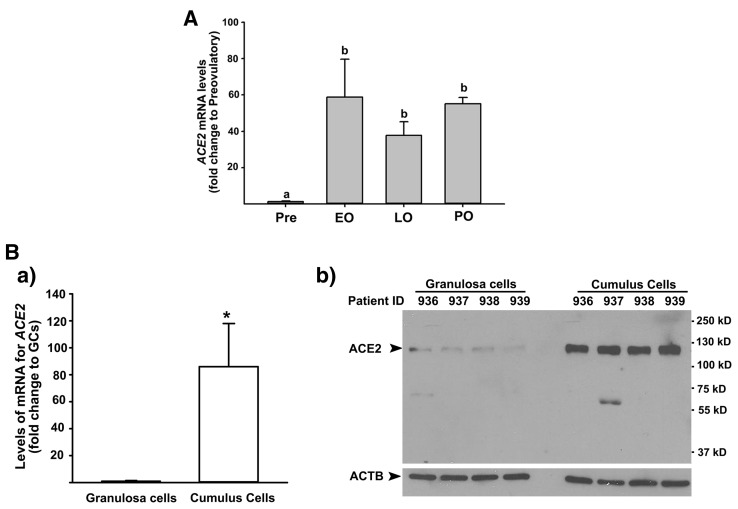
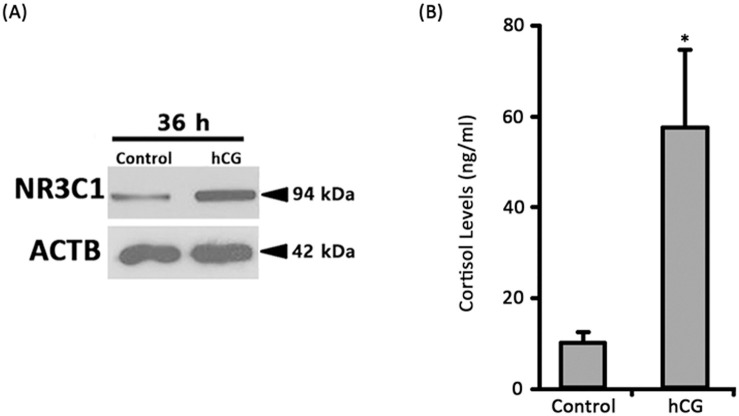
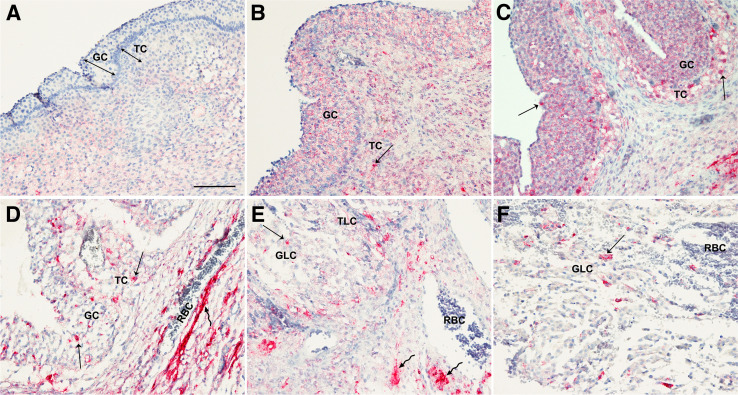
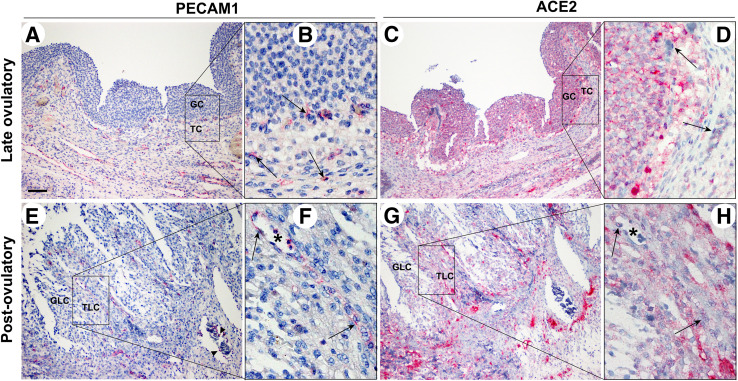
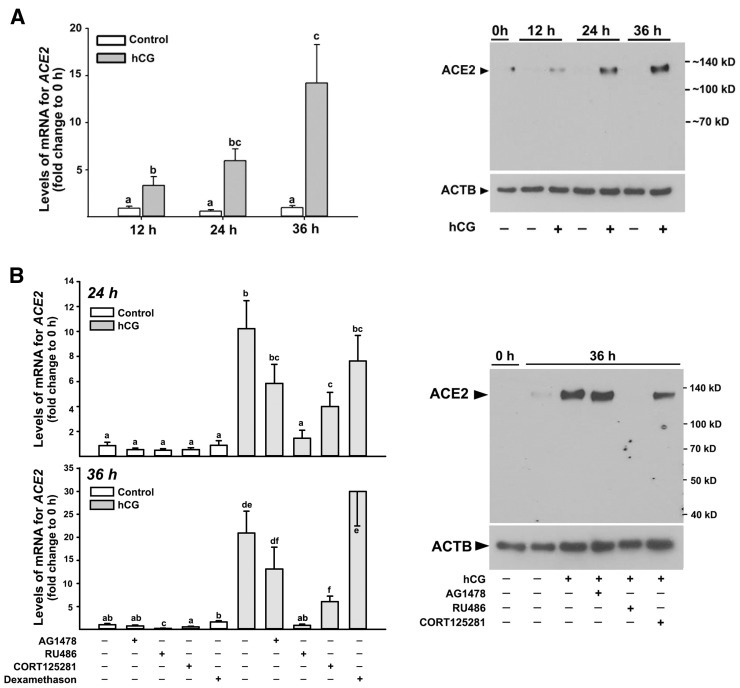
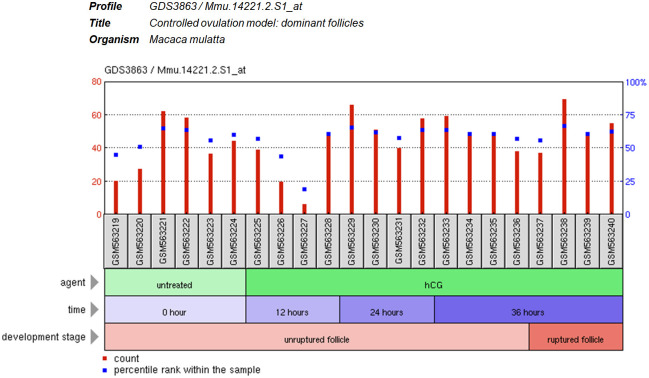
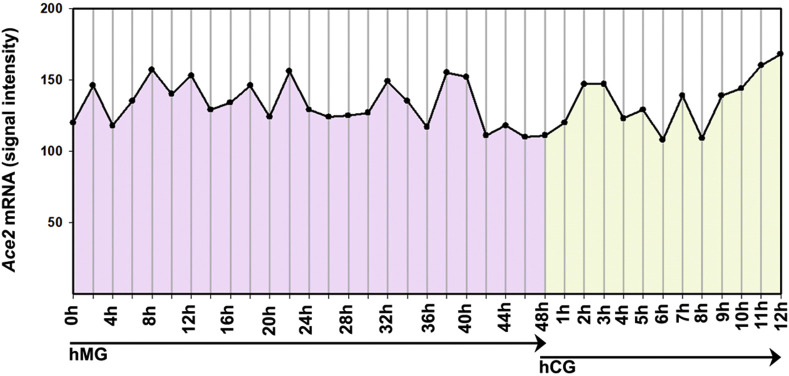
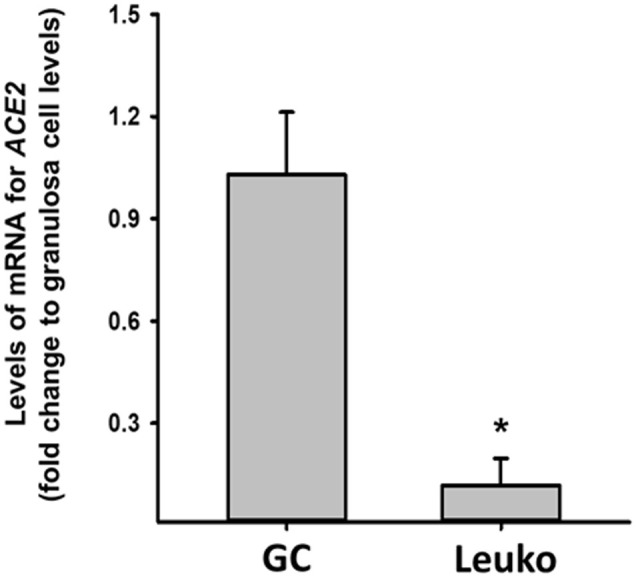
RESULT(S): ACE2 expression (mRNA and protein) is up-regulated in human ovulatory follicles after administration of hCG. ACE2 expression was higher in cumulus cells than in granulosa cells. hCG increased the expression of ACE2 in primary hGLC cultures; the increase was inhibited by RU486 (an antagonist for progesterone receptor and glucocorticoid receptor) and CORT125281 (a selective glucocorticoid receptor antagonist), but not by AG1478 (an EGF receptor tyrosine kinase inhibitor) or by dexamethasone.
CONCLUSION(S): The hormone-regulated expression of ACE2 in granulosa cells suggests a potential role of ACE2 in the ovulatory process. These data also imply the possible impact of COVID-19 on a vital cyclic event of ovarian function and thus on women's overall reproductive health. However, SAR-CoV-2 infection in ovarian cells in vivo or in vitro has yet to be determined.
确定血管紧张素转换酶 2(ACE2)在女性排卵周期中优势卵泡中的时间表达,ACE2 是 SARS-CoV-2 的受体,以及人颗粒细胞/黄体细胞(hGLC)中 ACE2 表达的调节机制。
实验性前瞻性临床研究和基于实验室的调查。
大学医学中心和私人体外受精中心。
30 名接受输卵管结扎术的绝经前妇女和 16 名接受体外受精的绝经前妇女。
给予人绒毛膜促性腺激素(hCG)并通过定时腹腔镜手术收获排卵前/排卵卵泡,以及在取卵时收集颗粒细胞/黄体细胞和卵丘细胞。
在整个月经周期的排卵周期中收集的颗粒细胞和优势卵泡以及 hGLC 中 ACE2 的表达和定位,使用定量聚合酶链反应、免疫印迹和免疫组织化学。
hCG 给药后,人排卵卵泡中 ACE2 的表达(mRNA 和蛋白质)上调。ACE2 在卵丘细胞中的表达高于颗粒细胞。hCG 增加了原代 hGLC 培养物中 ACE2 的表达;这种增加被 RU486(孕激素受体和糖皮质激素受体拮抗剂)和 CORT125281(选择性糖皮质激素受体拮抗剂)抑制,但不被 AG1478(EGF 受体酪氨酸激酶抑制剂)或地塞米松抑制。
ACE2 在颗粒细胞中的激素调节表达表明 ACE2 在排卵过程中可能发挥作用。这些数据还暗示了 COVID-19 对卵巢功能这一重要周期性事件以及对女性整体生殖健康的潜在影响。然而,SAR-CoV-2 在卵巢细胞中的体内或体外感染尚未确定。