Zaninelli Tiago H, Fattori Victor, Verri Waldiceu A
Laboratory of Pain, Inflammation, Neuropathy, and Cancer, Department of Pathology, Londrina State University, Londrina, Brazil.
Vascular Biology Program, Boston Children's Hospital, Department of Surgery, Harvard Medical School, Boston, MA, United States.
Front Physiol. 2021 Sep 1;12:729134. doi: 10.3389/fphys.2021.729134. eCollection 2021.
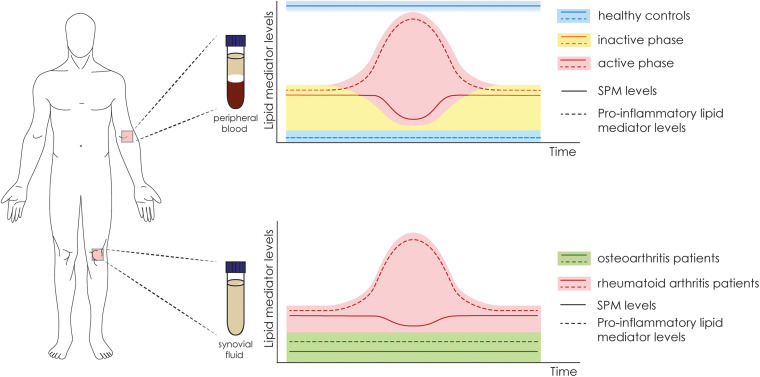
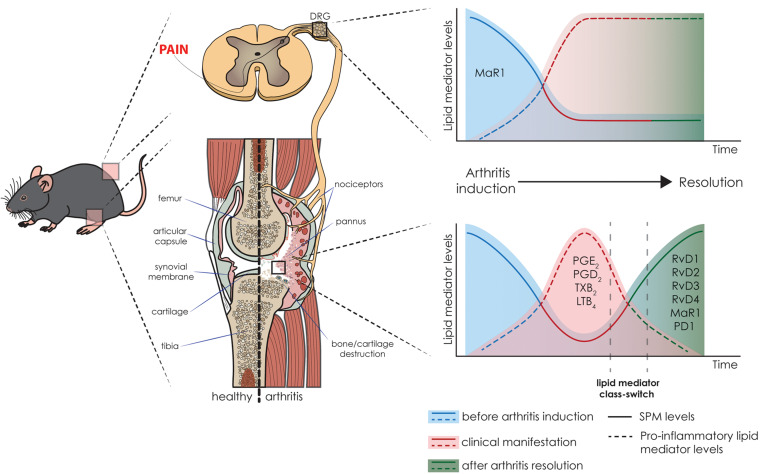
The concept behind the resolution of inflammation has changed in the past decades from a passive to an active process, which reflects in novel avenues to understand and control inflammation-driven diseases. The time-dependent and active process of resolution phase is orchestrated by the endogenous biosynthesis of specialized pro-resolving lipid mediators (SPMs). Inflammation and its resolution are two forces in rheumatic diseases that affect millions of people worldwide with pain as the most common experienced symptom. The pathophysiological role of SPMs in arthritis has been demonstrated in pre-clinical and clinical studies (no clinical trials yet), which highlight their active orchestration of disease control. The endogenous roles of SPMs also give rise to the opportunity of envisaging these molecules as novel candidates to improve the life quality of rhematic diseases patients. Herein, we discuss the current understanding of SPMs endogenous roles in arthritis as pro-resolutive, protective, and immunoresolvent lipids.
在过去几十年中,炎症消退的概念已从一个被动过程转变为一个主动过程,这体现在理解和控制炎症驱动疾病的新途径上。消退期的时间依赖性和主动过程是由专门的促消退脂质介质(SPM)的内源性生物合成所调控的。炎症及其消退是风湿性疾病中的两种力量,全球数以百万计的人受其影响,疼痛是最常见的症状。SPM在关节炎中的病理生理作用已在临床前和临床研究中得到证实(尚无临床试验),这些研究突出了它们对疾病控制的积极调控作用。SPM的内源性作用也带来了将这些分子设想为改善风湿性疾病患者生活质量的新候选物的机会。在此,我们讨论目前对SPM在关节炎中作为促消退、保护和免疫溶解脂质的内源性作用的理解。