Cuesta-Maté Ana, Renelies-Hamilton Justinn, Kryger Per, Jensen Annette Bruun, Sinotte Veronica M, Poulsen Michael
Section for Ecology and Evolution, Department of Biology, University of Copenhagen, Copenhagen, Denmark.
Entomology and Plant Pathology, Department of Agroecology, Aarhus University, Aarhus, Denmark.
Front Microbiol. 2021 Sep 3;12:717990. doi: 10.3389/fmicb.2021.717990. eCollection 2021.
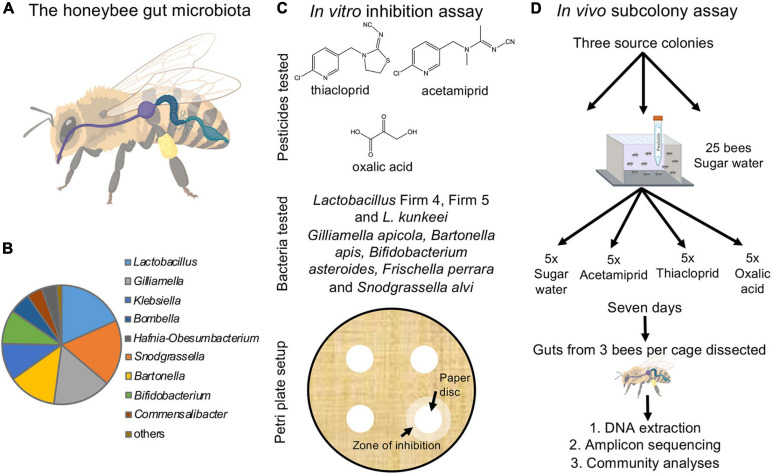
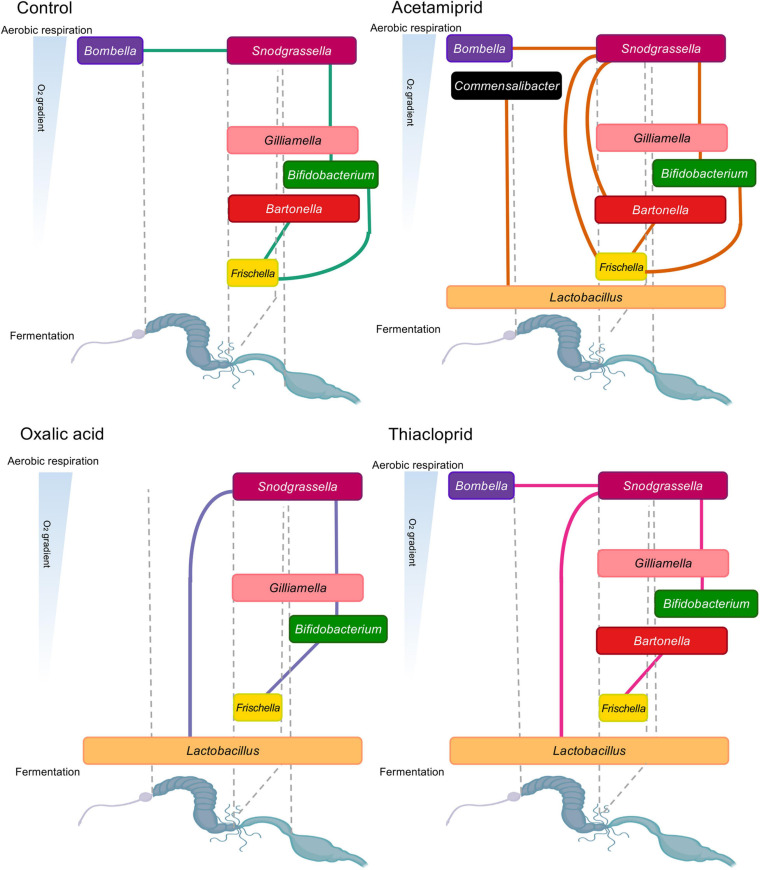
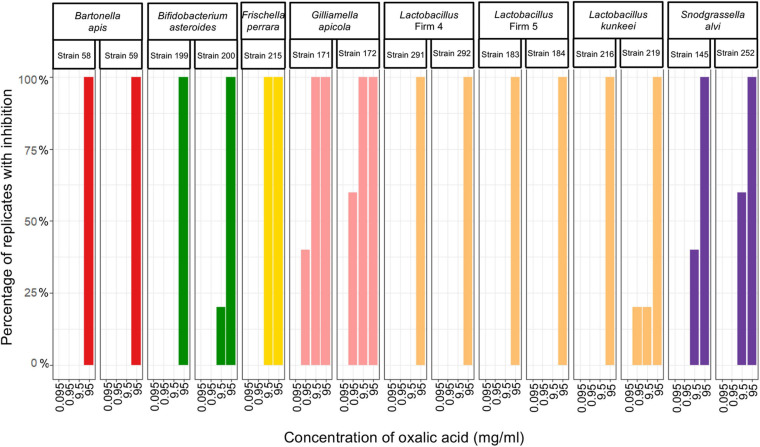
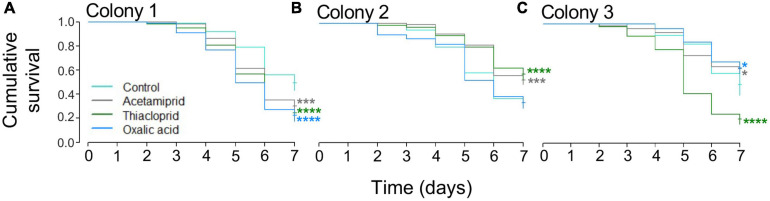
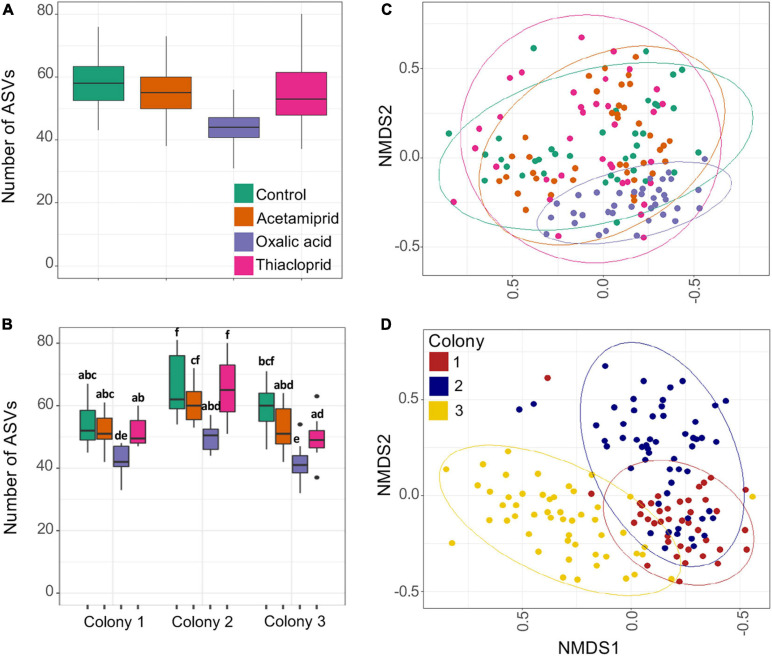
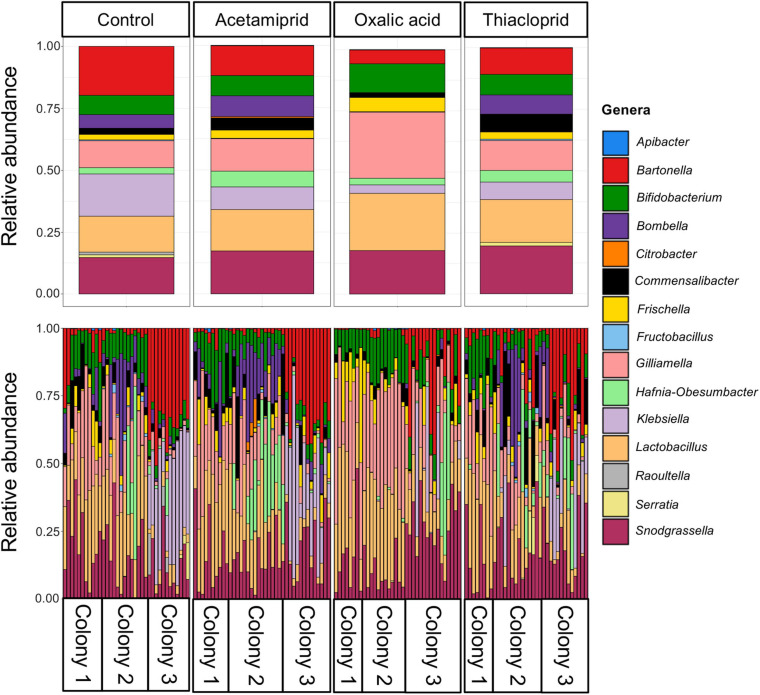
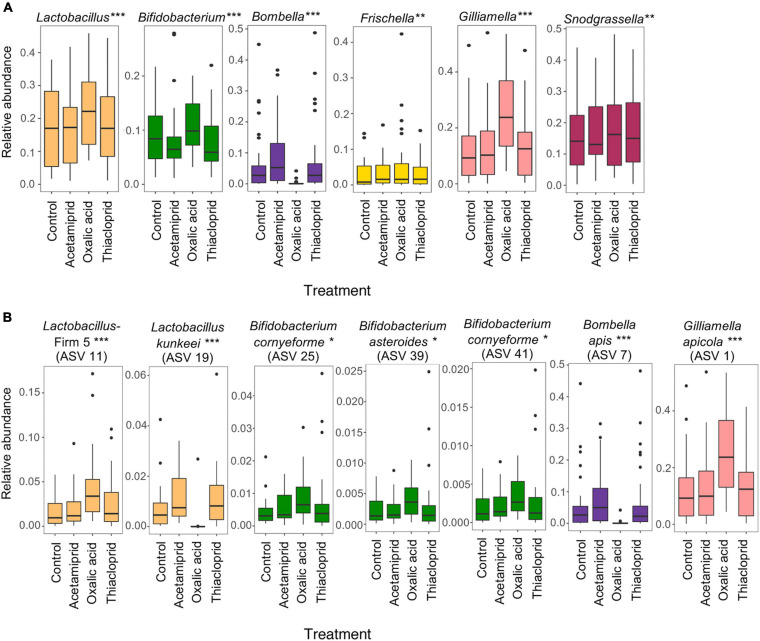
Agricultural and apicultural practices expose honeybees to a range of pesticides that have the potential to negatively affect their physiology, neurobiology, and behavior. Accumulating evidence suggests that these effects extend to the honeybee gut microbiome, which serves important functions for honeybee health. Here we test the potential effects of the pesticides thiacloprid, acetamiprid, and oxalic acid on the gut microbiota of honeybees, first in direct inhibition assays and secondly in an caged bee experiment to test if exposure leads to gut microbiota community changes. We found that thiacloprid did not inhibit the honeybee core gut bacteria , nor did it affect overall community composition or richness . Acetamiprid did also not inhibit bacterial growth , but it did affect community structure within bees. The eight bacterial genera tested showed variable levels of susceptibility to oxalic acid . , treatment with this pesticide reduced amplicon sequence variant (ASV) richness and affected gut microbiome composition, with most marked impact on the common crop bacteria and the genus . We conducted network analyses which captured known associations between bacterial members and illustrated the sensitivity of the microbiome to environmental stressors. Our findings point to risks of honeybee exposure to oxalic acid, which has been deemed safe for use in treatment against mites in honeybee colonies, and we advocate for more extensive assessment of the long-term effects that it may have on honeybee health.
农业和养蜂实践使蜜蜂接触到一系列农药,这些农药有可能对其生理、神经生物学和行为产生负面影响。越来越多的证据表明,这些影响延伸到蜜蜂肠道微生物群,而肠道微生物群对蜜蜂健康起着重要作用。在这里,我们首先在直接抑制试验中,其次在笼养蜜蜂实验中,测试噻虫啉、啶虫脒和草酸这三种农药对蜜蜂肠道微生物群的潜在影响,以检验暴露是否会导致肠道微生物群群落变化。我们发现,噻虫啉既不抑制蜜蜂核心肠道细菌,也不影响整体群落组成或丰富度。啶虫脒也不抑制细菌生长,但它确实影响了蜜蜂体内的群落结构。所测试的八个细菌属对草酸的敏感性各不相同。用这种农药处理会降低扩增子序列变体(ASV)的丰富度,并影响肠道微生物群组成,对常见的作物细菌和该属细菌影响最为显著。我们进行了网络分析,捕捉了细菌成员之间的已知关联,并说明了微生物群对环境压力源的敏感性。我们的研究结果指出了蜜蜂接触草酸的风险,草酸被认为用于防治蜂群螨虫是安全的,我们主张对其可能对蜜蜂健康产生的长期影响进行更广泛的评估。