Plant and Environmental Sciences, Clemson University, Clemson, SC 29634, USA.
G3 (Bethesda). 2021 Sep 6;11(9). doi: 10.1093/g3journal/jkab227.
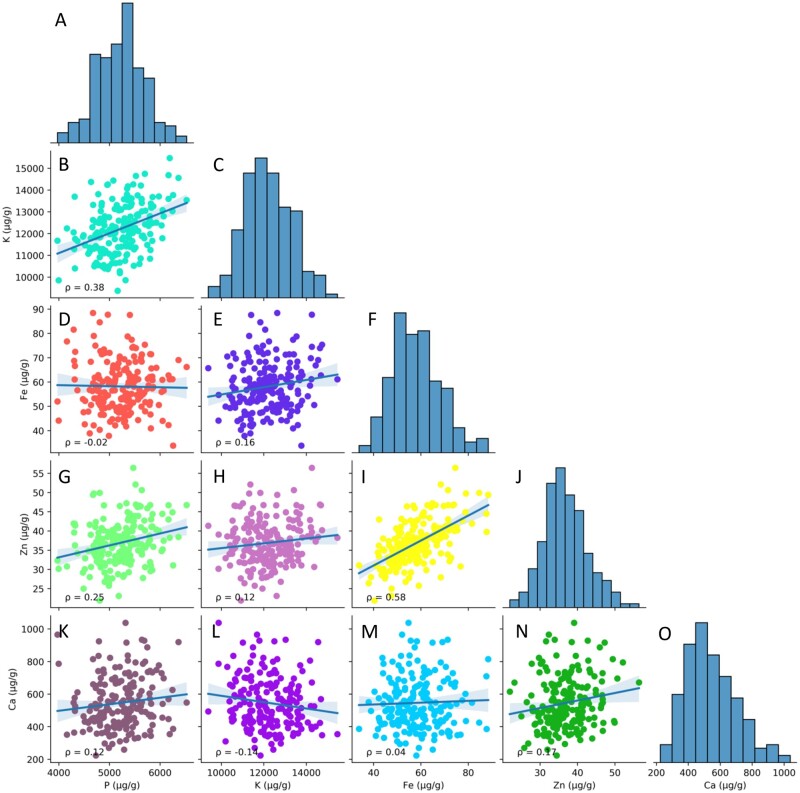
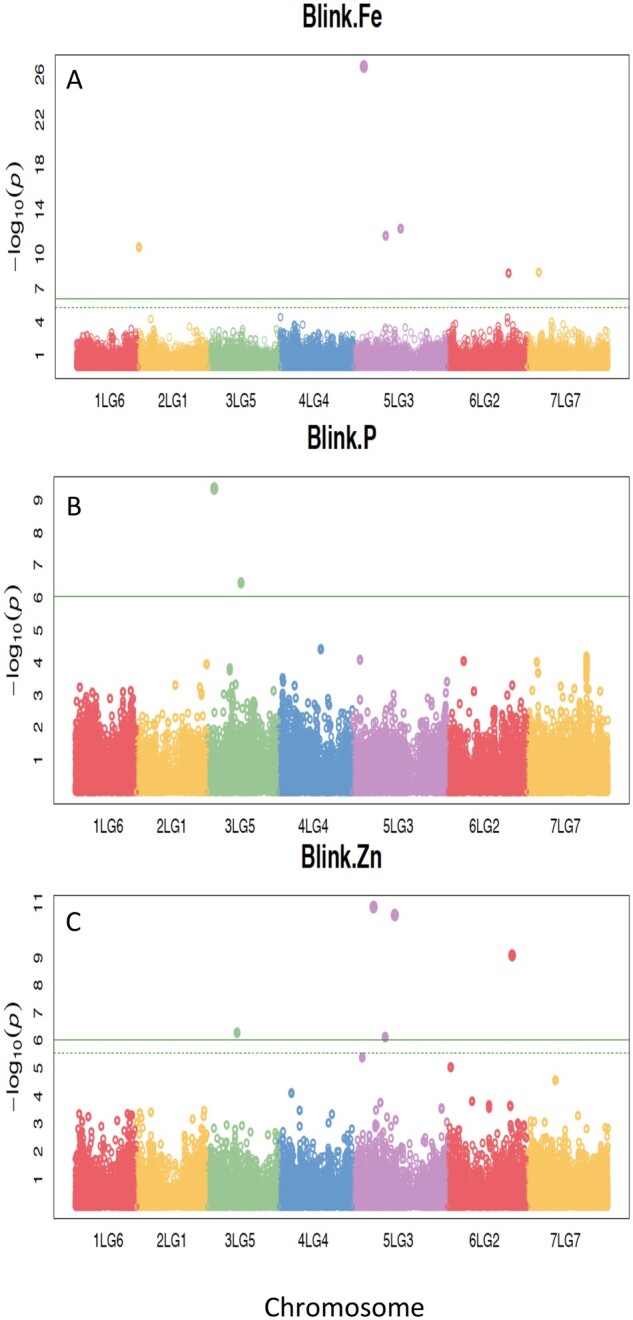
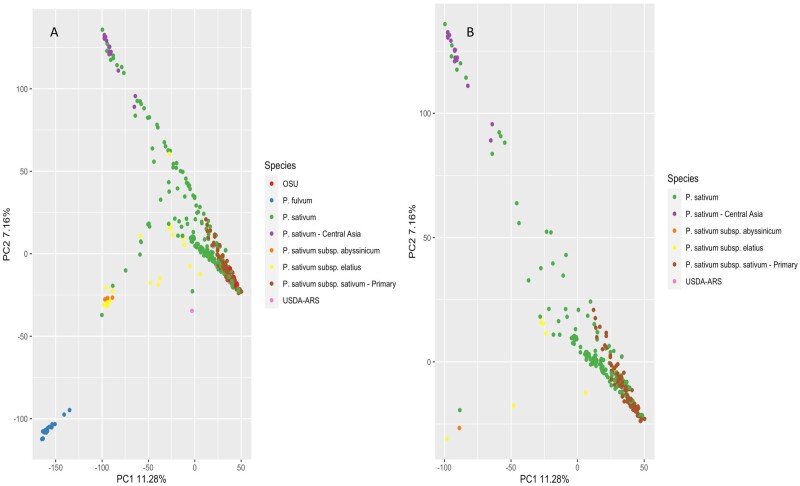
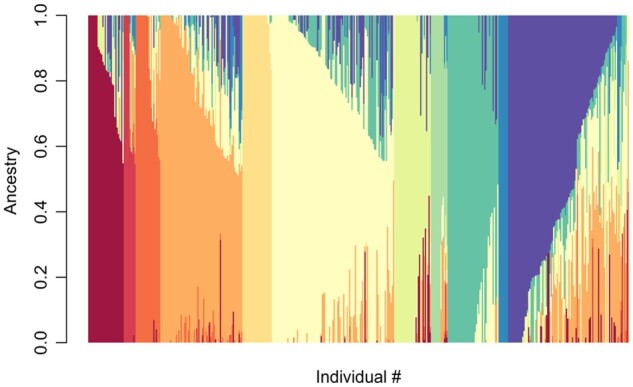
Pea (Pisum sativum L.) is an important cool season food legume for sustainable food production and human nutrition due to its nitrogen fixation capabilities and nutrient-dense seed. However, minimal breeding research has been conducted to improve the nutritional quality of the seed for biofortification, and most genomic-assisted breeding studies utilize small populations with few single nucleotide polymorphisms (SNPs). Genomic resources for pea have lagged behind those of other grain crops, but the recent release of the Pea Single Plant Plus Collection (PSPPC) and the pea reference genome provide new tools to study nutritional traits for biofortification. Calcium, phosphorus, potassium, iron, zinc, and phytic acid concentrations were measured in a study population of 299 different accessions grown under greenhouse conditions. Broad phenotypic variation was detected for all parameters except phytic acid. Calcium exhibited moderate broad-sense heritability (H2) estimates, at 50%, while all other minerals exhibited low heritability. Of the accessions used, 267 were previously genotyped in the PSPPC release by the USDA, and we mapped the genotyping data to the pea reference genome for the first time. This study generated 54,344 high-quality SNPs used to investigate the population structure of the PSPPC and perform a genome-wide association study to identify genomic loci associated with mineral concentrations in mature pea seed. Overall, we were able to identify multiple significant SNPs and candidate genes for iron, phosphorus, and zinc. These results can be used for genetic improvement in pea for nutritional traits and biofortification, and the candidate genes provide insight into mineral metabolism.
豌豆(Pisum sativum L.)是一种重要的冷季食用豆科植物,由于其固氮能力和营养丰富的种子,对可持续粮食生产和人类营养至关重要。然而,为了进行生物强化而改善种子的营养品质的最小育种研究很少,并且大多数基因组辅助育种研究利用的是少数单核苷酸多态性(SNP)的小种群。豌豆的基因组资源落后于其他粮食作物,但豌豆单株加系(PSPPC)和豌豆参考基因组的最近发布为研究生物强化的营养特性提供了新的工具。在温室条件下种植的 299 个不同品系的研究群体中测量了钙、磷、钾、铁、锌和植酸浓度。除植酸外,所有参数均检测到广泛的表型变异。除植酸外,所有其他矿物质的遗传力均较低,除植酸外,所有其他矿物质的遗传力均较低。在所使用的品系中,267 个品系先前在美国农业部的 PSPPC 中进行了基因分型,我们首次将基因分型数据映射到豌豆参考基因组上。本研究共生成了 54344 个高质量 SNP,用于研究 PSPPC 的群体结构,并进行全基因组关联研究,以鉴定与成熟豌豆种子中矿物质浓度相关的基因组位点。总体而言,我们能够鉴定出与铁、磷和锌相关的多个显著 SNP 和候选基因。这些结果可用于豌豆营养特性和生物强化的遗传改良,候选基因提供了对矿物质代谢的深入了解。