Meng Qingshi, Chen Liang, Xiong Bohui, Kang Beining, Zhang Pengfei, Tang Shanlong, Han Hui, Shen Wei, Feng Xiaohui, Feng Shengnan, Zhong Ruqing, Tang Xiangfang, Zhang Sheng, Zhang Hongfu, Zhao Yong
State Key Laboratory of Animal Nutrition, Institute of Animal Sciences, Chinese Academy of Agricultural Sciences, Beijing, People's Republic of China.
College of Life Sciences, Qingdao Agricultural University, Qingdao, People's Republic of China.
mSystems. 2021 Oct 26;6(5):e0072521. doi: 10.1128/mSystems.00725-21. Epub 2021 Sep 21.
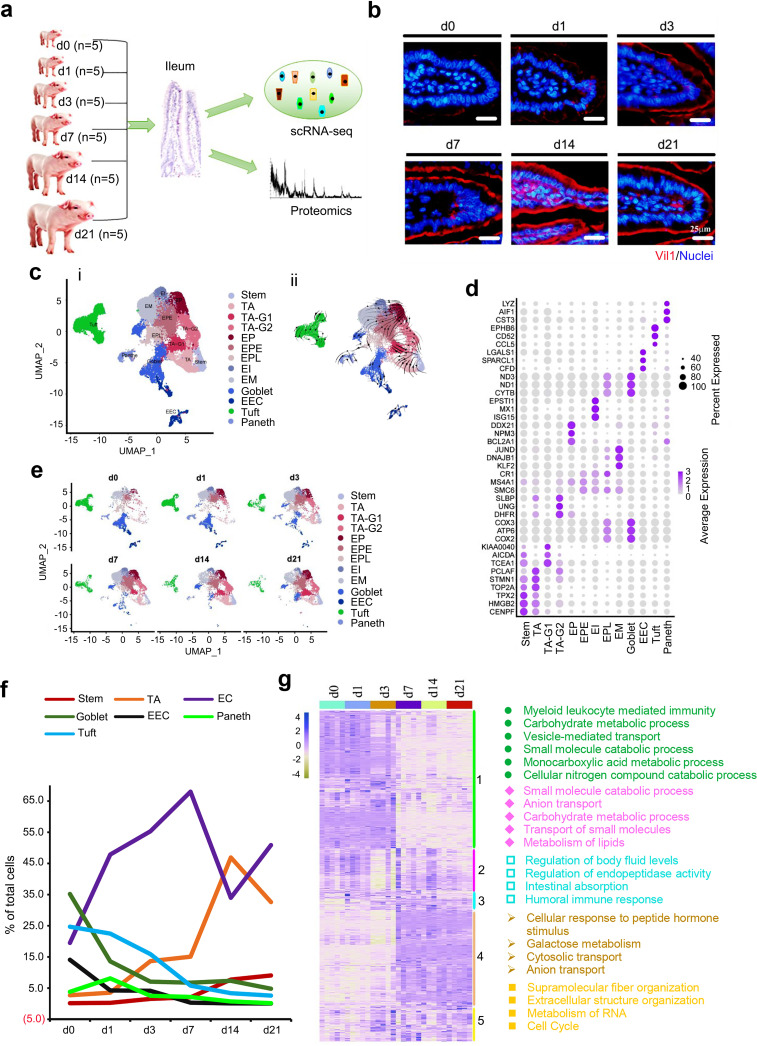
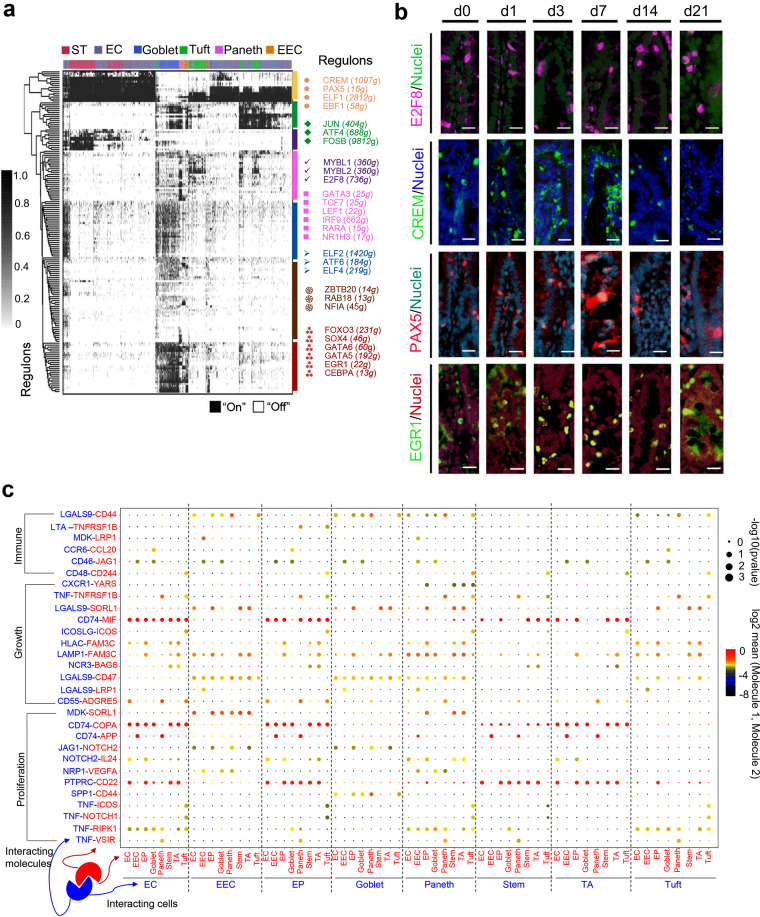
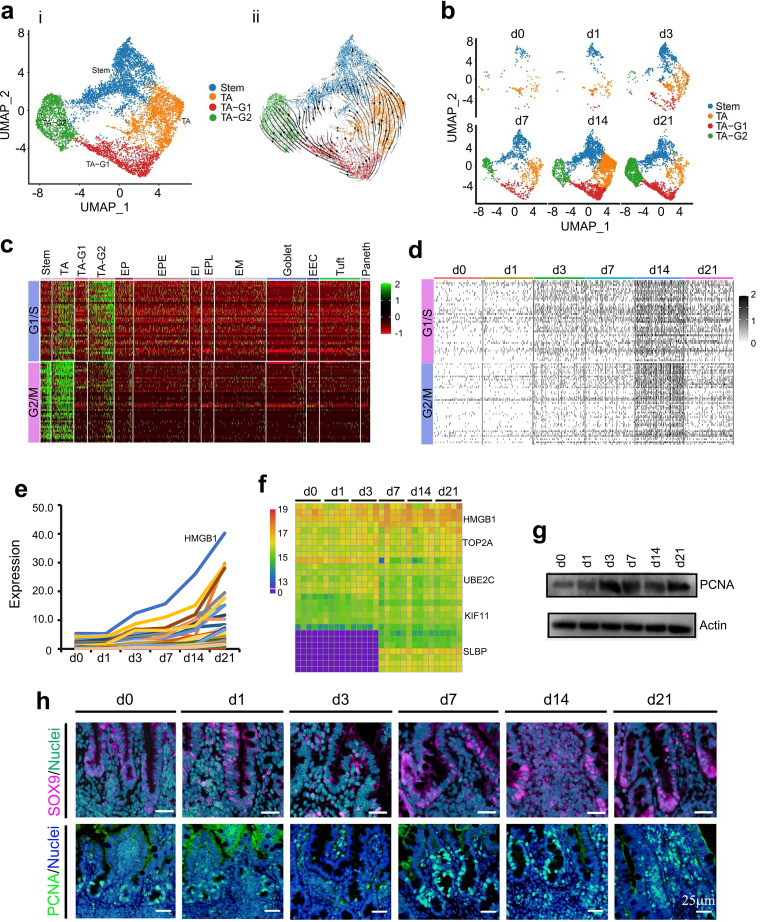
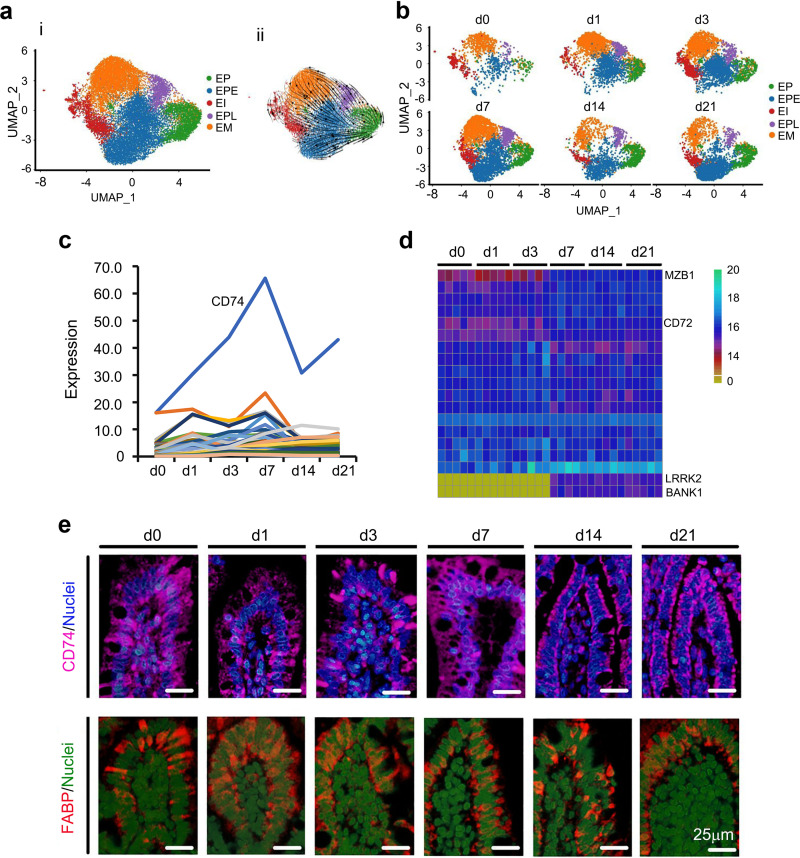
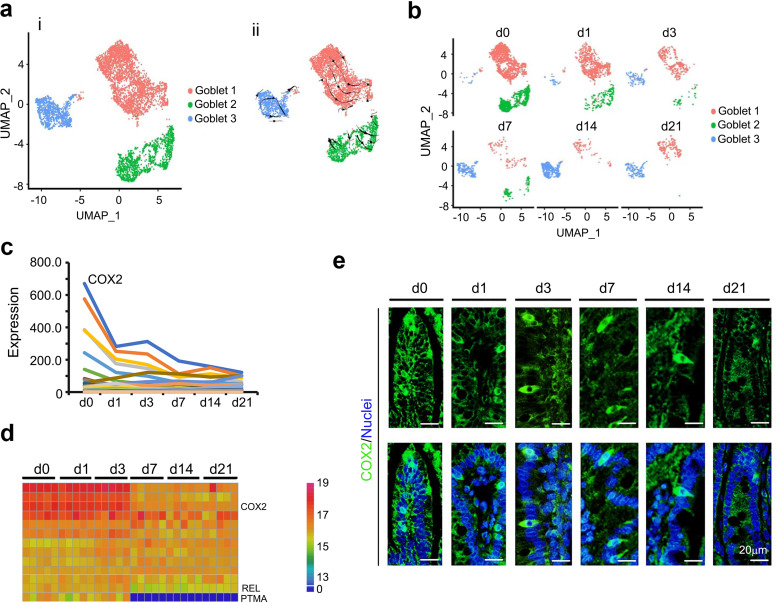
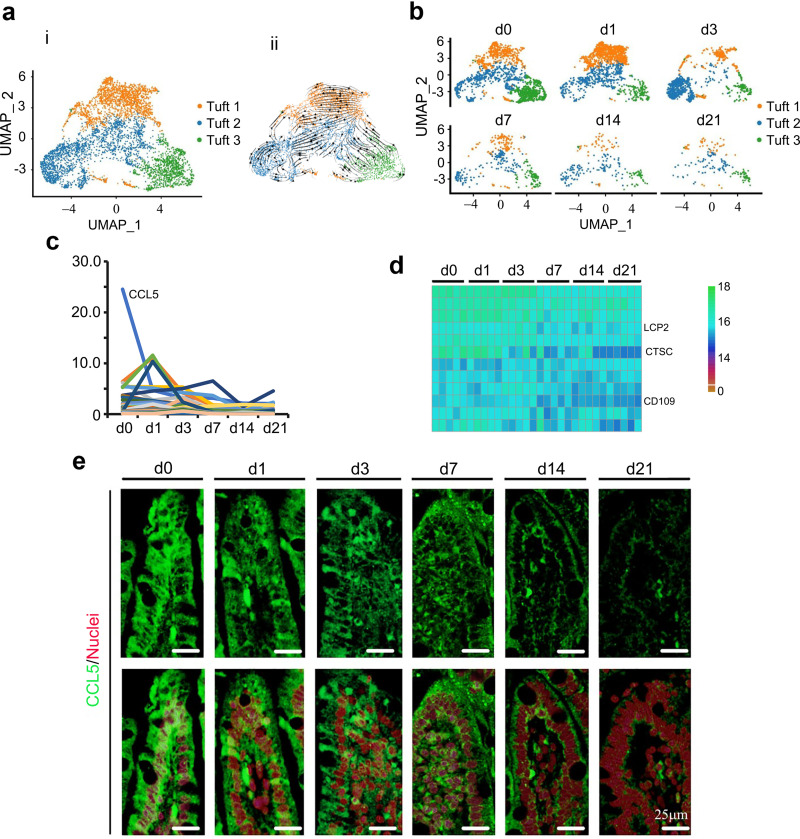
The neonatal period is a crucial time during development of the mammalian small intestine. Moreover, neonatal development and maturation of the small intestine are exceptionally important for early growth, successful weaning, and postweaning growth and development, in order to achieve species-specific milestones. Although several publications recently characterized intestinal epithelial cell diversity at the single-cell level, it remains unclear how differentiation and molecular interactions take place between types and subtypes of epithelial cells during the neonatal period. A single-cell RNA sequencing (scRNA-seq) survey of 40,186 ileal epithelial cells and proteomics analysis of ileal samples at 6 time points in the swine neonatal period were performed. The results revealed previously unknown developmental changes: specific increases in undifferentiated cells, unique enterocyte differentiation, and time-dependent reduction in secretory cells. Moreover, we observed specific transcriptional factors, ligand-receptor pairs, G protein-coupled receptors, transforming growth factor β, bone morphogenetic protein signaling pathways, and gut mucosal microbiota playing vital roles in ileal development during the neonatal window. This work offers new comprehensive information regarding ileal development throughout the neonatal period. Reference to this data set may assist in the creation of novel interventions for inflammation-, metabolism-, and proliferation-related gut pathologies. We found previously unknown neonatal ileum developmental potentials: specific increases in undifferentiated cells, unique enterocyte differentiation, and time dependent reduction in secretory cells. Specific transcriptional factors (TFs), ligand-receptor pairs, G protein-coupled receptors, transforming growth factor β, bone morphogenetic protein signaling pathways, and the gut mucosal microbiota are involved in this process. Our results may assist in the creation of novel interventions for inflammation-, metabolism-, and proliferation-related gut pathologies.
新生儿期是哺乳动物小肠发育的关键时期。此外,小肠的新生儿发育和成熟对于早期生长、成功断奶以及断奶后的生长发育尤为重要,以便实现特定物种的发育里程碑。尽管最近有几篇出版物在单细胞水平上描述了肠上皮细胞的多样性,但仍不清楚在新生儿期上皮细胞的类型和亚型之间如何发生分化和分子相互作用。我们对40186个回肠上皮细胞进行了单细胞RNA测序(scRNA-seq)调查,并对猪新生儿期6个时间点的回肠样本进行了蛋白质组学分析。结果揭示了以前未知的发育变化:未分化细胞的特定增加、独特的肠细胞分化以及分泌细胞的时间依赖性减少。此外,我们观察到特定的转录因子、配体-受体对、G蛋白偶联受体、转化生长因子β、骨形态发生蛋白信号通路以及肠道黏膜微生物群在新生儿期回肠发育中发挥着至关重要的作用。这项工作提供了关于整个新生儿期回肠发育的新的全面信息。参考这个数据集可能有助于创建针对炎症、代谢和增殖相关肠道疾病的新型干预措施。我们发现了以前未知的新生儿回肠发育潜能:未分化细胞的特定增加、独特的肠细胞分化以及分泌细胞的时间依赖性减少。特定的转录因子(TFs)、配体-受体对、G蛋白偶联受体、转化生长因子β、骨形态发生蛋白信号通路以及肠道黏膜微生物群参与了这一过程。我们的结果可能有助于创建针对炎症、代谢和增殖相关肠道疾病的新型干预措施。