Akpolat Demet
Dermatology, Demet Akpolat Clinic, Istanbul, TUR.
Cureus. 2021 Aug 11;13(8):e17115. doi: 10.7759/cureus.17115. eCollection 2021 Aug.
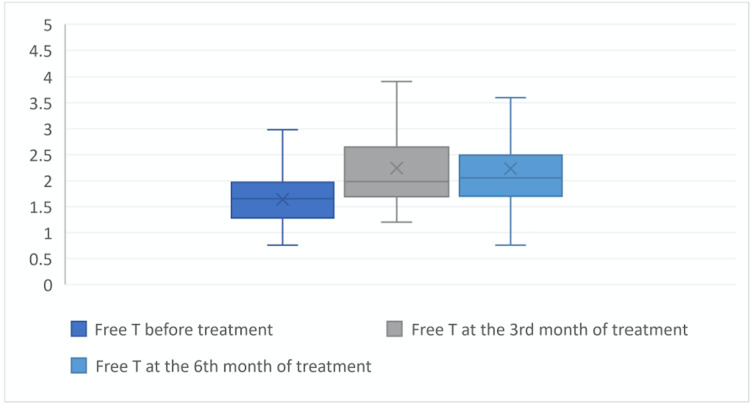
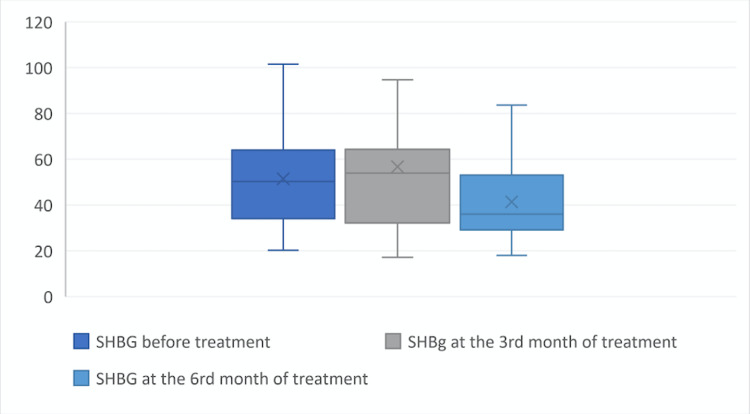
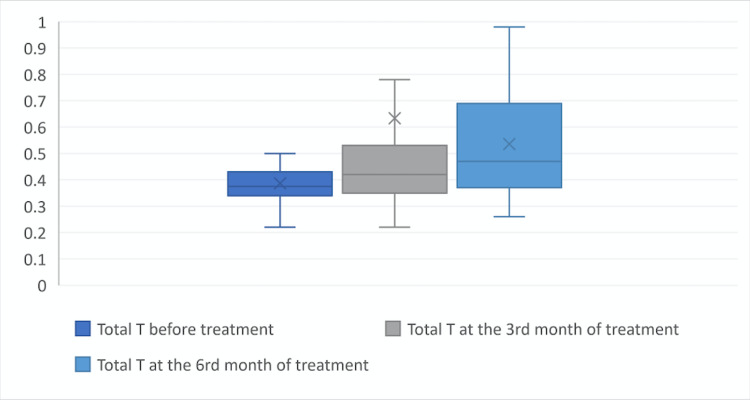
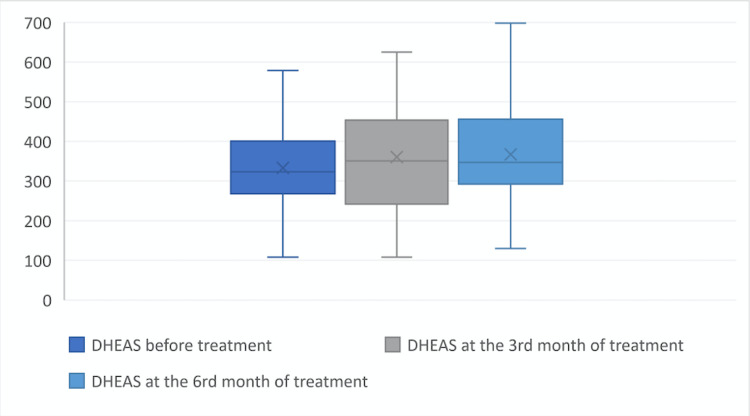
Background This study aimed to assess the effects of isotretinoin treatment on hirsutism, menstrual cycle and hormonal response in adolescents with acne vulgaris (AV). Methods In the study, 76 participants with nodulocystic acne were included. Free testosterone (fT), total testosterone (tT), dehydroepiandrosterone sulfate (DHEAS), luteinizing hormone (LH), follicle-stimulating hormone (FSH), 17-OH progesterone (17-OH PG), and sex hormone-binding globulin (SHBG) levels of the participants were measured before and at the third and sixth months of treatment. Furthermore, the patients were evaluated for hirsutism and menstrual irregularity. Results The rates of menstrual irregularity and hirsutism at the beginning and at the third and sixth months of treatment were found to be different (p < 0.05). fT, tT and DHEAS levels at the third and sixth months of treatment were higher than those at the beginning of treatment, and the SHBG level at the sixth month was found to be lower than that at the beginning and third month of treatment (p < 0.05). The tT levels were found to be lower and DHEAS levels were higher than those at the beginning of treatment in patients who presented with menstrual irregularity at the third month of treatment (p < 0.05). The LH and 17-OH PG levels were noted to be lower and DHEAS levels were higher than those at the beginning of treatment in patients who developed hirsutism at the third month of treatment (p < 0.05). The SHBG levels were observed to be lower and DHEAS levels were higher than those before treatment in patients who developed menstrual irregularity at the sixth month of treatment (p < 0.05). SHBG levels were discerned to be lower and DHEAS levels were higher compared to those at the beginning of treatment in patients who developed hirsutism at the sixth month of the treatment (p < 0.05). Conclusions Isotretinoin can cause alterations in the adrenal hormone levels. Hirsutism and menstrual irregularity can be observed during treatment follow-ups.
背景 本研究旨在评估异维A酸治疗对寻常痤疮(AV)青少年多毛症、月经周期及激素反应的影响。方法 本研究纳入了76例结节囊肿性痤疮患者。在治疗前、治疗第三个月及第六个月测量患者的游离睾酮(fT)、总睾酮(tT)、硫酸脱氢表雄酮(DHEAS)、黄体生成素(LH)、卵泡刺激素(FSH)、17-羟孕酮(17-OH PG)和性激素结合球蛋白(SHBG)水平。此外,对患者的多毛症和月经不规律情况进行评估。结果 发现治疗开始时、第三个月和第六个月的月经不规律率和多毛症率存在差异(p < 0.05)。治疗第三个月和第六个月时的fT、tT和DHEAS水平高于治疗开始时,且发现第六个月时的SHBG水平低于治疗开始时和第三个月时(p < 0.05)。在治疗第三个月出现月经不规律的患者中,发现tT水平低于治疗开始时,DHEAS水平高于治疗开始时(p < 0.05)。在治疗第三个月出现多毛症的患者中,LH和17-OH PG水平低于治疗开始时,DHEAS水平高于治疗开始时(p < 0.05)。在治疗第六个月出现月经不规律的患者中,观察到SHBG水平低于治疗前,DHEAS水平高于治疗前(p < 0.05)。在治疗第六个月出现多毛症的患者中,与治疗开始时相比,SHBG水平较低,DHEAS水平较高(p < 0.05)。结论 异维A酸可导致肾上腺激素水平改变。在治疗随访期间可观察到多毛症和月经不规律。