Institute for Physical Activity and Nutrition (IPAN), School of Exercise and Nutrition Sciences, Deakin University, Geelong, Victoria, Australia.
Institute of Heart Diseases, Wroclaw Medical University, Wroclaw, Poland.
ESC Heart Fail. 2021 Dec;8(6):5304-5315. doi: 10.1002/ehf2.13620. Epub 2021 Sep 22.
Weight excess and insulin resistance predispose to heart failure. High sodium consumption may contribute to the development of cardiac impairment in insulin-resistant individuals by promoting inadequate skeletal muscle microvascular perfusion response to insulin. We sought to investigate the association of dietary sodium reduction with muscle perfusion, insulin sensitivity, and cardiac function in overweight/obese insulin-resistant (O-IR) normotensive subjects.
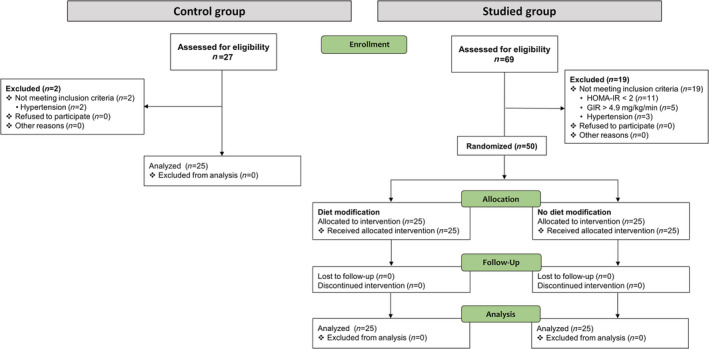
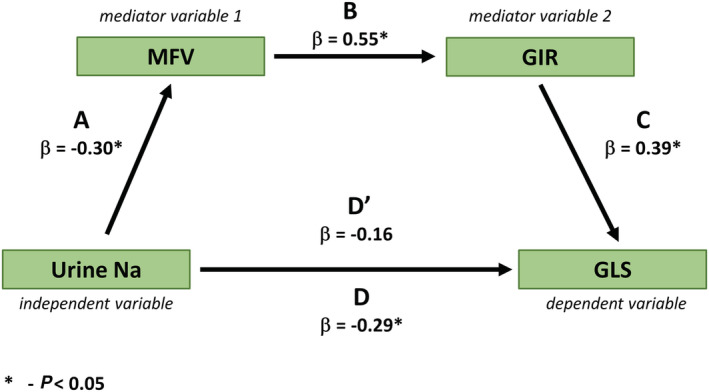
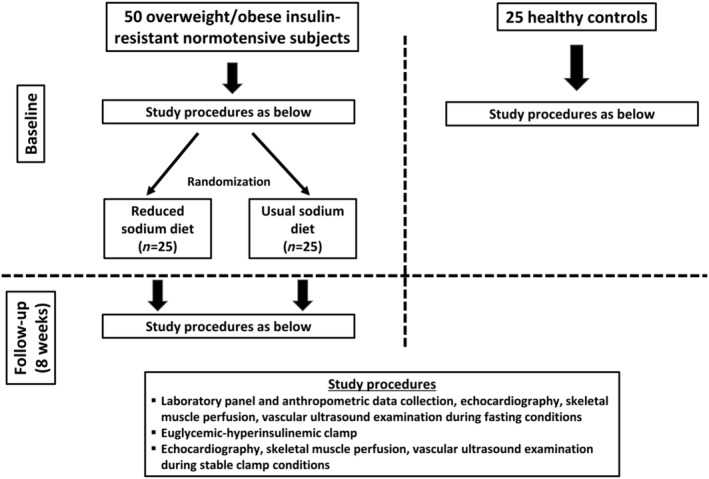
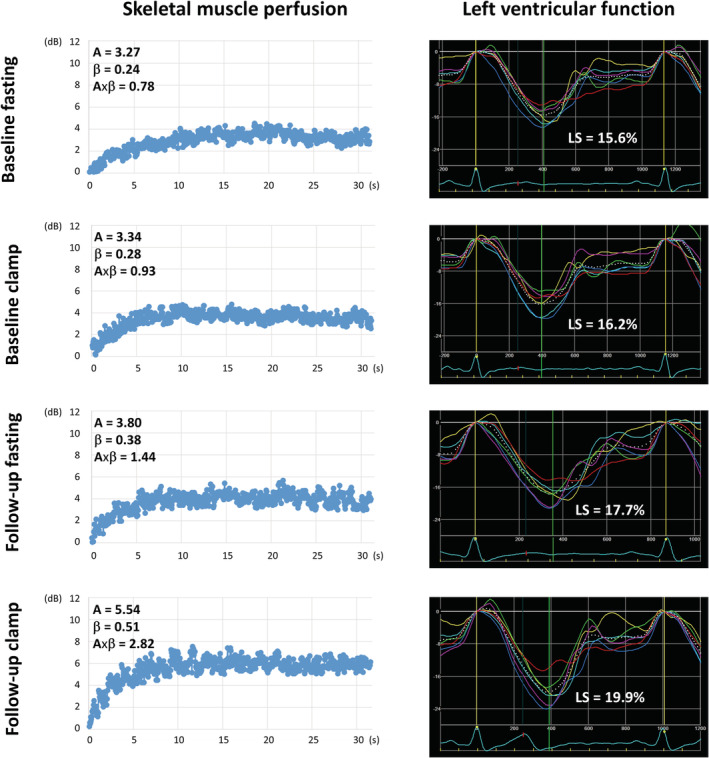
Fifty O-IR individuals with higher than recommended sodium intake were randomized to usual or reduced sodium diet for 8 weeks; 25 lean, healthy subjects served as controls for pre-intervention measurements. Echocardiography and muscle perfusion were performed during fasting and under stable euglycaemic-hyperinsulinaemic clamp conditions. O-IR patients demonstrated subclinical cardiac dysfunction as evidenced by lower left ventricular global longitudinal strain (GLS), e' tissue velocity, and left atrial strain and reduced muscle perfusion. The intervention arm showed improvements in insulin resistance [glucose infusion rate (GIR)], GLS, e', atrial strain, and muscle perfusion in fasting conditions, as well as improved responses of GLS and muscle perfusion to insulin during clamp. Significant interactions were found between the allocation to low-salt diet and improvement in muscle perfusion on change in GIR at follow-up (P = 0.030), and between improvement in muscle perfusion and change in GIR on change in GLS response to insulin at follow-up (P = 0.026). Mediation analysis revealed that the relationship between the reduction of sodium intake and improvement in GLS was mediated by improvements in muscle perfusion and GIR (decrease in beta coefficient from -0.29 to -0.16 after the inclusion of mediator variables to the model).
The reduction of dietary sodium in the normotensive O-IR population improves cardiac function, and this effect may be associated with the concomitant improvements in skeletal muscle perfusion and insulin resistance. These findings might contribute to refining heart failure preventive strategies.
体重超标和胰岛素抵抗会导致心力衰竭。高钠摄入可能会通过促进胰岛素抵抗个体骨骼肌微血管对胰岛素的灌注反应不足,从而导致心脏损伤。我们试图研究减少饮食中的钠摄入量与超重/肥胖胰岛素抵抗(O-IR)的正常血压个体的肌肉灌注、胰岛素敏感性和心脏功能之间的关系。
50 名钠摄入量高于推荐量的 O-IR 个体被随机分为常规或低盐饮食组,进行 8 周的干预;25 名健康的瘦个体作为干预前测量的对照组。在空腹和稳定的正葡萄糖高胰岛素钳夹条件下进行超声心动图和肌肉灌注检查。O-IR 患者表现出亚临床心脏功能障碍,表现为左心室整体纵向应变(GLS)、e'组织速度和左心房应变降低,以及肌肉灌注减少。干预组在空腹状态下显示出胰岛素抵抗(葡萄糖输注率(GIR))、GLS、e'、心房应变和肌肉灌注的改善,以及在钳夹期间 GLS 和肌肉灌注对胰岛素的反应改善。在随访时,低盐饮食的分配与肌肉灌注改善对 GIR 的变化之间存在显著的交互作用(P=0.030),以及肌肉灌注改善与胰岛素对 GLS 反应的变化之间存在显著的交互作用(P=0.026)。中介分析显示,钠摄入量减少与 GLS 改善之间的关系是通过肌肉灌注和 GIR 的改善来介导的(在将中介变量纳入模型后,β系数从-0.29 降低到-0.16)。
在正常血压的 O-IR 人群中减少饮食中的钠摄入量可以改善心脏功能,这种效果可能与骨骼肌灌注和胰岛素抵抗的同时改善有关。这些发现可能有助于完善心力衰竭的预防策略。