Tianjin Key Laboratory of Lung Cancer Metastasis and Tumor Microenvironment, Tianjin Lung Cancer Institute, Tianjin Medical University General Hospital, Tianjin, 300052, China.
Department of Anesthesiology, Tianjin First Center Hospital, Tianjin, 300192, China.
Cell Death Dis. 2021 Sep 22;12(10):858. doi: 10.1038/s41419-021-04150-4.
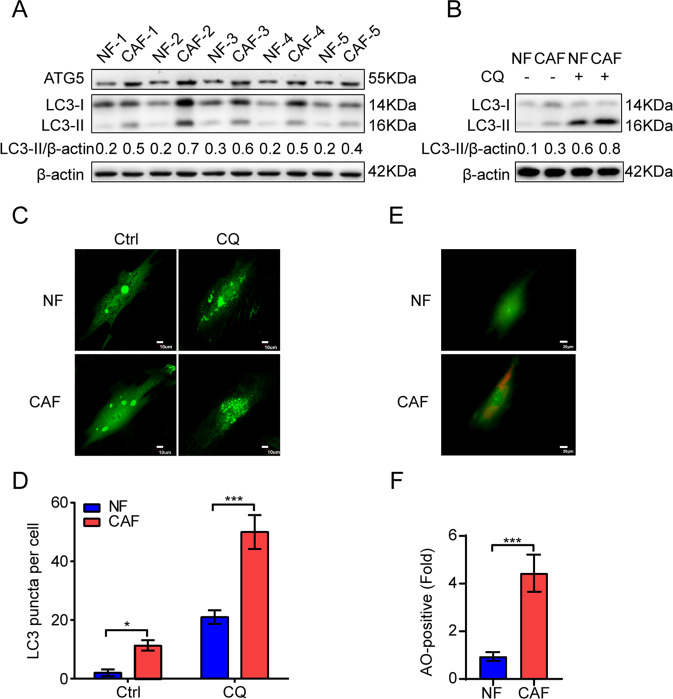
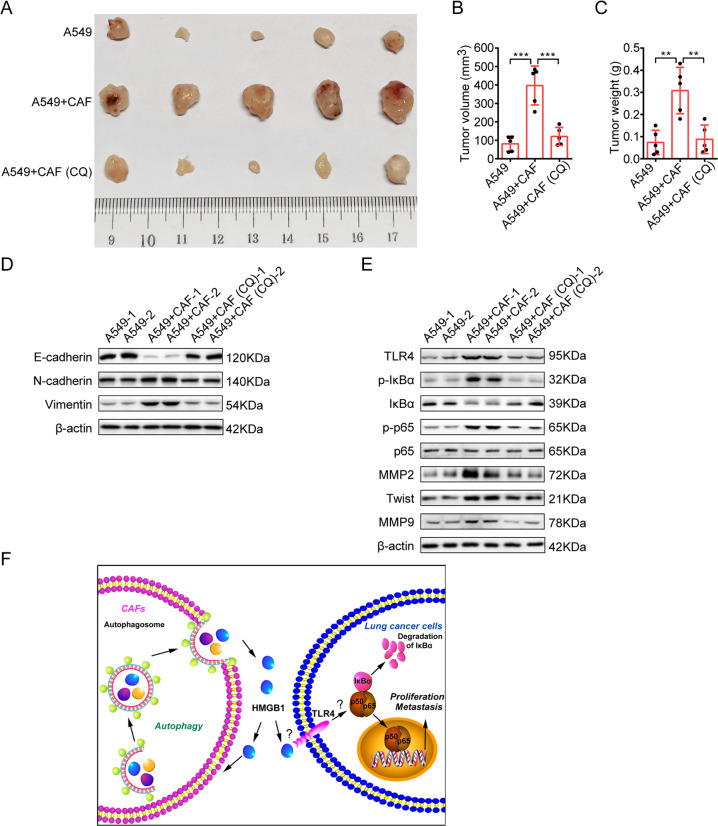
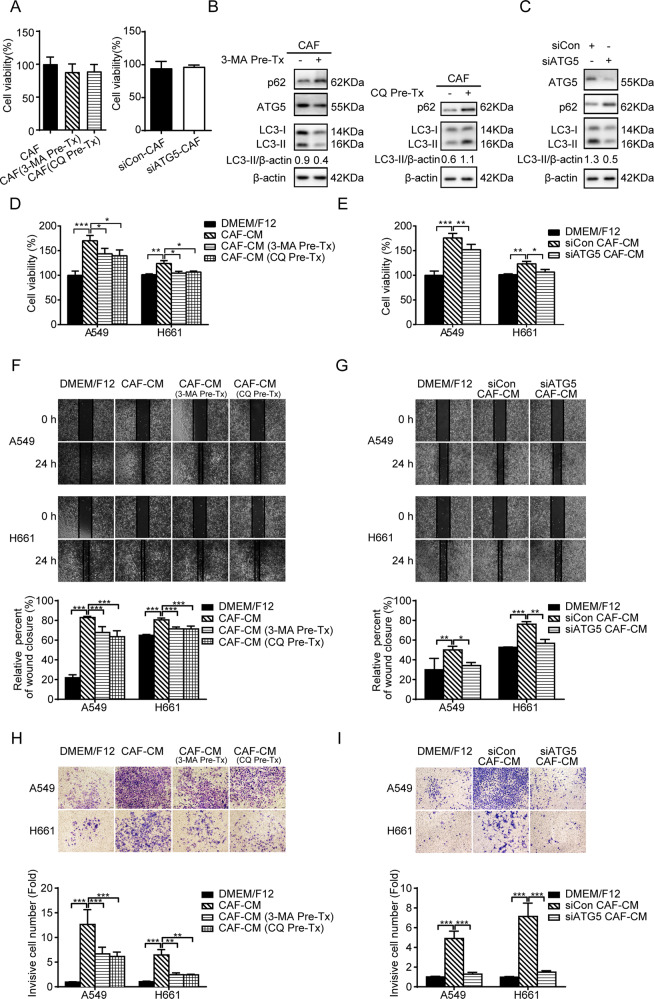
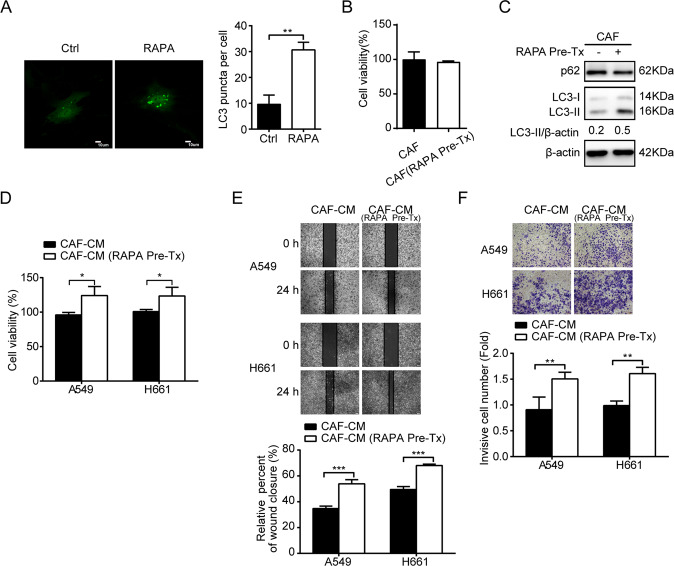
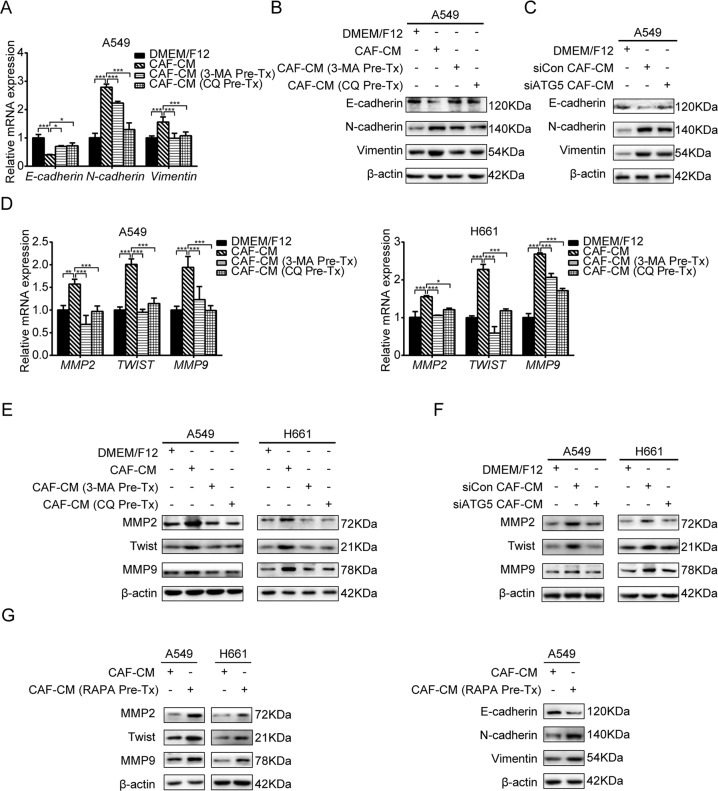
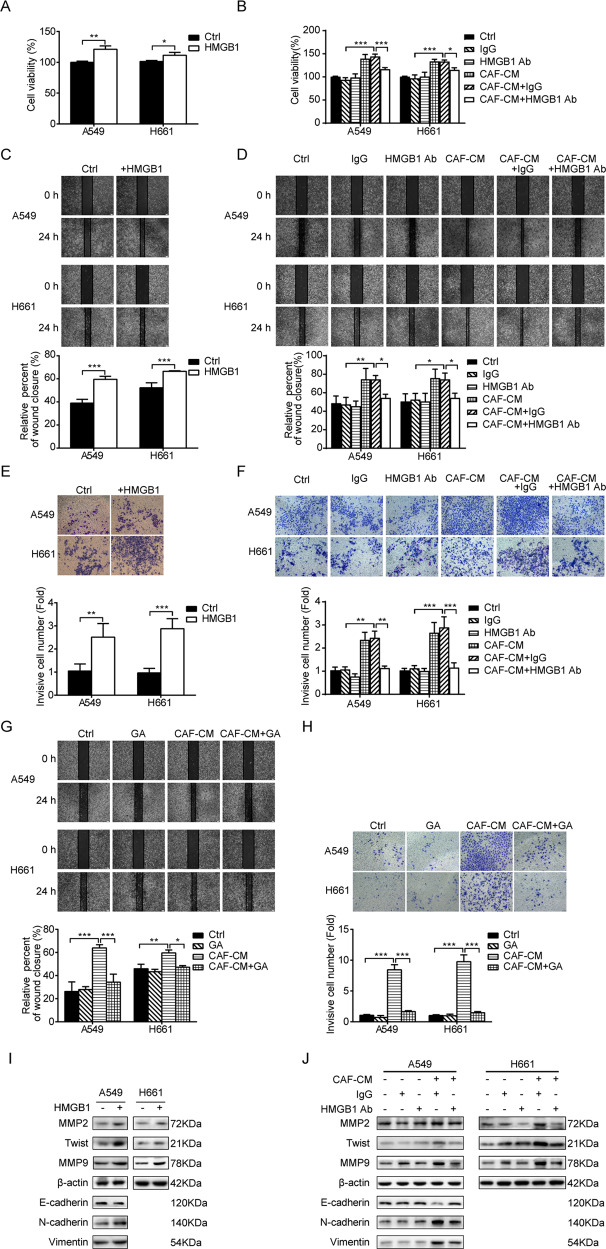
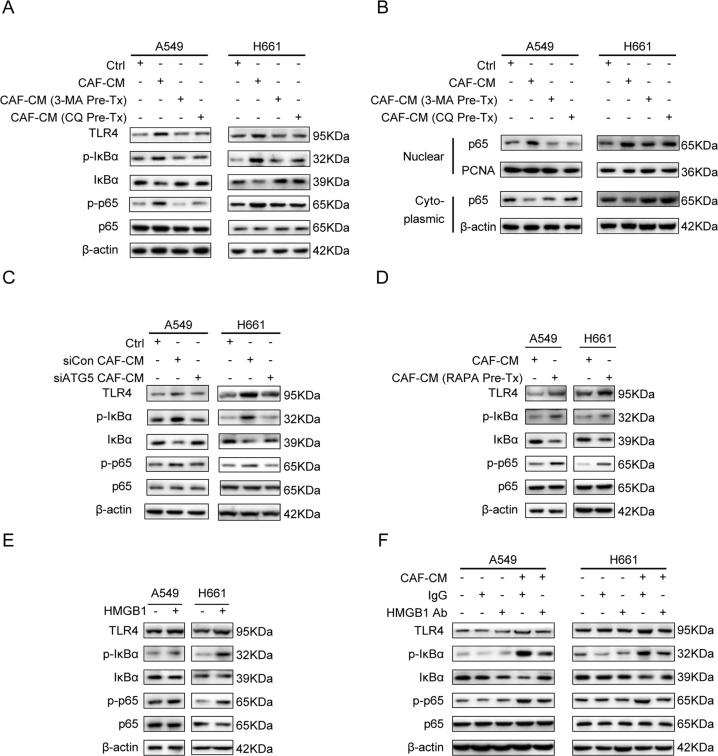
Tumor progression requires the communication between tumor cells and tumor microenvironment (TME). Cancer-associated fibroblasts (CAFs) are major components of stromal cells. CAFs contribute to metastasis process through direct or indirect interaction with tumor cells; however, the underlying mechanism is largely unknown. Here, we reported that autophagy was upregulated in lung cancer-associated CAFs compared to normal fibroblasts (NFs), and autophagy was responsible for the promoting effect of CAFs on non-small cell lung cancer (NSCLC) cell migration and invasion. Inhibition of CAFs autophagy attenuated their regulation on epithelial-mesenchymal transition (EMT) and metastasis-related genes of NSCLC cells. High mobility group box 1 (HMGB1) secreted by CAFs mediated CAFs' effect on lung cancer cell invasion, demonstrated by using recombinant HMGB1, HMGB1 neutralizing antibody, and HMGB1 inhibitor glycyrrhizin (GA). Importantly, the autophagy blockade of CAFs revealed that HMGB1 release was dependent on autophagy. We also found HMGB1 was responsible, at least in part, for autophagy activation of CAFs, suggesting CAFs remain active through an autocrine HMGB1 loop. Further study demonstrated that HMGB1 facilitated lung cancer cell invasion by activating the NFκB pathway. In a mouse xenograft model, the autophagy specific inhibitor chloroquine abolished the stimulating effect of CAFs on tumor growth. These results elucidated an oncogenic function for secretory autophagy in lung cancer-associated CAFs that promotes metastasis potential, and suggested HMGB1 as a novel therapeutic target.
肿瘤的进展需要肿瘤细胞与肿瘤微环境(TME)之间的通讯。癌相关成纤维细胞(CAFs)是基质细胞的主要组成部分。CAFs 通过与肿瘤细胞的直接或间接相互作用,促进转移过程;然而,其潜在机制在很大程度上尚不清楚。在这里,我们报道与正常成纤维细胞(NFs)相比,肺癌相关 CAFs 中的自噬上调,并且自噬负责 CAFs 对非小细胞肺癌(NSCLC)细胞迁移和侵袭的促进作用。CAFs 自噬的抑制减弱了它们对 NSCLC 细胞上皮-间充质转化(EMT)和转移相关基因的调节。CAFs 分泌的高迁移率族蛋白 B1(HMGB1)介导了 CAFs 对肺癌细胞侵袭的作用,这通过使用重组 HMGB1、HMGB1 中和抗体和 HMGB1 抑制剂甘草酸(GA)得到证实。重要的是,CAFs 的自噬阻断揭示了 HMGB1 的释放依赖于自噬。我们还发现 HMGB1 至少部分负责 CAFs 的自噬激活,表明 CAFs 通过自分泌 HMGB1 环保持活性。进一步的研究表明,HMGB1 通过激活 NFκB 通路促进肺癌细胞的侵袭。在小鼠异种移植模型中,自噬特异性抑制剂氯喹消除了 CAFs 对肿瘤生长的刺激作用。这些结果阐明了分泌自噬在肺癌相关 CAFs 中的致癌功能,促进了转移潜力,并表明 HMGB1 是一种新的治疗靶点。