Department of Electrical and Computer Engineering, University of California, San Diego, California, United States of America.
Department of Psychology, University of California, San Diego, California, United States of America.
PLoS Comput Biol. 2021 Sep 23;17(9):e1008100. doi: 10.1371/journal.pcbi.1008100. eCollection 2021 Sep.
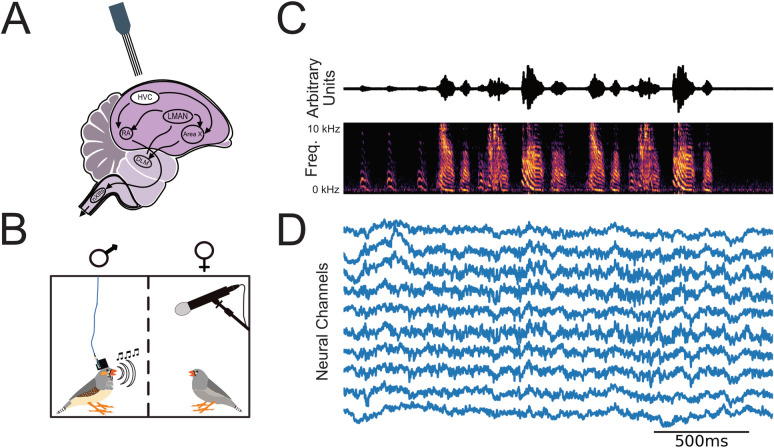
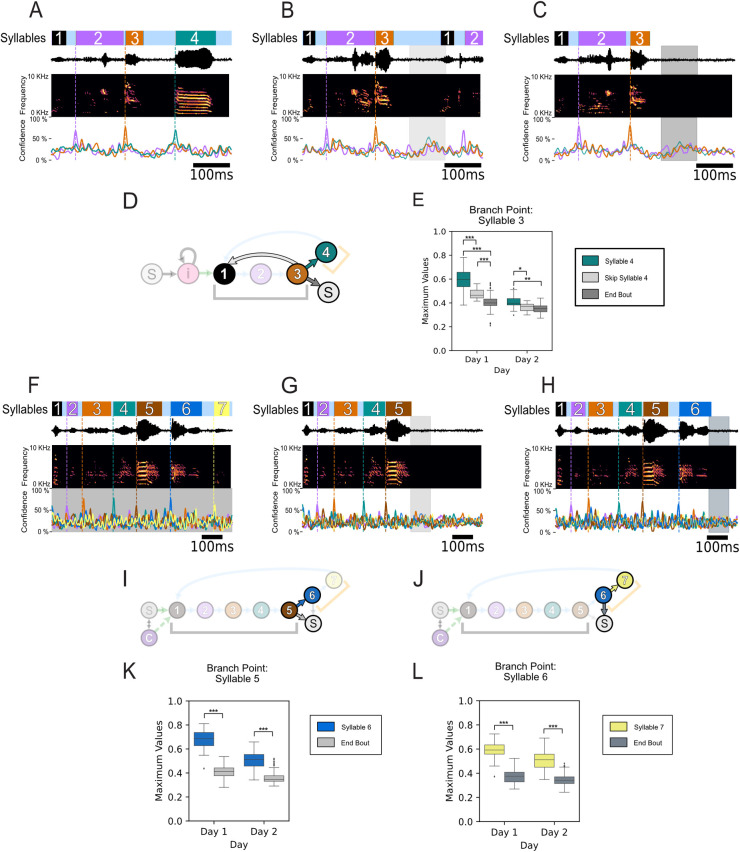
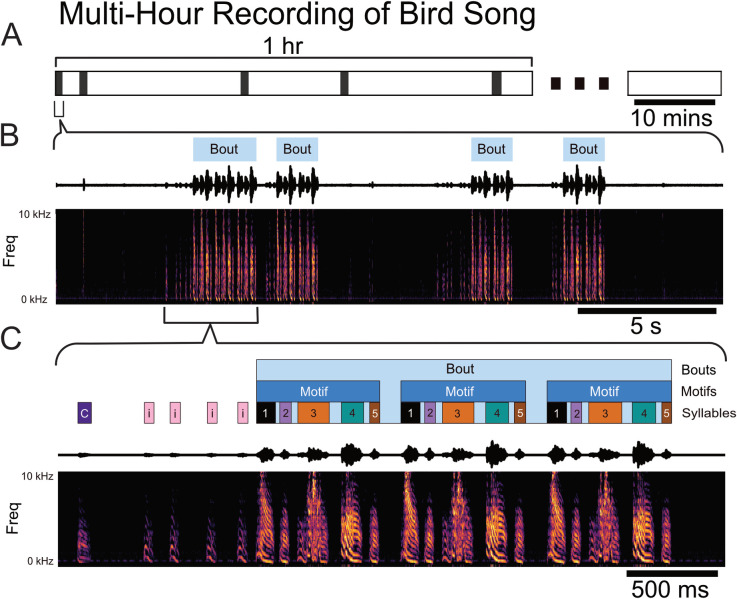
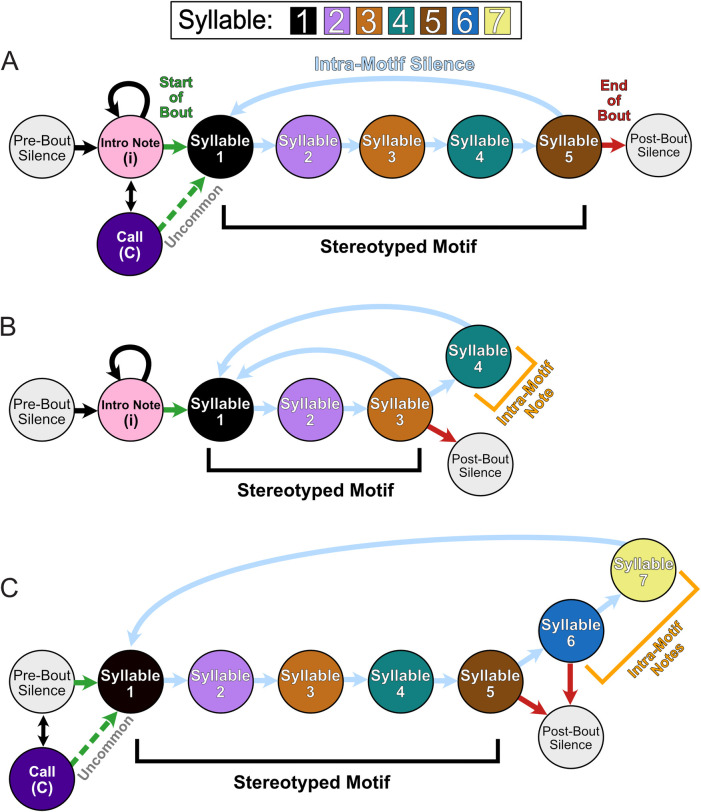
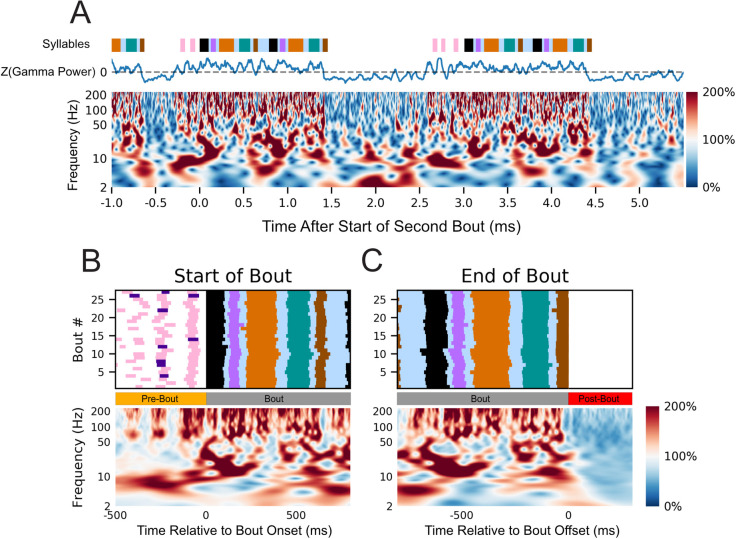
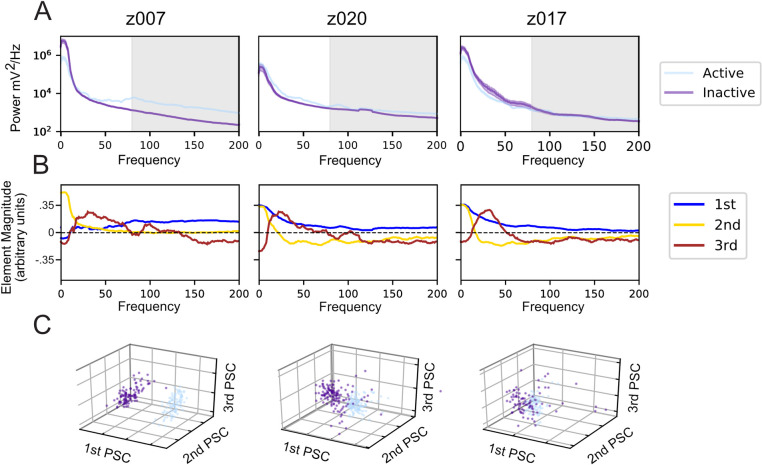
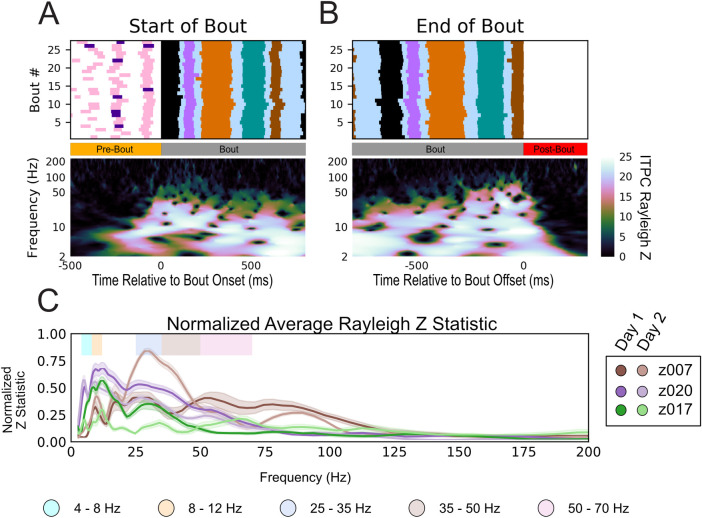
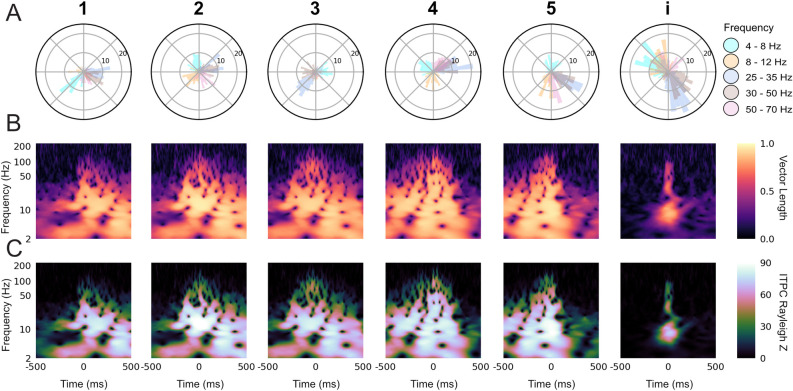
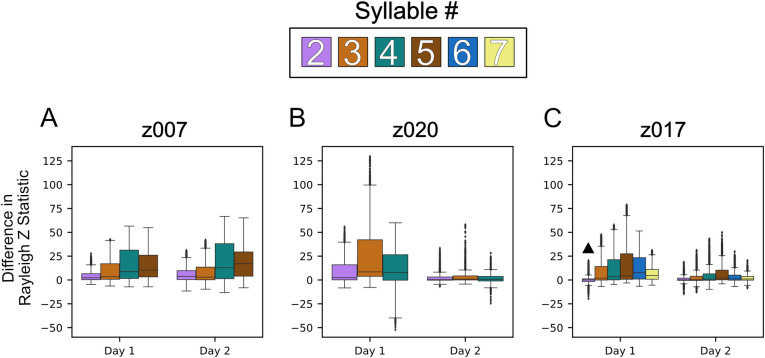
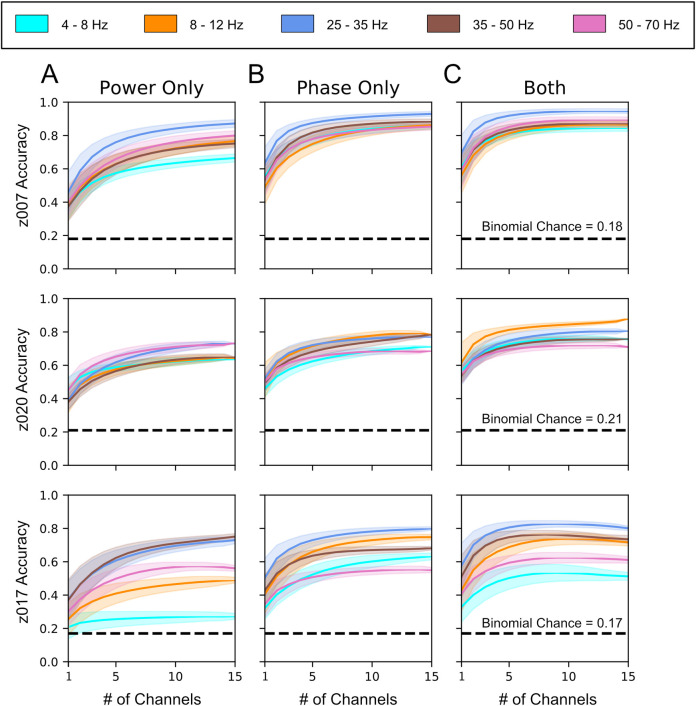
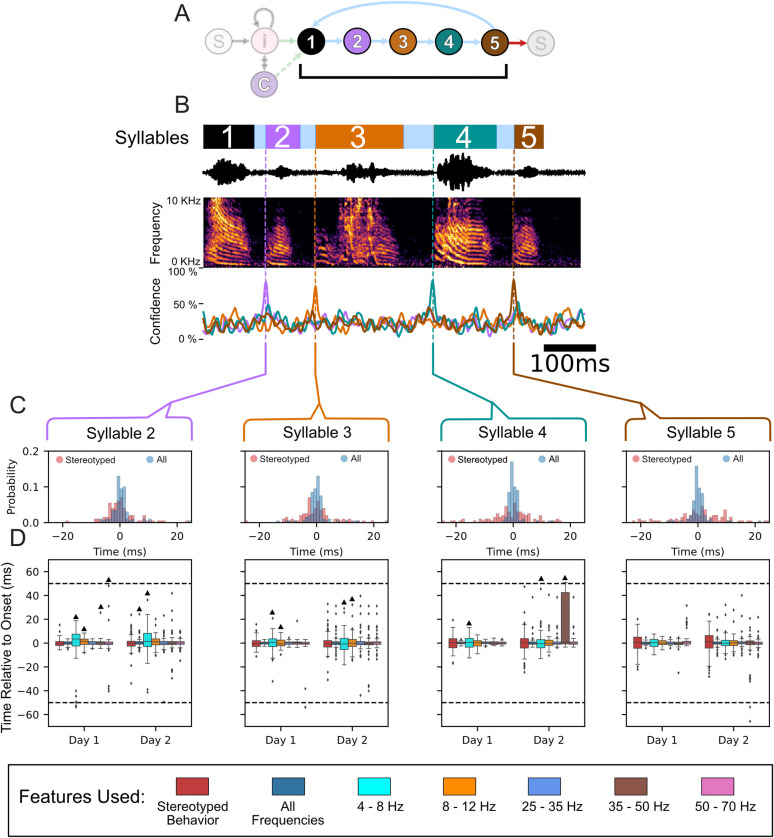
Neuronal activity within the premotor region HVC is tightly synchronized to, and crucial for, the articulate production of learned song in birds. Characterizations of this neural activity detail patterns of sequential bursting in small, carefully identified subsets of neurons in the HVC population. The dynamics of HVC are well described by these characterizations, but have not been verified beyond this scale of measurement. There is a rich history of using local field potentials (LFP) to extract information about behavior that extends beyond the contribution of individual cells. These signals have the advantage of being stable over longer periods of time, and they have been used to study and decode human speech and other complex motor behaviors. Here we characterize LFP signals presumptively from the HVC of freely behaving male zebra finches during song production to determine if population activity may yield similar insights into the mechanisms underlying complex motor-vocal behavior. Following an initial observation that structured changes in the LFP were distinct to all vocalizations during song, we show that it is possible to extract time-varying features from multiple frequency bands to decode the identity of specific vocalization elements (syllables) and to predict their temporal onsets within the motif. This demonstrates the utility of LFP for studying vocal behavior in songbirds. Surprisingly, the time frequency structure of HVC LFP is qualitatively similar to well-established oscillations found in both human and non-human mammalian motor areas. This physiological similarity, despite distinct anatomical structures, may give insight into common computational principles for learning and/or generating complex motor-vocal behaviors.
在鸟类中,前运动区 HVC 中的神经元活动与习得歌曲的清晰发声紧密同步,对其至关重要。对这种神经活动的描述详细说明了 HVC 群体中一小部分经过精心识别的神经元的顺序爆发模式。这些特征很好地描述了 HVC 的动态,但尚未在超出此测量尺度的范围内得到验证。使用局部场电位 (LFP) 来提取有关行为的信息的历史悠久,其应用范围超出了单个细胞的贡献。这些信号具有长时间稳定的优势,并且已被用于研究和解码人类语音和其他复杂运动行为。在这里,我们对自由行为的雄性斑马雀在产生歌曲时的 HVC 中的 LFP 信号进行了特征描述,以确定群体活动是否可以为理解复杂运动发声行为的机制提供类似的见解。最初观察到 LFP 中的结构化变化与歌曲中的所有发声明显不同之后,我们表明可以从多个频带中提取时变特征,以解码特定发声元素(音节)的身份,并预测它们在动机内的时间出现。这证明了 LFP 可用于研究鸣禽的发声行为。令人惊讶的是,HVC LFP 的时频结构与在人类和非人类哺乳动物运动区域中发现的成熟振荡在质量上是相似的。尽管存在明显的解剖结构,但这种生理相似性可能为学习和/或产生复杂运动发声行为的共同计算原理提供了一些见解。