Institute for Bioscience & Biotechnology Research, University of Maryland, College Park, MD, 20742, USA; Robert E. Fischell Institute for Biomedical Devices, University of Maryland, College Park, MD, 20742, USA.
Robert E. Fischell Institute for Biomedical Devices, University of Maryland, College Park, MD, 20742, USA.
Redox Biol. 2021 Nov;47:102138. doi: 10.1016/j.redox.2021.102138. Epub 2021 Sep 16.
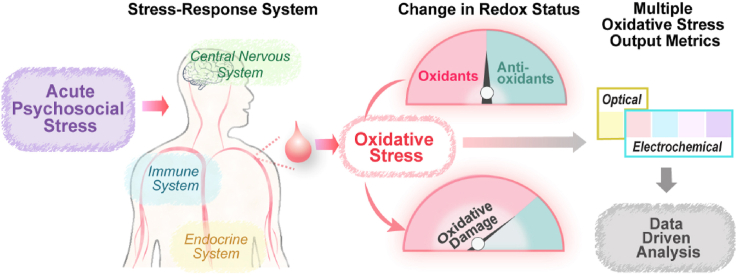
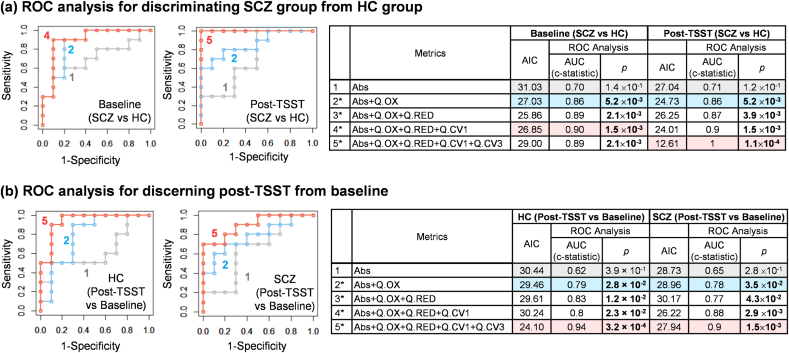
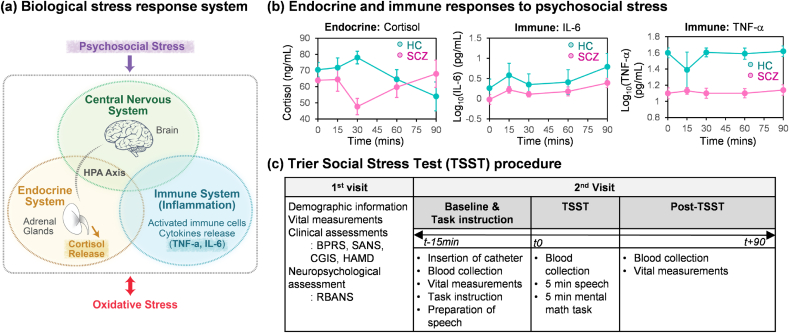
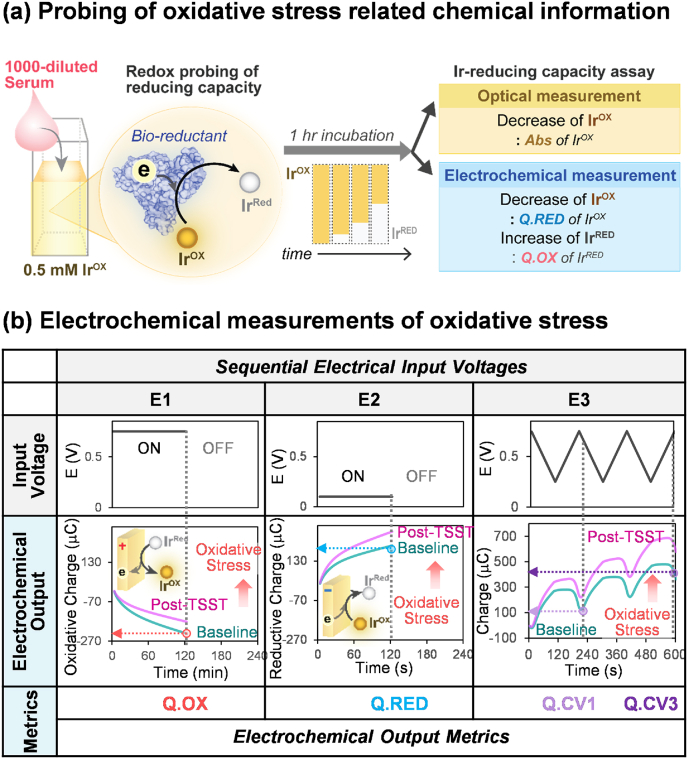
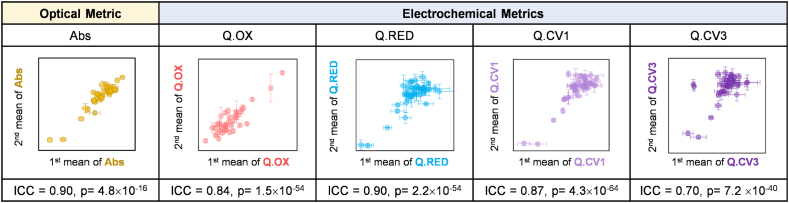
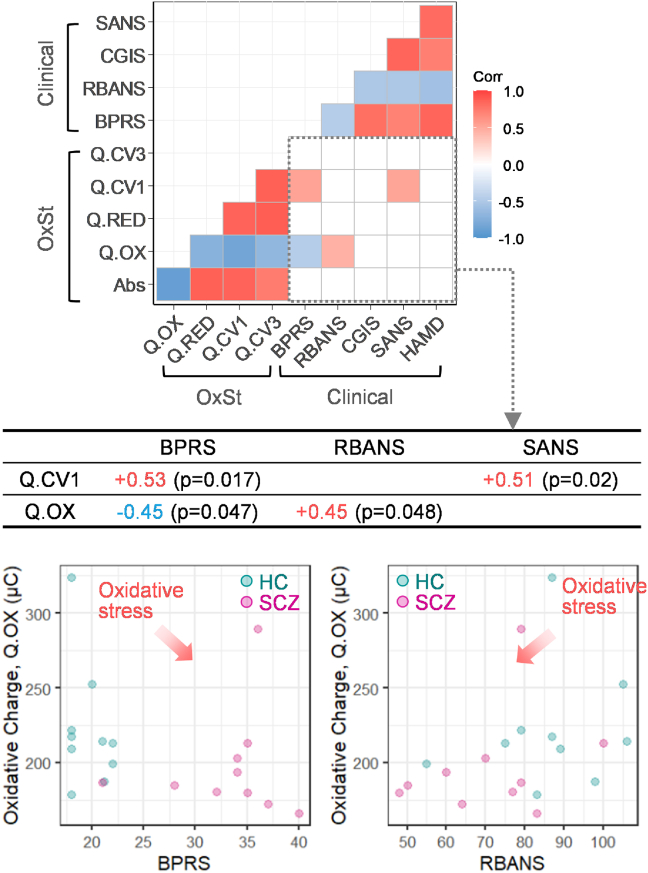
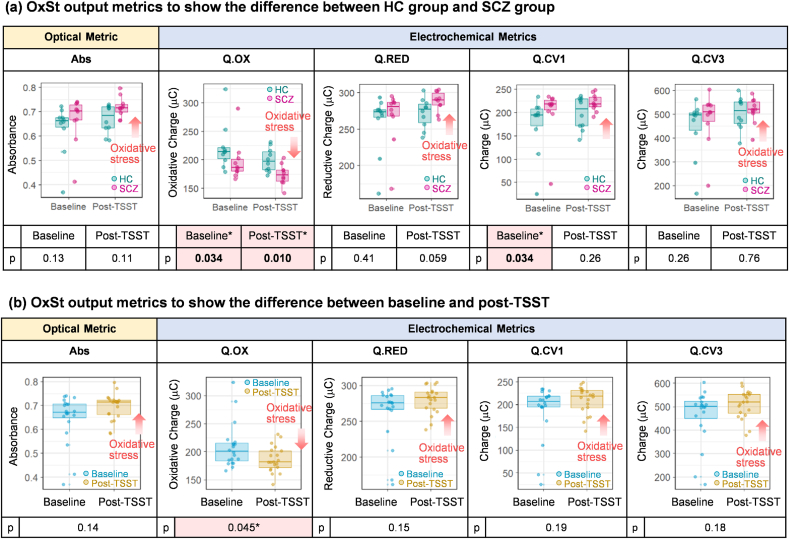
Growing evidence implicates an association between psychosocial stress and oxidative stress (OxSt) although there are not yet reliable biomarkers to study this association. We used a Trier Social Stress Test (TSST) and compared the response of a healthy control group (HC; N=10) against the response of a schizophrenia group (SCZ; N=10) that is expected to have higher levels of OxSt. Because our previous study showed inconsistent changes in conventional molecular markers for stress responses in the neuroendocrine and immune systems, we analyzed the same serum samples using a separate reducing capacity assay that provides a more global measurement of OxSt. This assay uses the moderately strong oxidizing agent iridium (Ir) to probe a sample's reducing capacity. Specifically, we characterized OxSt by this Ir-reducing capacity assay (Ir-RCA) using two measurement modalities (optical and electrochemical) and we tuned this assay by imposing an input voltage sequence that generates multiple output metrics for data-driven analysis. We defined five OxSt metrics (one optical and four electrochemical metrics) and showed: (i) internal consistency among each metric in the measurements of all 40 samples (baseline and post TSST for N=20); (ii) all five metrics were consistent with expectations of higher levels of OxSt for the SCZ group (three individual metrics showed statistically significant differences); and (iii) all five metrics showed higher levels of OxSt Post-TSST (one metric showed statistically significant difference). Using multivariant analysis, we showed that combinations of OxSt metrics could discern statistically significant increases in OxSt for both the SCZ and HC groups 90 min after the imposed acute psychosocial stress.
越来越多的证据表明,心理社会应激与氧化应激(OxSt)之间存在关联,尽管目前还没有可靠的生物标志物来研究这种关联。我们使用了特里尔社会应激测试(TSST),并比较了健康对照组(HC;N=10)和精神分裂症组(SCZ;N=10)的反应,预计后者的 OxSt 水平更高。由于我们之前的研究表明,神经内分泌和免疫系统中应激反应的常规分子标志物的变化不一致,我们使用另一种还原能力测定法分析了相同的血清样本,该测定法提供了 OxSt 的更全面测量。该测定法使用中等强度的氧化剂铱(Ir)来探测样品的还原能力。具体来说,我们使用 Ir 还原能力测定法(Ir-RCA)通过两种测量方式(光学和电化学)来描述 OxSt,并通过施加输入电压序列来调整该测定法,该序列为数据驱动分析生成多个输出指标。我们定义了五个 OxSt 指标(一个光学指标和四个电化学指标),并表明:(i)在 40 个样本的所有测量中(TSST 前后的 N=20),每个指标之间的内部一致性;(ii)所有五个指标都与 SCZ 组的高 OxSt 水平预期一致(三个单独的指标显示出统计学上的显著差异);(iii)所有五个指标在 TSST 后都显示出更高的 OxSt 水平(一个指标显示出统计学上的显著差异)。使用多变量分析,我们表明,OxSt 指标的组合可以区分 SCZ 和 HC 组在施加急性心理社会应激后 90 分钟 OxSt 的统计学显著增加。