Razaghi Ali, Brusselaers Nele, Björnstedt Mikael, Durand-Dubief Mickael
Division of Pathology, Department of Laboratory Medicine, Karolinska Institute, Karolinska University-Hospital, Stockholm, Sweden.
Centre for Translational Microbiome Research (CTMR), Department of Microbiology, Tumor and Cell Biology, Karolinska Institute, Karolinska Hospital, Stockholm, Sweden; Global Health Institute, Antwerp University, Belgium; Department of Head and Skin, Ghent University, Belgium.
Neoplasia. 2021 Sep 20;23(10):1059-1068. doi: 10.1016/j.neo.2021.08.004.
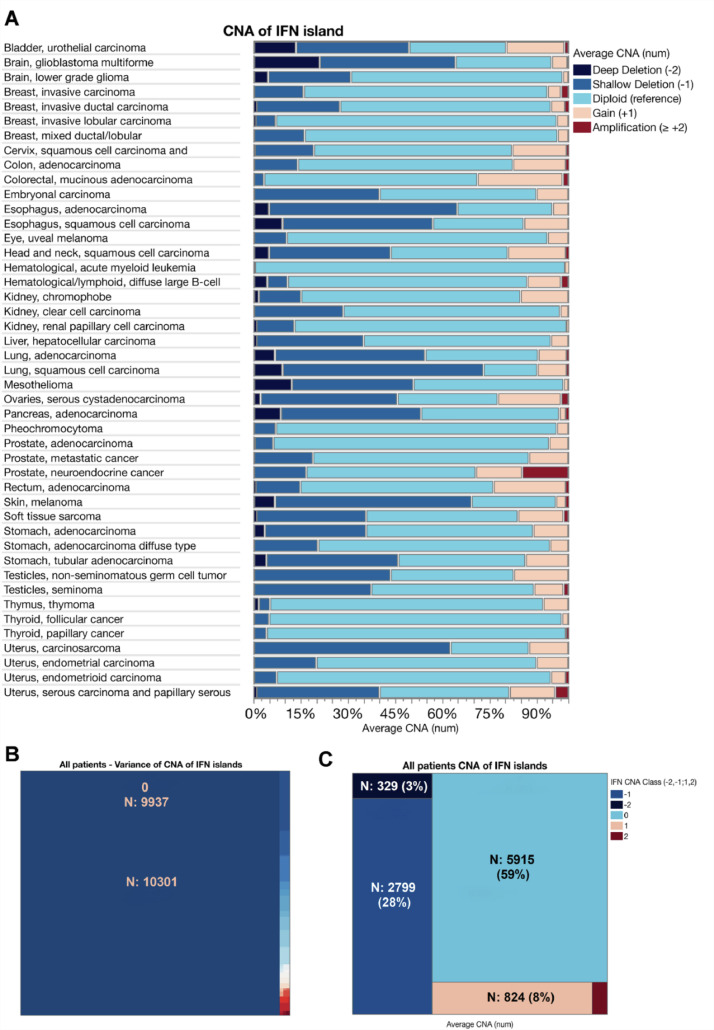
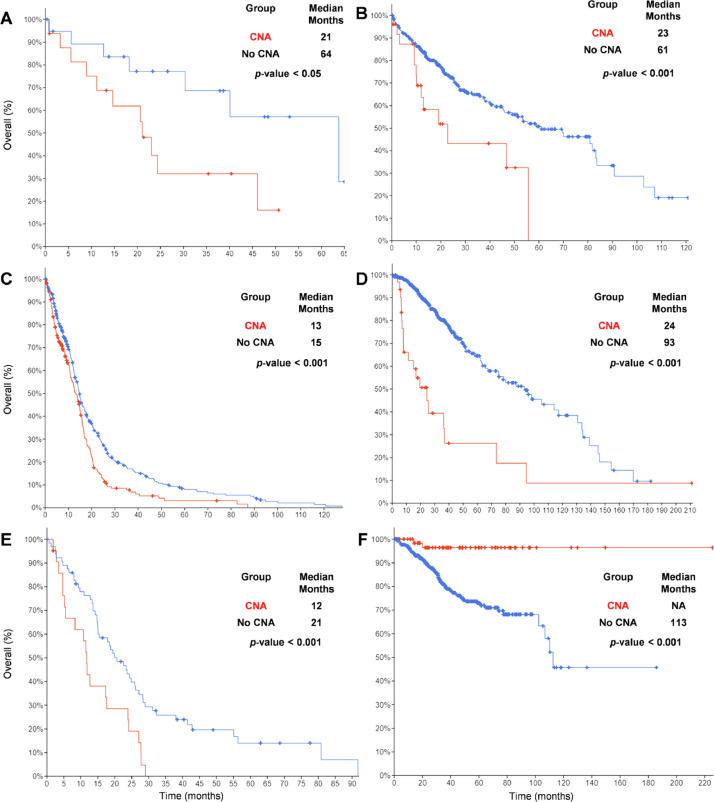
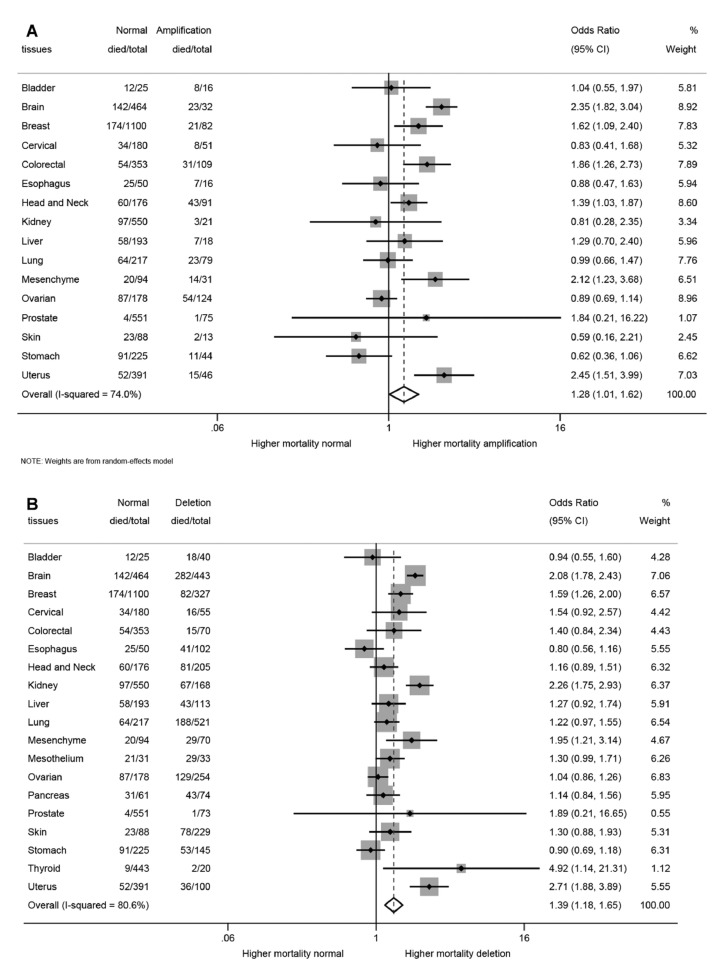
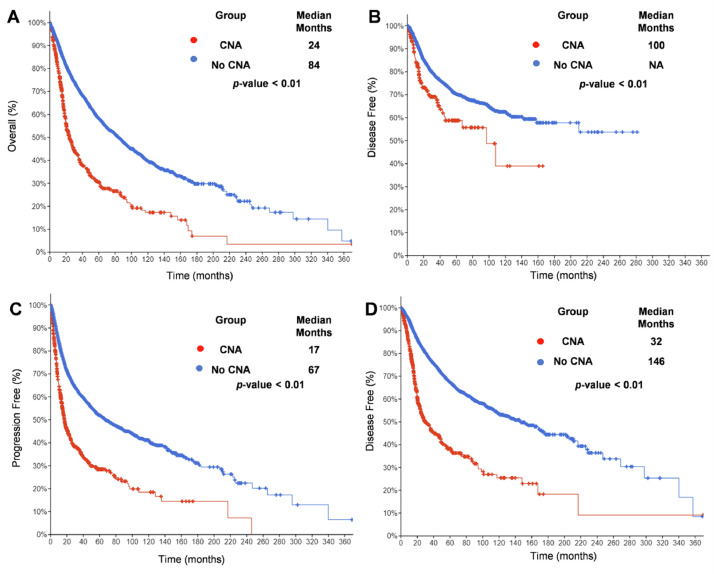
Interferon (IFN) therapy has been the standard of care for a variety of cancers for decades due to the pleiotropic actions of IFNs against malignancies. However, little is known about the role of copy number alteration (CNA) of the IFN gene cluster, located at the 9p21.3, in cancer. This large individual patient data meta-analysis using 9937 patients obtained from cBioportal indicates that CNA of the IFN gene cluster is prevalent among 24 cancer types. Two statistical approaches showed that notably deletion of this cluster is significantly associated with increased mortality in many cancer types particularly uterus (OR = 2.71), kidney (OR = 2.26), and brain (OR = 2.08) cancers. The Cancer Genome Atlas PanCancer analysis also showed that CNA of the IFN gene cluster is significantly associated with decreased overall survival. For instance, the overall survival of patients with brain glioma reduced from 93m (diploidy) to 24m (with the CNA of the IFN gene). In conclusion, the CNA of the IFN gene cluster is associated with increased mortality and decreased overall survival in cancer. Thus, in the prospect of immunotherapy, CNA of IFN gene may be a useful biomarker to predict the prognosis of patients and also as a potential companion diagnostic test to prescribe IFN α/β therapy.
几十年来,由于干扰素(IFN)对恶性肿瘤具有多效性作用,IFN疗法一直是多种癌症的标准治疗方法。然而,位于9p21.3的IFN基因簇的拷贝数改变(CNA)在癌症中的作用却鲜为人知。这项对来自cBioportal的9937名患者进行的大型个体患者数据荟萃分析表明,IFN基因簇的CNA在24种癌症类型中普遍存在。两种统计方法显示,该基因簇的显著缺失与许多癌症类型(特别是子宫癌(OR = 2.71)、肾癌(OR = 2.26)和脑癌(OR = 2.08))的死亡率增加显著相关。癌症基因组图谱泛癌分析还表明,IFN基因簇的CNA与总生存率降低显著相关。例如,脑胶质瘤患者的总生存期从93个月(二倍体)降至24个月(伴有IFN基因的CNA)。总之,IFN基因簇的CNA与癌症死亡率增加和总生存期降低相关。因此,在免疫治疗前景中,IFN基因的CNA可能是预测患者预后的有用生物标志物,也是作为开处方IFNα/β治疗的潜在伴随诊断测试。