Medrano Ruan F V, Hunger Aline, Mendonça Samir Andrade, Barbuto José Alexandre M, Strauss Bryan E
Viral Vector Laboratory, Center for Translational Investigation in Oncology, Cancer Institute of São Paulo/LIM 24, University of São Paulo School of Medicine, São Paulo, Brazil.
Department of Immunology, Institute of Biomedical Sciences, University of São Paulo, São Paulo, Brazil.
Oncotarget. 2017 Jul 25;8(41):71249-71284. doi: 10.18632/oncotarget.19531. eCollection 2017 Sep 19.
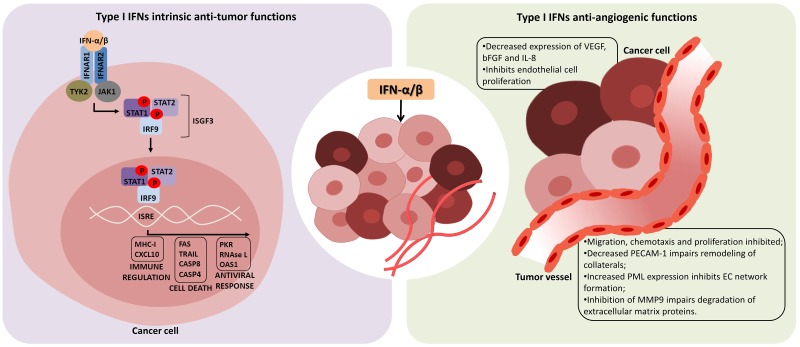
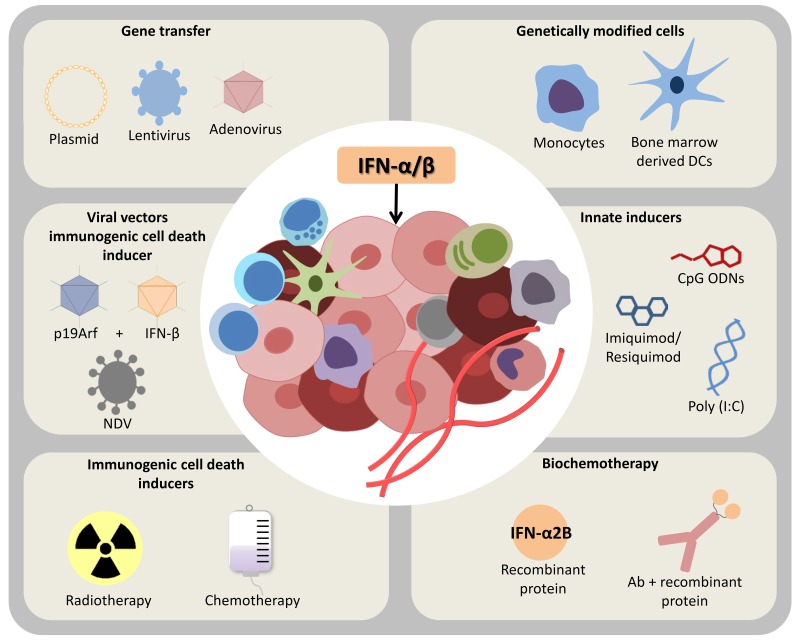
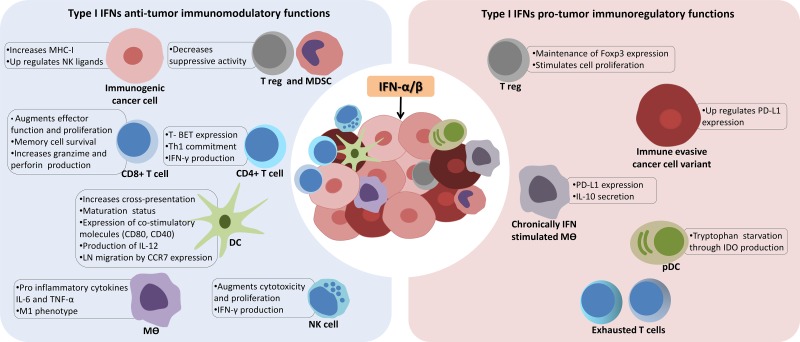
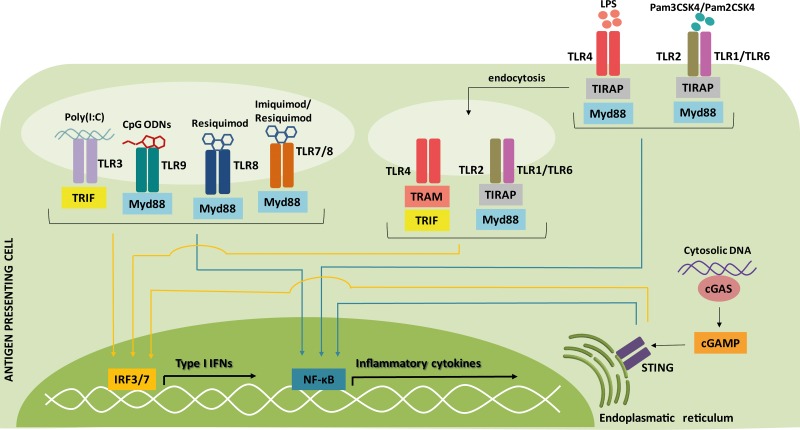
During the last decades, the pleiotropic antitumor functions exerted by type I interferons (IFNs) have become universally acknowledged, especially their role in mediating interactions between the tumor and the immune system. Indeed, type I IFNs are now appreciated as a critical component of dendritic cell (DC) driven T cell responses to cancer. Here we focus on IFN-α and IFN-β, and their antitumor effects, impact on immune responses and their use as therapeutic agents. IFN-α/β share many properties, including activation of the JAK-STAT signaling pathway and induction of a variety of cellular phenotypes. For example, type I IFNs drive not only the high maturation status of DCs, but also have a direct impact in cytotoxic T lymphocytes, NK cell activation, induction of tumor cell death and inhibition of angiogenesis. A variety of stimuli, including some standard cancer treatments, promote the expression of endogenous IFN-α/β, which then participates as a fundamental component of immunogenic cell death. Systemic treatment with recombinant protein has been used for the treatment of melanoma. The induction of endogenous IFN-α/β has been tested, including stimulation through pattern recognition receptors. Gene therapies involving IFN-α/β have also been described. Thus, harnessing type I IFNs as an effective tool for cancer therapy continues to be studied.
在过去几十年中,I型干扰素(IFN)发挥的多效性抗肿瘤功能已得到广泛认可,尤其是它们在介导肿瘤与免疫系统相互作用中的作用。事实上,I型干扰素现在被视为树突状细胞(DC)驱动的T细胞对癌症反应的关键组成部分。在这里,我们重点关注IFN-α和IFN-β,以及它们的抗肿瘤作用、对免疫反应的影响及其作为治疗剂的用途。IFN-α/β具有许多共同特性,包括激活JAK-STAT信号通路和诱导多种细胞表型。例如,I型干扰素不仅能驱动DC的高成熟状态,还对细胞毒性T淋巴细胞、NK细胞激活、肿瘤细胞死亡诱导和血管生成抑制有直接影响。多种刺激因素,包括一些标准的癌症治疗方法,可促进内源性IFN-α/β的表达,然后它作为免疫原性细胞死亡的基本组成部分发挥作用。重组蛋白的全身治疗已用于黑色素瘤的治疗。内源性IFN-α/β的诱导也已得到测试,包括通过模式识别受体进行刺激。涉及IFN-α/β的基因疗法也已被描述。因此,将I型干扰素作为癌症治疗的有效工具的研究仍在继续。